

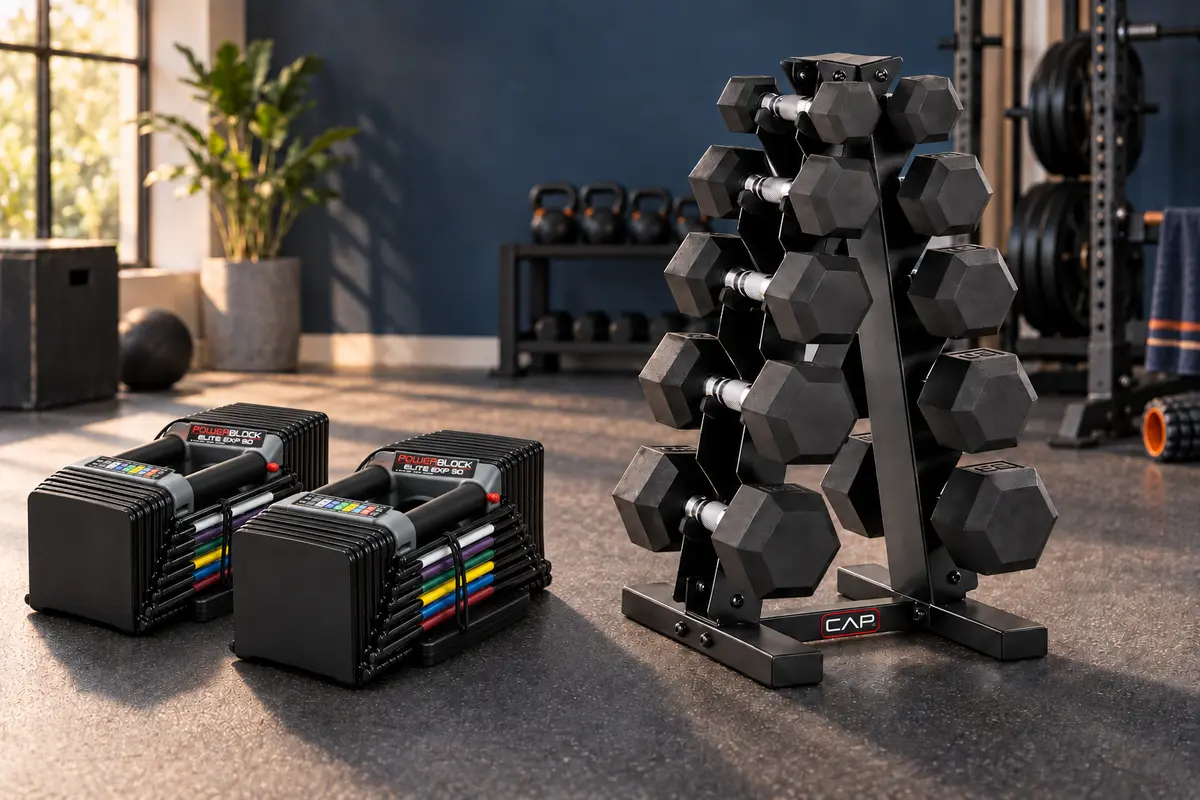
Adjustable Dumbbells vs. Dumbbell Sets: Which Is Better for Your Home Gym?
A practical comparison of space, cost, training speed, durability, feel, and long-term progression—so you can buy the weights that fit the way you actually train.
The better choice is not universal. Adjustable models usually make the most sense when floor space and budget efficiency lead your list, while a rack of fixed pairs works better when you want instant weight changes, familiar balance, and fewer moving parts. This guide compares adjustable dumbbells vs. dumbbell sets using the factors that matter in a real home gym.
Best for Small Spaces
Adjustable dumbbells consolidate many weight increments into one pair and typically need only a compact stand.
Best for Fast Training
Fixed pairs let you move immediately from one load to another during circuits, supersets, and drop sets.
Best Overall Value
Adjustable models usually provide more weight choices per dollar, but fixed sets can offer better longevity.
Quick Answer: Which Type Should You Buy?
Choose adjustable dumbbells if you train in a bedroom, apartment, garage corner, or other compact area; want a broad range of weight increments without buying many pairs; and can accept a short pause to change the load. A well-designed selector system is especially useful for solo lifters who follow traditional strength sessions with normal rest periods.
Choose a dumbbell set if you have room for a stable rack, frequently perform timed circuits or drop sets, train with another person, or prefer the predictable size and balance of a conventional dumbbell. Fixed pairs also make it easier to grab different weights for bilateral, unilateral, warm-up, and accessory movements without adjusting hardware.
Our short verdict
For most space-conscious home gyms, adjustable dumbbells are the smarter first purchase. For a dedicated training room where speed, simplicity, and long service life matter more than footprint, a fixed dumbbell set is the stronger solution.
Adjustable vs. Fixed Dumbbells at a Glance
| Factor | Adjustable Dumbbells | Fixed Dumbbell Set | Typical Advantage |
|---|---|---|---|
| Space | One pair replaces multiple weights | Requires a rack and more floor or wall space | Adjustable |
| Upfront cost | Higher cost per pair, lower cost per available increment | Can start cheaply, but a complete set costs more | Adjustable for broad ranges |
| Weight changes | Requires a dial, pin, plate, or collar change | Pick up the next pair immediately | Fixed |
| Durability | Contains more moving or locking parts | Simple construction with few failure points | Fixed |
| Balance and feel | Length or shape may remain larger at light settings | Compact size generally scales with weight | Fixed |
| Shared workouts | One pair can become a bottleneck | Multiple users can select different pairs | Fixed |
| Portability | Compact, but a heavy pair can be awkward to move | Move individual pairs as needed | Depends |
| Expansion | Limited by the system’s maximum or add-on kits | Add individual pairs at any time | Fixed |
1. Space and Storage
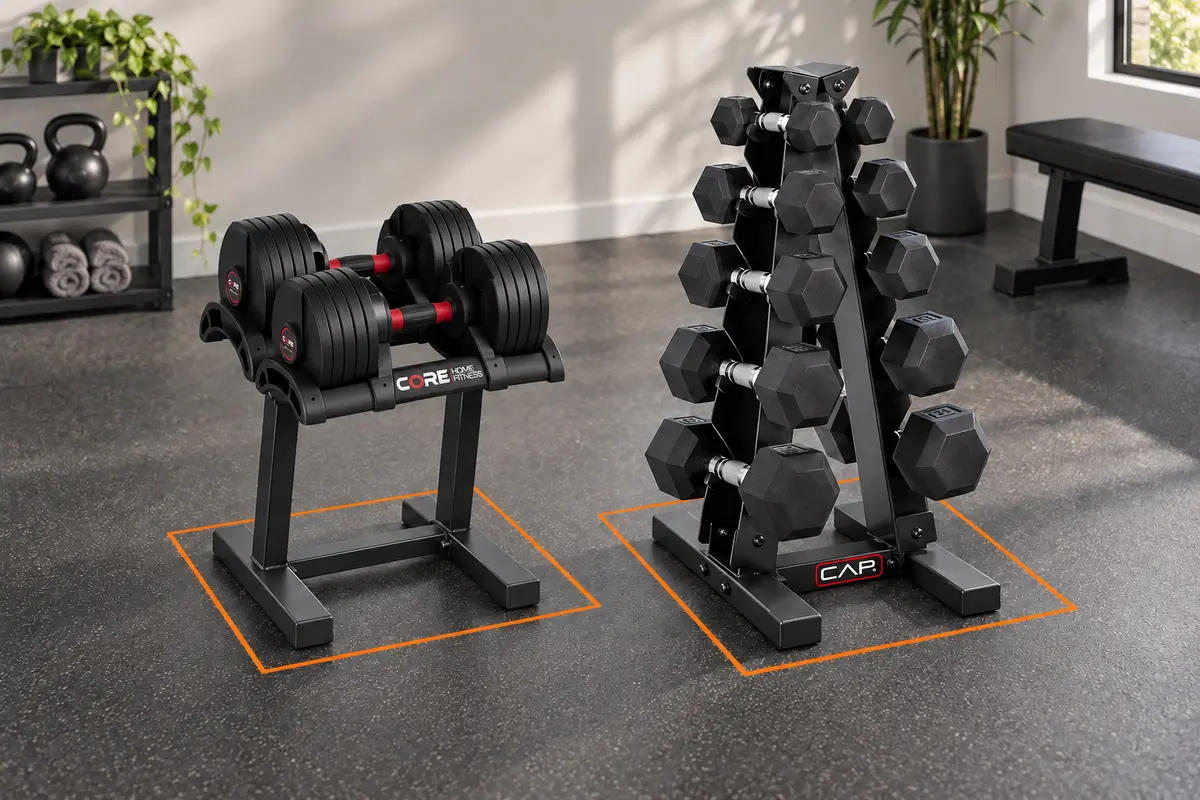
Space is the clearest reason to choose an adjustable system. One pair may cover the same working range as a row of fixed weights, so it can live beside a bench, under a console, or on a small stand. If your training zone must return to normal living space after each session, space-saving dumbbells reduce both visual clutter and storage demands.
A fixed set needs more planning. Even a compact vertical rack needs clear space around its base, and a horizontal rack may take up several feet of wall space. Allow enough room to bend, lift a pair safely, and return it without striking a wall, bench, or another weight.
2. Upfront Cost and Long-Term Value
Compare total usable weight range—not simply the price of one pair. An adjustable pair can replace several fixed pairs, which often makes it more economical for a lifter who needs light warm-up weights, moderate accessory loads, and heavier working sets. Before buying, list the increments you use now and the loads you expect to need over the next two or three years.
A fixed dumbbell set is easy to build gradually. You can purchase only the pairs you need, then add heavier weights as your strength improves. The tradeoff is that accumulated equipment and a suitable rack can eventually cost more than one adjustable system.
Long-term value also includes replacement risk. A basic fixed dumbbell has no selector, internal gear, or removable pin. Adjustable models are more mechanically complex, so warranty coverage, replacement-part availability, and the manufacturer’s handling guidance deserve attention.
3. Weight Range and Progression
Good progression depends on useful increments. Smaller jumps are helpful for lateral raises, curls, rehabilitation work, and overhead pressing, where a large increase can be disproportionate. Larger jumps may be acceptable for rows, squats, Romanian deadlifts, and other movements that involve more muscle mass.
When comparing adjustable dumbbells for home gyms, check the minimum load, maximum load, increment pattern, and whether expansion kits are available. A high maximum looks impressive, but it does not compensate for awkward gaps in the loads you use most often.
Fixed dumbbells offer complete flexibility because you can mix brands, shapes, and increments. However, filling every small weight gap increases cost and rack space. Many home lifters save money by buying closer increments at the light end and wider increments at the heavy end.
4. Workout Speed and Weight Changes
Fixed dumbbells win when every second matters. During a drop set, circuit, or interval session, you can put one pair down and immediately grab another. That smooth transition helps maintain the intended work-to-rest ratio and avoids interrupting a training partner.
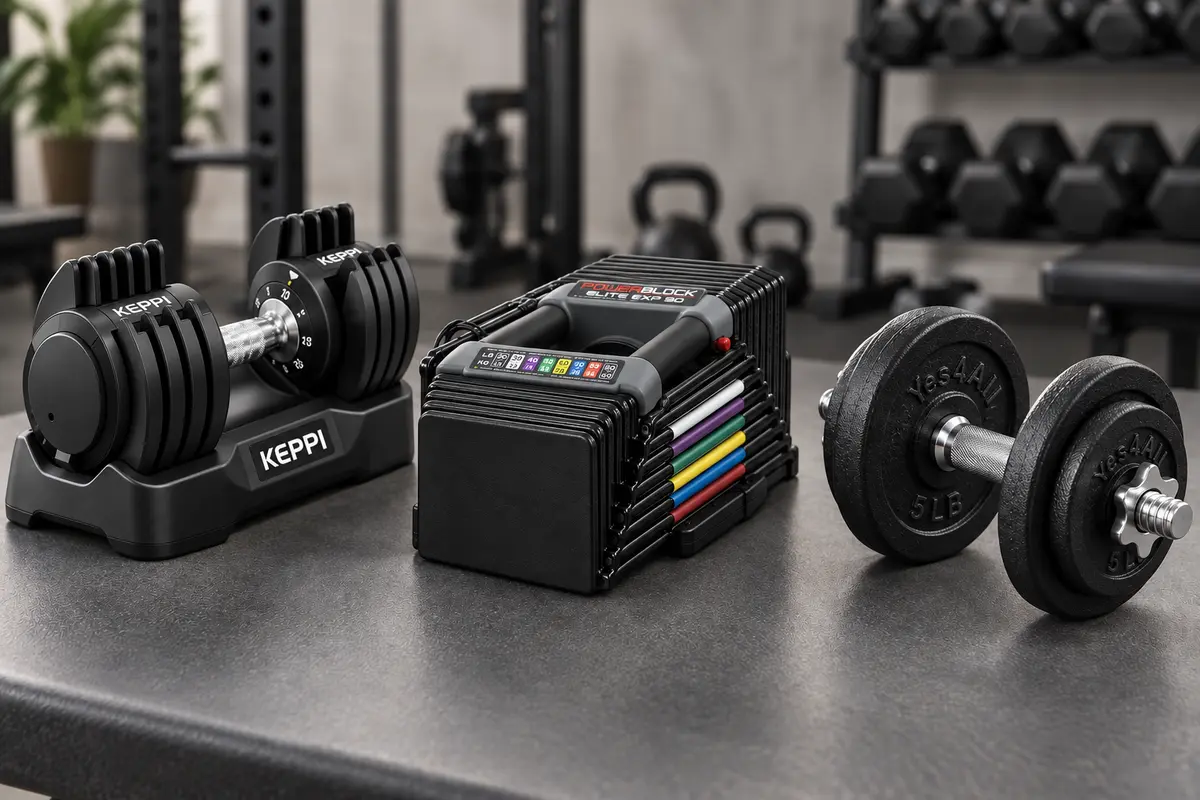
Adjustable designs vary considerably. Dial and selector-pin systems can change weight quickly when the dumbbell is seated correctly in its base. Plate-loaded handles take longer because you must remove collars, change plates, and secure everything again. With any system, confirm that the selector is fully engaged before lifting.
For traditional strength training with 60 to 180 seconds of rest between sets, the adjustment delay is usually minor. For high-volume conditioning or frequent supersets involving different loads, it can become a persistent annoyance.
5. Feel, Balance, and Durability
How adjustable dumbbells feel
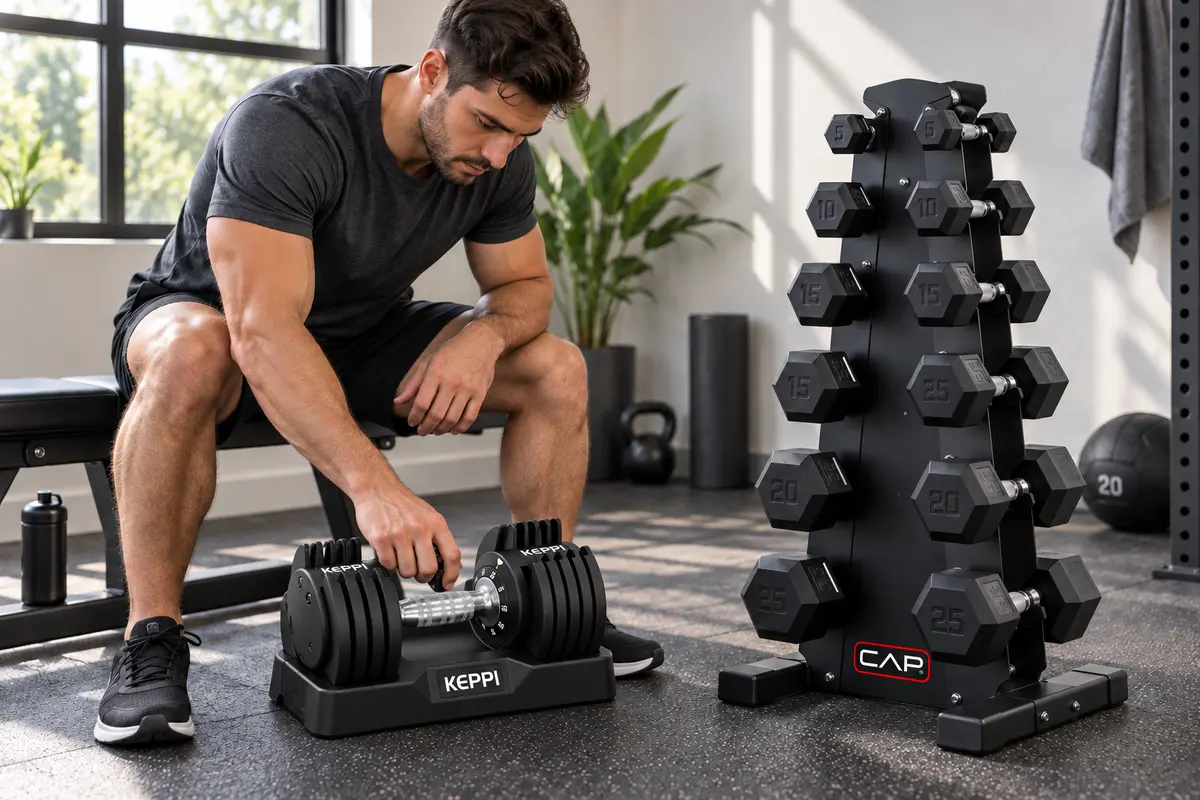
Some adjustable handles remain long even when set to a light load. That extra length can contact your thighs during curls or complicate setup for a press. Other systems become shorter as weight is removed, which creates a more traditional feel. Also check handle diameter, knurling, plate movement, and whether the shape allows comfortable goblet holds.
How fixed dumbbells feel
Fixed pairs are straightforward and predictable. Their size generally increases with weight, and their center of mass does not depend on a selector mechanism. Rubber hex heads resist rolling and are common in home gyms; round urethane or rubber dumbbells often feel more refined but need a rack that prevents movement.
What lasts longer?
Fixed dumbbells usually have the durability advantage because they contain few components. Adjustable models can still last for years when used correctly, but many should not be dropped. Follow the manufacturer’s instructions, return the handle squarely to its cradle, and keep grit away from moving parts.
6. Noise, Floor Protection, and Apartment Use
Neither dumbbell type should be dropped casually in a home. Impact can damage flooring, disturb neighbors, loosen fixed heads, or harm an adjustable locking system. Dense rubber tiles reduce vibration better than a thin yoga mat, but they do not make repeated drops safe.
Adjustable plates may produce mild movement or clicking depending on the design. Fixed rubber or urethane dumbbells are often quieter during normal handling, although metal handles can still strike a rack. In upstairs rooms, controlled repetitions and careful set-downs matter more than the dumbbell category.
7. Shared Home Gyms and Partner Workouts
One adjustable pair serves one load at a time. If two people train together, they may need to wait, repeatedly change settings, or purchase a second pair. A rack of dumbbell sets for home gyms makes simultaneous training easier because each person can use a different weight.
Fixed pairs are also simpler for households with several users. There is no adjustment system to learn, and the weight is immediately visible. Adjustable models remain practical when workouts occur at different times or when both users need similar loads and can share a pair without disrupting the session.
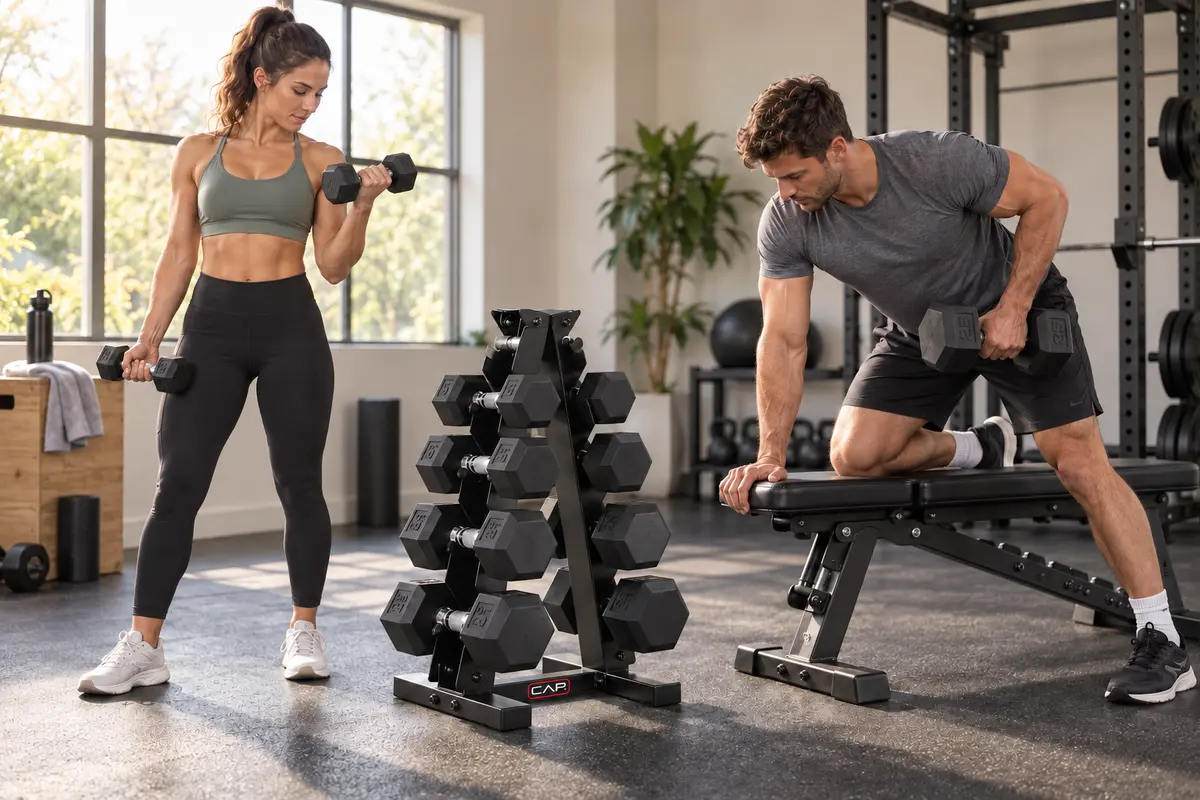
Which Dumbbells Match Your Training Style?
Traditional Strength Training
Best fit: Adjustable or fixed. Normal rest periods give you time to change settings, while fixed pairs provide the most familiar feel.
Circuits and HIIT
Best fit: Fixed pairs. Instant transitions protect the pace of timed intervals and multi-exercise circuits.
Bodybuilding and Drop Sets
Best fit: Fixed pairs. Multiple loads remain ready, although two fast-changing adjustable pairs can work for solo training.
General Fitness
Best fit: Adjustable. One compact pair usually covers presses, rows, squats, hinges, carries, and accessory work.
The best home gym dumbbells are the ones that support your program without adding friction. A feature that looks impressive on a product page has little value if changing weights is annoying, the handle feels uncomfortable, or the storage system does not fit your room.
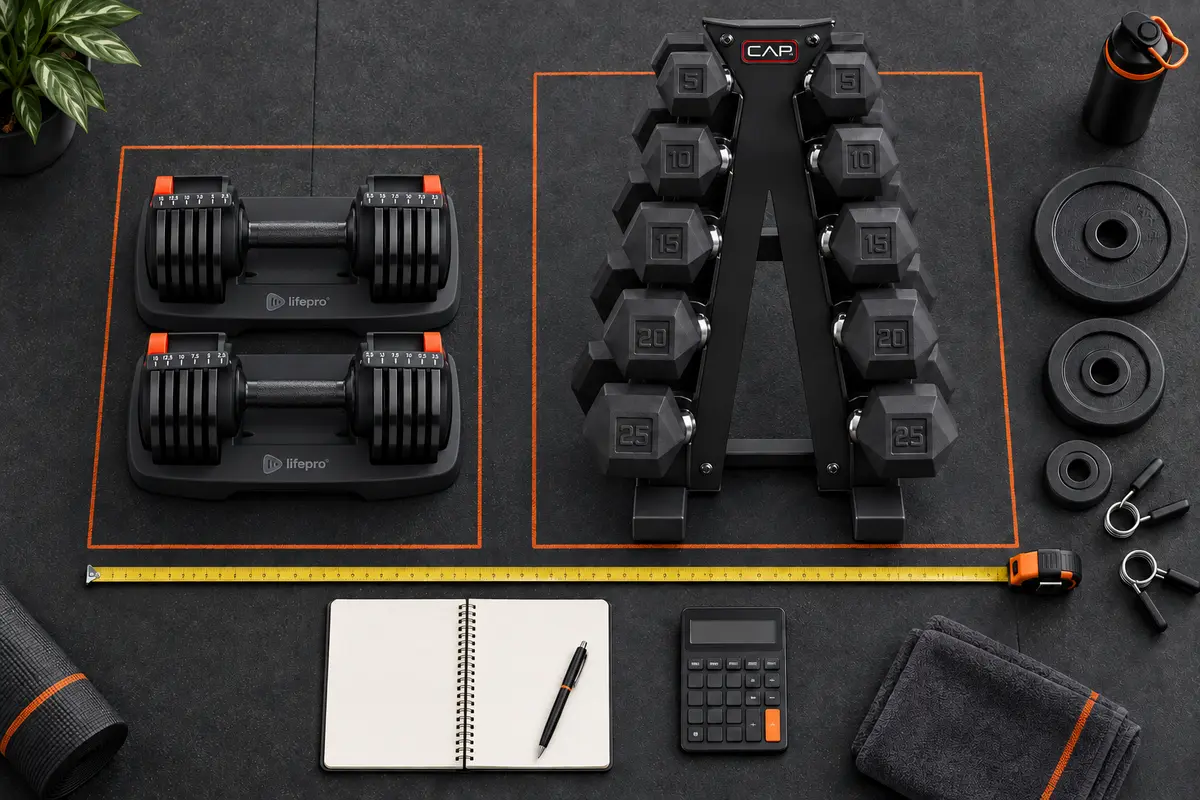
Decision Checklist Before You Buy
Use this checklist to turn the comparison into a practical buying decision:
- Measure the equipment footprint and the clear space needed to lift and return each dumbbell safely.
- Write down the lightest, heaviest, and most frequently used loads in your current program.
- Check whether the available increments are small enough for upper-body accessory movements.
- Estimate the total cost of the weights, stand or rack, floor protection, shipping, and future expansion.
- Decide whether you need instant changes for circuits, drop sets, or partner workouts.
- Review handle diameter, usable handle length, overall dumbbell length, and balance.
- Confirm the rules on dropping, warranty coverage, and access to replacement parts.
- If possible, test the adjustment mechanism and perform a few representative movements before buying.
If you are still uncertain, start by comparing your room measurements and training plan with a detailed guide on how to choose adjustable dumbbells. The right specifications should follow your exercises—not the other way around.
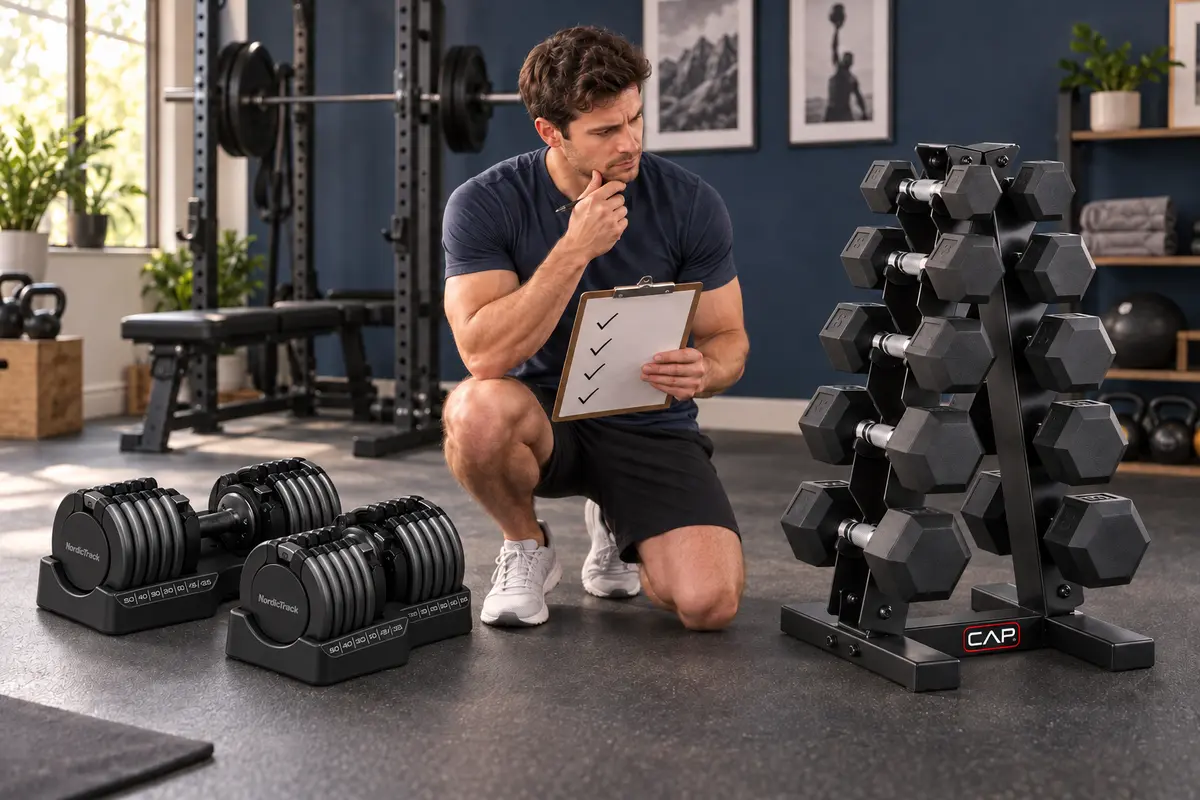
Frequently Asked Questions
Are adjustable dumbbells worth it for a home gym?
They are usually worth considering when you need several weight increments but have limited space. Their value is strongest for solo training with normal rest periods. Check the maximum weight, increment pattern, handle dimensions, warranty, and rules on dropping before buying.
Are fixed dumbbells safer than adjustable dumbbells?
Both can be safe when correctly manufactured, maintained, and used. Fixed dumbbells have fewer moving parts, while adjustable models depend on a secure locking mechanism. Inspect equipment regularly and confirm that every selector, pin, plate, or collar is fully engaged before lifting.
Can adjustable dumbbells be dropped?
Many manufacturers advise against dropping adjustable dumbbells because impact can damage plates, cradles, selectors, or internal components. Follow the exact handling instructions for your model and end sets with controlled placement.
Which option is better for drop sets?
A fixed dumbbell set is generally better because several loads can be ready at once. Some dial or selector adjustable models change quickly enough for solo drop sets, but the dumbbell must usually be returned to its base between changes.
How much room does a dumbbell set need?
The answer depends on the number of pairs and rack design. Measure the rack footprint, then add clear access space so you can bend, remove weights, and re-rack them without contacting a wall or other equipment. Adjustable dumbbells typically require much less storage area.
Can I combine adjustable and fixed dumbbells?
Yes. A hybrid setup can be highly practical: use adjustable dumbbells for the broad weight range, then add one or two fixed pairs for the loads you use most often or for exercises where compact dimensions and rapid transitions matter.
Final Verdict
Adjustable dumbbells are the better starting point for most home-gym owners because they deliver many weight choices in a small footprint. They are particularly compelling for apartments, multipurpose rooms, and lifters who train alone. The main compromises are adjustment time, a less conventional shape on some models, and greater sensitivity to impact.
Fixed dumbbell sets are better for dedicated gyms, rapid workouts, multiple users, and lifters who prioritize familiar handling and simple durability. They demand more space and usually more total investment, but they are convenient every time you change exercises.
If your budget and room allow it, a hybrid arrangement offers the best of both: an adjustable pair for broad coverage plus a few fixed dumbbells at your most-used weights.
Choose for the Workout You Will Repeat
Measure your space, map your working weights, and prioritize the training flow you use every week. The best dumbbell solution is the one that makes consistent, progressive workouts easier.

Pingback: Best Adjustable Dumbbells Under $500: 3 Amazon Picks