Weight Benches for Home Gyms
A weight bench is useful well beyond the bench press. It can give you a stable position for dumbbell presses, support one arm rows, and add variety to lower body and core training. The best weight bench for your home gym is the one that fits those exercises while remaining stable, comfortable, and practical to store between sessions.
This category brings together buying guides, individual product reviews, and side by side comparisons of weight benches. Use it to understand the main bench styles, identify the measurements that matter, and decide which features suit your training. Product names and specifications may change, so verify the exact model and current manufacturer details before ordering.
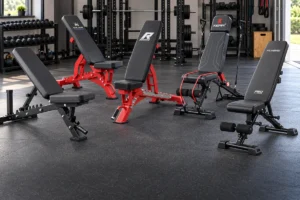
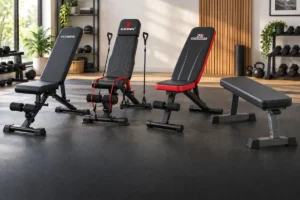
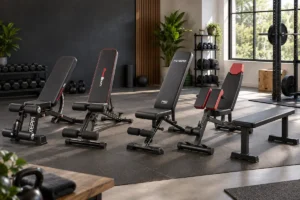
Flat Adjustable and Folding Weight Benches
A flat weight bench has a fixed pad and a simple design. It may be a good fit if your routine centers on flat presses, rows, step ups, and other exercises that do not require an angled backrest. Evaluate the height, pad width, leg placement, and amount of floor contact. A fixed position does not automatically make every flat bench equally stable or comfortable.
An adjustable weight bench lets you change the backrest angle for incline work and other positions. Check how many settings you would use, whether the seat also adjusts, and how securely each position locks. The shape of the backrest and the gap between pads can affect comfort in certain exercises. More positions are only valuable when they solve a real training need.
A folding weight bench can free floor space after a workout. Before buying one, compare its open footprint with its folded dimensions and consider where it will stand or lie when stored. Check the folding mechanism, assembly instructions, and the bench’s stability in the positions you plan to use. Compact storage is useful only when the bench also works well during a session.
How to Choose a Weight Bench for Your Space
Measure the area where you will actually lift, not just the spot where the bench will sit. Leave room for your feet, a full arm movement, dumbbell placement, and any rack or stand you plan to use. If the bench must move after every workout, also consider its weight, handles, wheels, and storage path. Check doorways and nearby furniture before assuming a folding design will fit.
Bench dimensions influence exercise setup. Height affects foot placement during presses; pad length and width affect support; and the frame can determine whether your legs have space to move naturally. Body size and preferred lifting style matter, so a published dimension should be interpreted in the context of how you will train. A bench that looks compact online can still feel oversized in a shared room.
Stability Construction and Weight Ratings
Stability is a practical consideration whenever you press, row, or use one end of a bench for support. Look at the frame design, contact points, and whether the feet can sit securely on your flooring. Check that moving parts lock as intended and that the bench remains level when assembled according to the manufacturer’s instructions.
Weight ratings are not always described in the same way. Some listings give a total capacity that includes the user and the weights being lifted. Confirm what the stated limit means for the exact model, follow the manufacturer’s guidance, and leave an appropriate margin for your use. For barbell presses, plan for a suitable rack and safety setup; a bench alone does not provide bar catches or a spotter.
Match the Bench to Your Exercises
Write down the movements you expect the bench to support. If most sessions use flat dumbbell pressing and supported rows, a sturdy flat bench may cover your needs. If you want incline presses and several seated positions, compare adjustable models by the angles and seat settings you will actually use. If you train in an apartment or small spare room, storage and ease of moving the bench may deserve more weight in the decision.
Check compatibility with the rest of your setup. A bench should fit inside a rack or between its uprights as intended, and its height should allow a workable bar or dumbbell position. Think about whether your existing flooring supports secure footing and whether you can place weights down safely. These details affect workouts more than cosmetic finishes.
Using Reviews and Comparisons Before Buying
Begin with a buying guide to understand the bench type and features that fit your goals. Then use a product review to examine the exact model’s dimensions, adjustment method, storage, stated capacity, and known limitations. A comparison is useful when two benches are close in price or design but differ in features that matter to your space.
Finally, confirm the current product listing for included parts, warranty coverage, shipping, and return conditions. Measure your workout area once more and check whether a required rack or accessory is sold separately. The right home gym weight bench should be easy to set up, suitable for your lifts, and practical enough to use regularly.