

How to Choose a Dumbbell Set for Your Home Gym
Choose useful loads, practical increments, comfortable handles, and a design that fits both your workouts and your available space.
The best dumbbell set for home gym training is the one that covers your current exercises, leaves practical room for progression, and fits where you train. Start with the loads you need, then compare fixed, adjustable, and plate-loaded designs. Finish by checking increments, handle comfort, storage, durability, and delivered cost.
This guide explains how to choose a dumbbell set without overbuying. It also explains why total advertised weight can matter less than the heaviest dumbbell, the smallest available increment, and the number of genuinely useful settings.
Training note: This is general educational content, not individualized medical or exercise advice. Choose loads you can control and consult a qualified professional when health, injury, or technique concerns apply.
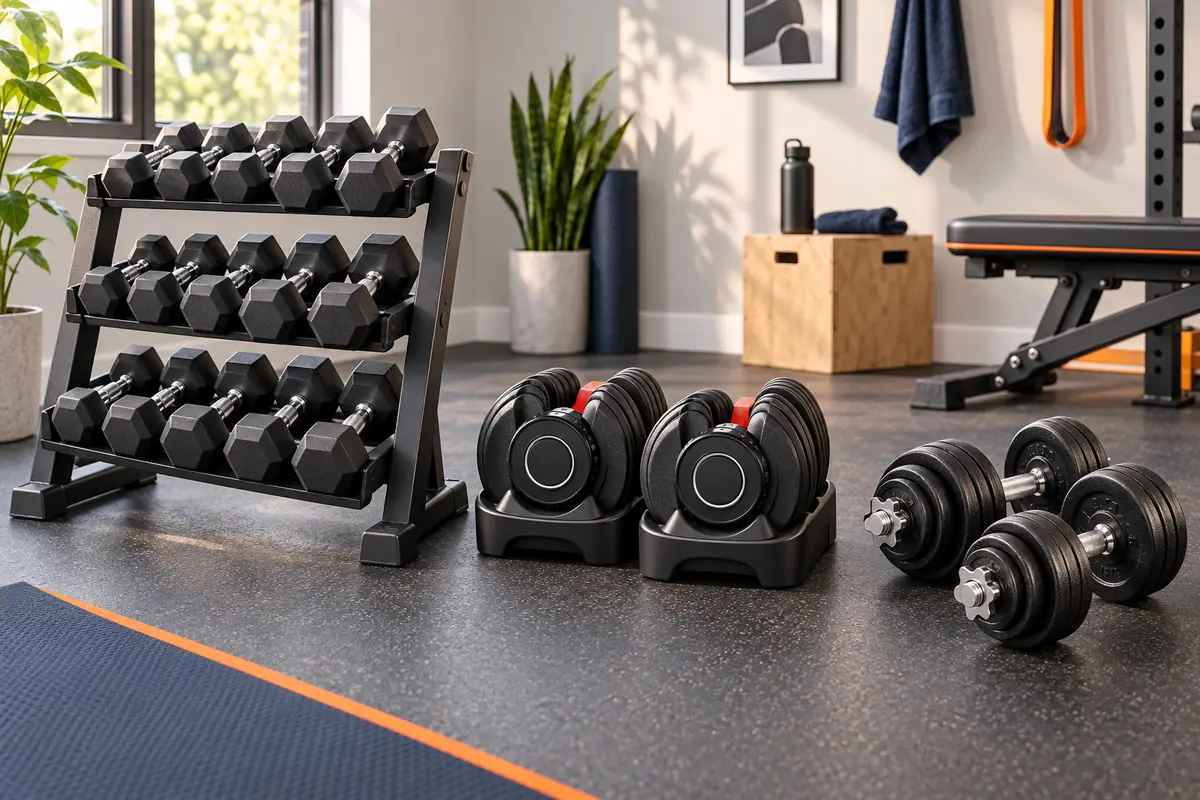
Useful weight range
Check the minimum, maximum per dumbbell, and every step—not only total set weight.
Room to progress
Leave sensible capacity above current working loads without buying unusable settings.
Fit for the room
Measure storage, cradle or rack access, and the clearance required for each exercise.
Start With Your Training Plan
Write down the exercises you expect to perform before comparing products. A useful list might include goblet squats, Romanian deadlifts, presses, rows, curls, lateral raises, split squats, and loaded carries. Different movements usually require different loads, so one fixed pair rarely covers a complete program for long.
Your goal changes what matters. General fitness may require a modest range and convenient transitions. Strength-focused training places more value on a high maximum load and durable construction. Circuits may favor fixed pairs that can be picked up immediately, while a small apartment may justify the slower changes of an adjustable system.
Choose a Useful Weight Range
Do not choose a home gym dumbbell set from total package weight alone. A 150-pound collection could contain several light pairs yet stop at 25 pounds per hand. That may be suitable for some exercises and insufficient for others. Check the minimum weight, maximum weight per dumbbell, and each selectable step between them.
Use recent workout records when possible. Note the loads you can control for the intended repetitions, then make sure the set covers those values. Avoid estimating your needs from someone else’s program or body weight alone.
Plan for Progression
A dumbbell set should support more than the first week of training. Progress may come from more repetitions, better technique, additional sets, harder variations, or more weight. The NSCA resistance training guidance supports gradually increasing training demands instead of adding stress suddenly.
Leave room above current working loads for movements that are likely to advance. A set that already ends at your current row or squat weight can become restrictive quickly. A very high maximum is not automatically valuable when the system is bulky, expensive, or awkward at the lighter settings used most often.
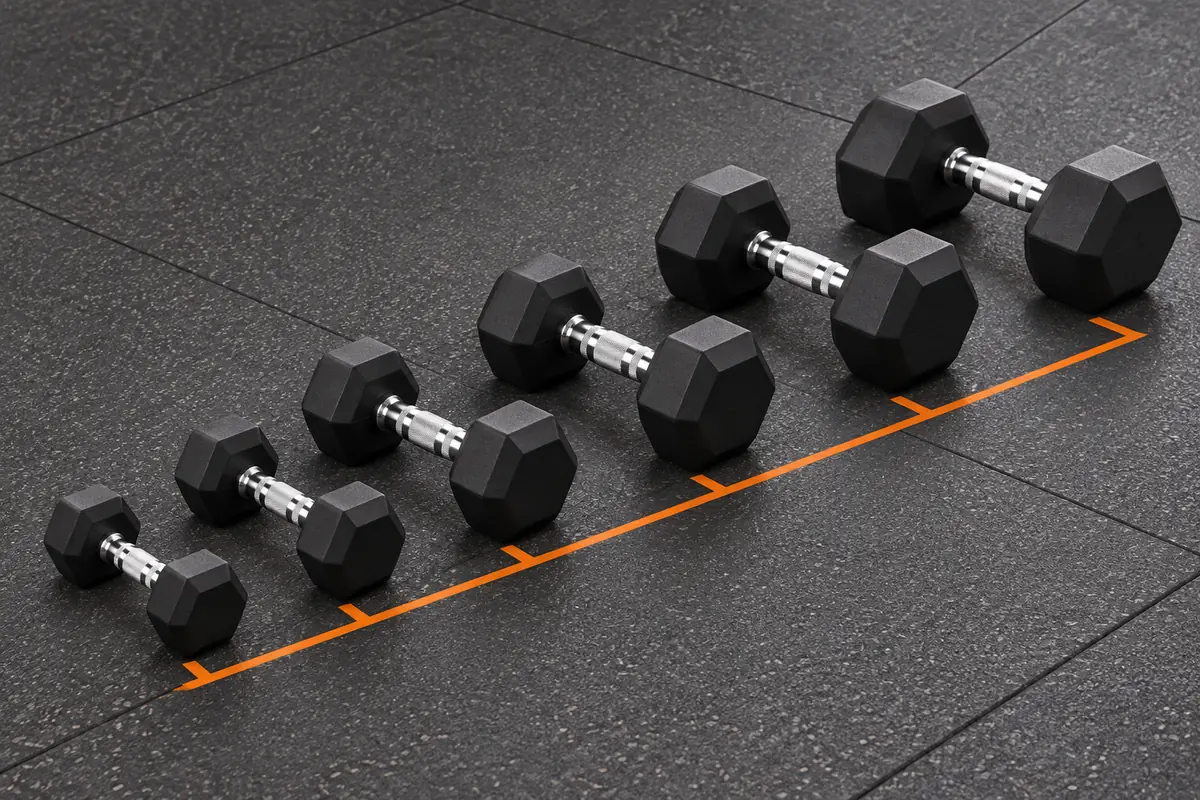
Check the Weight Increments
Smaller steps make progression easier to manage, especially for upper-body accessory work. A five-pound increase per dumbbell adds ten pounds to a two-handed exercise. That jump may feel reasonable for a squat and excessive for a lateral raise or overhead press.
Compare the actual dumbbell weight range and sequence instead of accepting a claim such as “multiple settings.” Some adjustable models use uniform increments; others use smaller steps at light settings and larger steps near the top. Fixed collections may leave gaps unless extra pairs are purchased. Plate-loaded handles provide flexible increments only when compatible plates are available in useful sizes.
Compare the Main Dumbbell Types
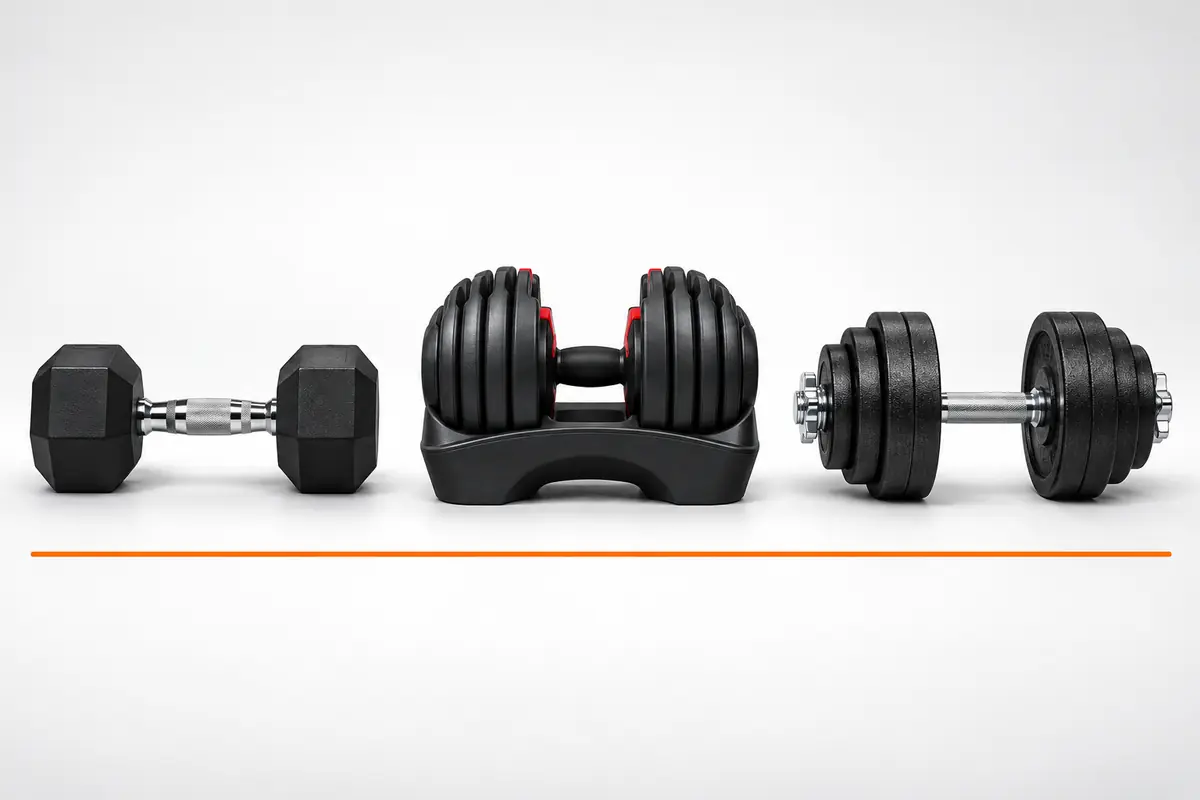
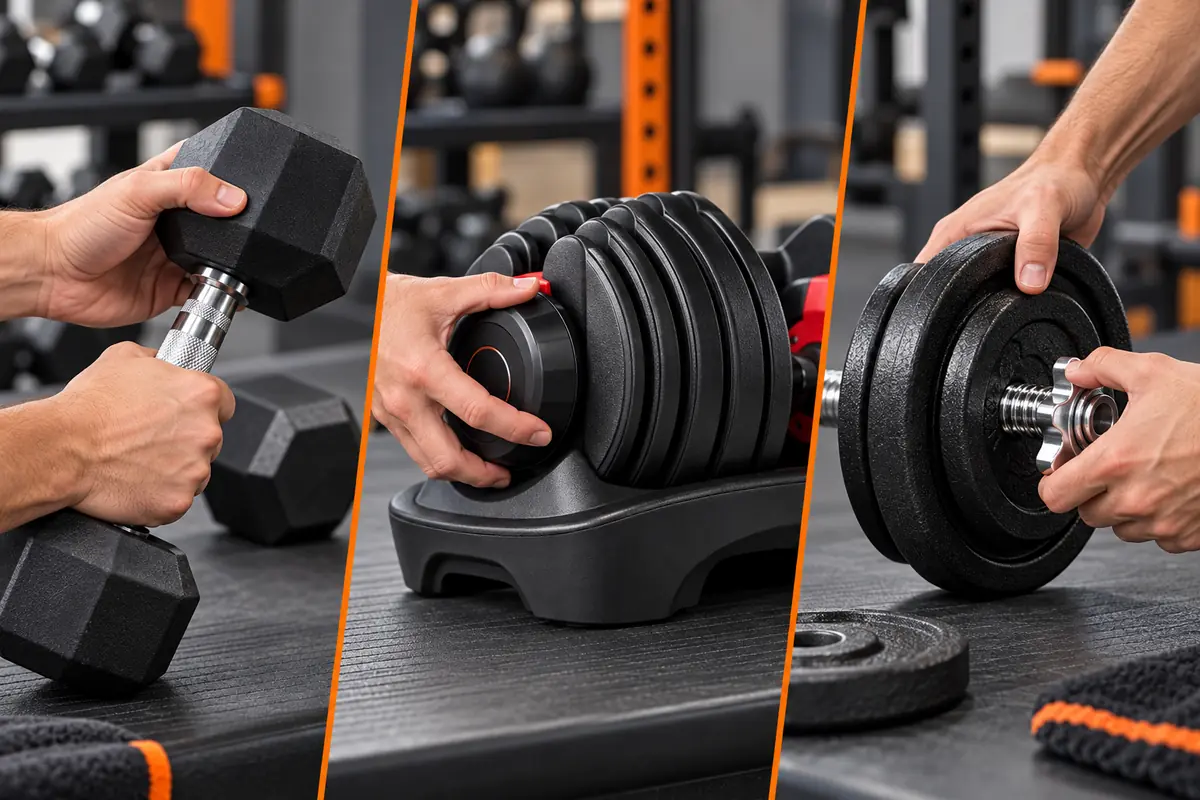
| Type | Best fit | Main advantage | Main tradeoff |
|---|---|---|---|
| Fixed | Dedicated gym space and fast exercise changes | Simple, ready to use, and easy to share | Needs more floor or rack space as the collection grows |
| Adjustable | Small spaces and one-person workouts | Many weight settings in one pair | Adjustment time and a larger body at some settings |
| Plate loaded | Buyers who value modular equipment | Load can grow with compatible plates | Slower changes; exposed hardware may affect comfort |
When comparing fixed vs adjustable dumbbells, consider workout flow as carefully as storage. The most compact option is not automatically the most convenient during circuits, supersets, or shared sessions.
Fixed Dumbbells
Fixed dumbbell sets make sense when you have rack space, train with another person, or switch exercises quickly. There is no selector to operate and no plate to secure. The drawback is cumulative cost and storage demand.
Adjustable Dumbbells
Adjustable dumbbells consolidate several settings into one pair. Check cradle requirements, locking security, adjustment method, and length at lighter settings.
Plate-Loaded Dumbbells
Plate-loaded handles can be cost-effective when compatible plates are already available. Confirm sleeve diameter, usable sleeve length, collar type, handle weight, and maximum rated load.
Match the Shape and Materials to Your Space
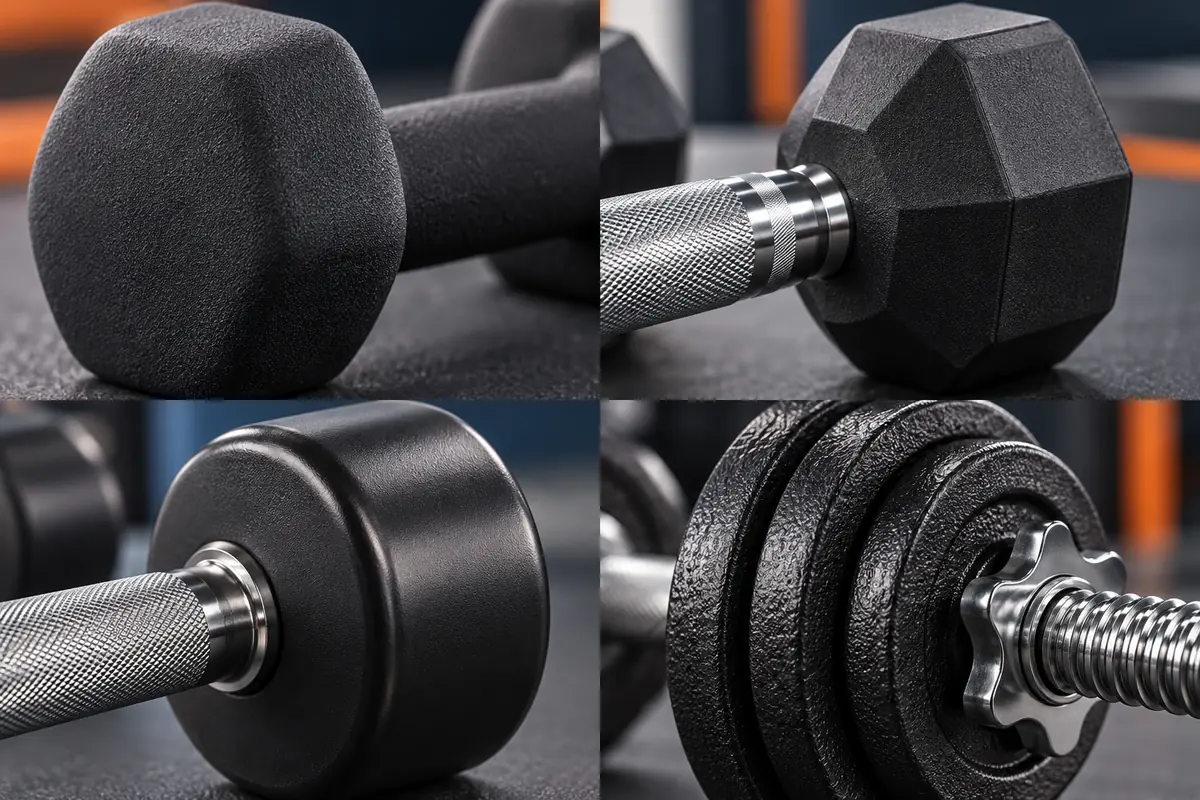
Head shape affects handling and storage. Hex heads resist rolling on a level floor and are common on fixed dumbbells. Round heads can work well on a purpose-built rack but may move when placed carelessly. Adjustable models often use proprietary shapes, so confirm that they sit securely in their cradles.
Common surfaces include rubber, urethane, neoprene, painted metal, and chrome. A coating may improve grip or reduce direct metal contact, but it does not make a dumbbell harmless to flooring. Review care instructions, protect finished floors, and avoid dropping equipment that is not designed for it.
Evaluate the Handle
Handle diameter, usable length, contour, and texture influence comfort. Aggressive knurling can feel secure under heavier loads but uncomfortable during high-repetition work. Smooth or coated handles can feel gentler yet become harder to control when wet. When specifications are available, compare the grip dimensions with a dumbbell you already find comfortable.
Look for enough clearance so your knuckles do not press against plates, end caps, or a selector mechanism. Buyers with smaller or larger hands should pay particular attention to grip diameter and handle length. Gloves change the fit but should not be treated as a guaranteed solution to an unsuitable handle.
Measure Storage Space and Training Clearance
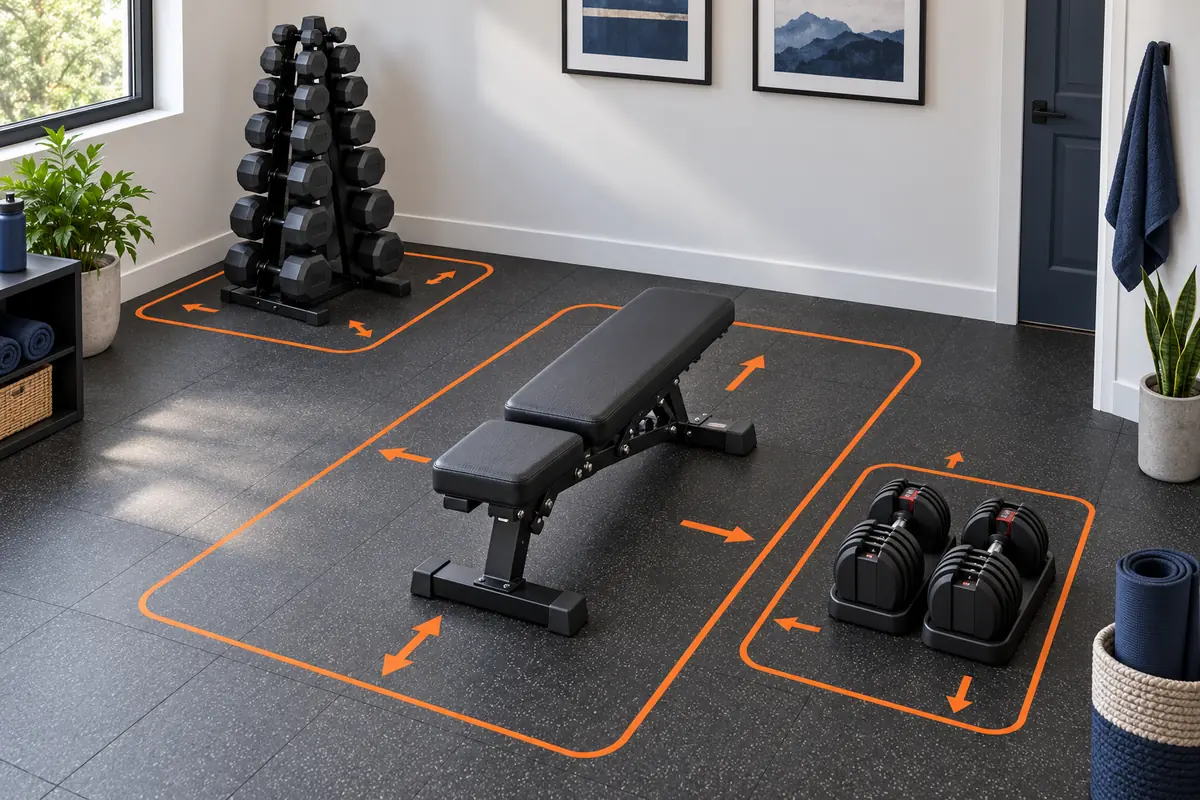
Measure both the equipment and the area needed to use it. A compact rack still requires clear access from the front or sides. Adjustable dumbbells need room for their cradles, and some systems must remain in the base while the weight changes. Record assembled width, depth, and height instead of relying on descriptions such as “space saving.”
Plan dumbbell storage together with exercise clearance. You need enough room to pick up and set down both weights without hitting a wall, bench, or other equipment. When using weight benches, test the combined layout for presses, rows, split squats, and the path used while carrying the weights.
Inspect Construction and Safety Features
For fixed dumbbells, examine how the heads attach to the handle and whether weight markings are easy to read. For adjustable systems, review the locking mechanism, allowed handling, and instructions for returning each dumbbell to its base. For plate-loaded handles, verify collar security and plate compatibility.
Check the warranty and what it excludes. Commercial use, dropping, outdoor storage, or improper assembly may affect coverage. Inspect new equipment before use and stop using a dumbbell when a head, plate, collar, or selector feels loose or damaged.
Calculate the Real Cost
Compare delivered cost rather than listed price alone. Include shipping, a required stand, storage, compatible plates, and accessories needed for safe use. For fixed dumbbells, estimate the next pairs you expect to add. For adjustable models, determine whether expansion kits exist and whether the base package reaches the planned maximum.
Price per pound can help compare similar fixed sets, but it should not determine the purchase. A package may appear inexpensive per pound because it includes weights you will not use. Cost per setting can also mislead when several adjustable settings are impractical for your exercises. Value comes from useful loads, reliable operation, and fit with the room.
Review Delivery, Assembly, and Returns
Dumbbells are dense and may arrive in multiple boxes. Confirm how many packages to expect and inspect each one promptly. Keep the packaging until the contents and function have been verified, especially for an adjustable system with a cradle or selector components.
Read the return policy before ordering. Heavy-item return shipping can change the economics of a purchase. When a marketplace listing combines several sizes or bundles, verify the exact variation in the cart and order confirmation. Product photos and reviews may describe a version other than the one selected.
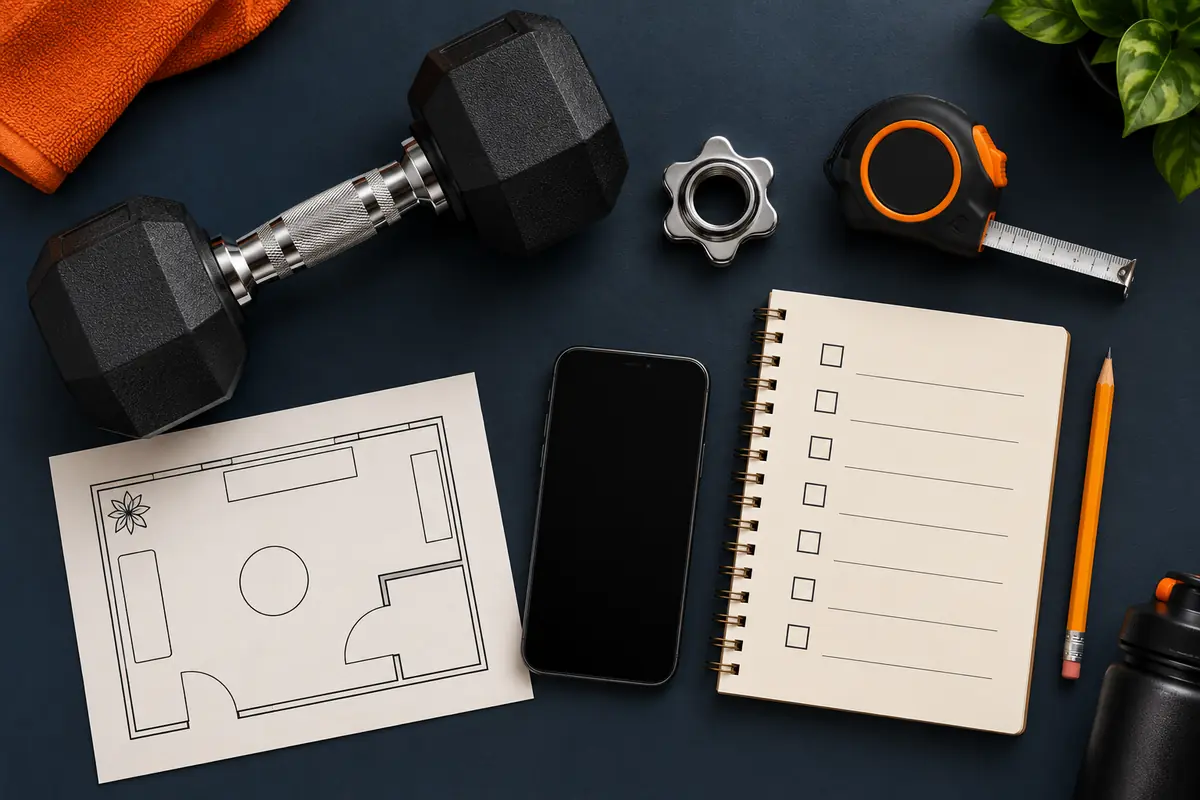
Use This Buying Checklist
- List the exercises and current working weights in your program.
- Choose a minimum and maximum load with room for progression.
- Check every increment, not only the number of settings.
- Select fixed, adjustable, or plate-loaded construction.
- Measure storage access and full exercise clearance.
- Compare handle dimensions, texture, head shape, and coating.
- Verify capacity, locking or collar design, warranty, and care.
- Calculate delivered price and likely expansion costs.
- Confirm package contents, return terms, and selected variation.
Common Buying Mistakes
Choosing by Total Set Weight
The total combines every dumbbell in the package. It does not reveal the maximum available in one hand. Identify the heaviest individual dumbbell or adjustable setting.
Buying Only for Current Loads
A set with no capacity above present working weights may require early expansion. Plan for likely progress while keeping low-end increments appropriate.
Ignoring Adjustment Time
Adjustment speed matters in supersets, drop sets, and shared workouts. Review the complete process, including cradle use or changing plates and collars.
Assuming Compact Means Easy
Small storage dimensions do not guarantee comfortable lifting. A long body, crowded cradle, or narrow rack can still create handling problems.
Frequently Asked Questions
How many dumbbell pairs does a home gym need?
There is no universal number. You need enough loads to cover the chosen exercises and planned progression. One adjustable pair may provide the required range, while a fixed setup may require several carefully spaced pairs.
What dumbbell weight should a beginner buy?
The correct starting load depends on the exercise, repetition target, technique, and individual capacity. When choosing dumbbells for beginners, select a weight you can control through the intended range of motion. Seek professional guidance when health or injury considerations apply.
Are fixed or adjustable dumbbells better for a home gym?
Fixed dumbbells favor fast transitions, simple operation, and shared workouts. Adjustable dumbbells favor space efficiency and a broad range in one pair. The better option follows from available space, maximum load, preferred increments, and tolerance for adjustment time.
How much space should I leave around dumbbells?
Use the manufacturer’s dimensions as a starting point, then add enough clearance to lift, carry, and return the weights without striking nearby objects. Test the area for every planned movement, not only equipment storage.
Do I need a dumbbell rack?
A rack is useful for a growing fixed collection because it keeps pairs organized and easier to access. It must be rated for the intended load and placed on a stable surface. Adjustable dumbbells usually use dedicated bases or cradles.
How often should adults strength train?
The U.S. Physical Activity Guidelines for Americans recommend muscle-strengthening activity involving all major muscle groups on at least two days each week. Frequency and exercise selection may need adjustment for health, experience, and recovery.
Final Recommendation
When deciding how to choose a dumbbell set, begin with the weight range and increments required by your program. Next, select the design that fits the room and workout pace. Confirm handle comfort, construction, storage, warranty, and total cost before ordering.
A well-matched set does not need the largest advertised total or the most settings. It needs useful loads, manageable progression, and a format that can be used safely and consistently in your home gym.
Compare Dumbbell Options for Your Home Gym
Review fixed and adjustable systems by weight range, increments, storage footprint, and the exercises you plan to perform.
View the Best Dumbbell Sets →
Pingback: Amazon Basics Neoprene Dumbbell Hand Weights Review