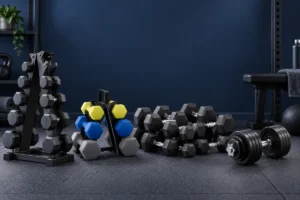
Dumbbell Sets for Home Gyms: Build a Smarter Strength Setup
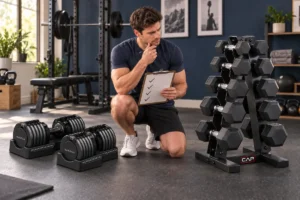
Dumbbell sets remain one of the most versatile foundations for a home gym. A coordinated range of weights can support presses, rows, curls, raises, squats, lunges, Romanian deadlifts, carries, and many other controlled strength exercises. Unlike a single pair, a complete dumbbell weight set lets different users or exercises move between loads without rebuilding the equipment after every set.
The best dumbbell sets are not defined by the largest number of pieces. A useful set provides appropriate starting weights, manageable progressions, dependable construction, comfortable handles, and storage that suits the room. Before buying, consider how the dumbbells will be used, where they will be stored, and whether a fixed or adjustable format better supports the training plan.
Types of Dumbbell Sets
| Type | Main advantage | Best suited to |
| Rubber hex dumbbell sets | Stable on the floor, familiar shape, and protective coating | General home gyms, presses, rows, carries, and circuits |
| Urethane dumbbell sets | Durable premium coating with a clean appearance | Higher-budget home gyms and frequent training |
| Cast-iron dumbbell sets | Compact, simple construction, and no outer rubber layer | Dry indoor spaces where floor protection is available |
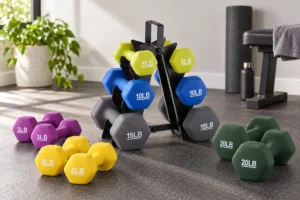
| Neoprene dumbbell sets | Comfortable coating and lighter color-coded weights | Light resistance, classes, mobility work, and beginner routines |
| Adjustable dumbbell sets | Multiple weight settings in a small footprint | Apartments and compact training spaces |
Fixed Dumbbell Sets
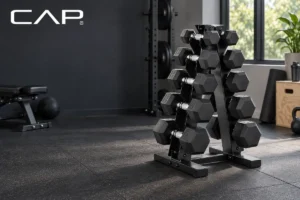
Fixed dumbbell sets provide one dedicated pair at each weight. They are immediately ready for use, feel predictable in the hand, and allow fast transitions during supersets or shared workouts. Rubber hex dumbbell sets are especially common in home gyms because the flat sides resist rolling and the coating helps reduce direct contact between metal, flooring, and nearby equipment.
The main tradeoff is space. As the range grows, fixed dumbbells require a rack or a carefully organized storage area. Total cost also rises with every additional pair. Fixed sets make the most sense when natural handling, quick access, and simple construction matter more than minimizing the footprint.
Adjustable Dumbbell Sets
Adjustable dumbbell sets combine multiple load settings into one pair. Selector pins, dials, plates, or handle-twist mechanisms change the working weight while unused plates remain in a tray or stack. This format can replace many fixed pairs and is often the practical choice for apartments, bedrooms, and compact garage gyms.
Adjustment speed, overall length, handle shape, weight increments, and drop tolerance vary widely. Some systems stay long at every setting, while others become shorter as weight is removed. Buyers should also check whether the set can expand later and whether replacement parts or expansion kits are compatible with the exact model.
How to Choose a Dumbbell Set for a Home Gym
1. Match the weight range to your exercises
Choose a starting load light enough for controlled raises, curls, and warm-ups, then allow a higher ceiling for rows, presses, squats, hinges, and carries. Beginners do not need to buy the heaviest set immediately, but an overly narrow range can become limiting as technique and strength improve.
2. Look at the size of each weight jump
Smaller increments make progression easier, particularly for shoulder, arm, and rehabilitation-approved exercises. A set that jumps too quickly between weights may force the user to compromise form or repeat the same load for longer. Review the actual included pairs or selectable settings rather than relying only on the minimum and maximum numbers.
3. Compare handle diameter and grip
A handle should feel secure without creating unnecessary pressure in the palm. Knurling can improve grip, but very aggressive textures may be uncomfortable during high-repetition sessions. Rubberized or contoured handles may feel softer, while straight metal handles more closely resemble commercial gym equipment. Hand size and lifting gloves can change which design feels best.
4. Consider coating and construction
Rubber helps protect surfaces and reduce noise, although new products can have a noticeable odor that usually fades with ventilation. Urethane is often selected for durability and appearance but generally costs more. Cast iron is straightforward and compact, yet it benefits from dry storage and protective flooring. Neoprene is comfortable at lighter weights but is not typically designed for heavy strength progression.
5. Plan storage before ordering
Measure the intended floor or wall area, including clearance for lifting dumbbells safely from the rack. Confirm that any stand is rated for the combined load and that heavier pairs can be reached without awkward bending or twisting. In small rooms, an adjustable set may free more space for a bench, mat, or other strength equipment.
6. Review durability, warranty, and seller
Dumbbells receive repeated contact with hands, racks, trays, and floors. Check warranty coverage, residential-use limitations, replacement-part availability, and seller authorization. Adjustable models require especially careful handling because their selection mechanisms can be damaged by drops. Product availability and marketplace sellers change, so verify the live listing before purchase.
| Practical buying rule Choose the smallest set that covers your present exercises and provides a realistic progression path. Extra weights add cost and storage demands, while too little range can lead to an early replacement purchase. |
Fixed vs. Adjustable Dumbbells
Choose fixed home gym dumbbells when you want familiar balance, instant access to every weight, and fewer moving components. They are a strong fit for larger rooms, shared training spaces, and workouts with rapid changes between exercises. A properly sized rack keeps the set organized and makes heavier pairs easier to handle safely.
Choose adjustable dumbbells when floor space is limited or when a broad range is needed without a full rack. They can provide strong value, but convenience depends on the adjustment system. Pay attention to the base or tray, how the dumbbell length changes, and whether small weight changes require separate add-on weights.
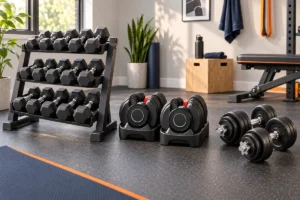
Some home gyms benefit from a hybrid setup: one adjustable pair for most strength work plus one or two fixed pairs for warm-ups, high-repetition exercises, or movements where a conventional hex shape feels more stable.
Dumbbell Set Safety and Care
- Inspect before lifting: Check handles, heads, collars, selector pins, dials, trays, and coatings for looseness or visible damage.
- Use level storage: Keep racks and adjustable-dumbbell bases on a stable surface away from walkways.
- Control every repetition: Select a load that allows sound technique and an unobstructed range of motion.
- Do not assume drop resistance: Set dumbbells down under control unless the manufacturer explicitly rates the product for impact.
- Protect the floor: Use suitable gym mats where heavy weights may contact tile, wood, concrete, or finished surfaces.
- Follow recall notices: Before buying used equipment, search the exact brand and model in the U.S. CPSC recall database.
Frequently Asked Questions About Dumbbell Sets
What weights should a beginner dumbbell set include?
A beginner set should include loads light enough for controlled shoulder and arm exercises plus heavier options for rows, presses, squats, and hinges. The ideal numbers depend on the user’s current strength, technique, and training plan.
Are rubber hex dumbbell sets good for home gyms?
Yes. Their flat sides help prevent rolling, and the rubber coating can reduce noise and protect nearby surfaces. Use appropriate flooring and ventilate new rubber products if the initial odor is noticeable.
Are adjustable dumbbell sets better than fixed sets?
Neither format is universally better. Adjustable sets save space, while fixed sets provide faster access and a traditional feel. The right choice depends on room size, budget, training style, and preferred weight range.
Do I need a dumbbell rack?
A rack is strongly recommended for larger fixed sets because it improves organization and access. Adjustable pairs normally use their supplied trays, although a compatible stand can make changes more comfortable.
Explore Dumbbell Set Guides and Reviews
Use the articles and product comparisons in this category to evaluate weight ranges, materials, rack requirements, adjustment systems, and long-term value. Gym Gear Pilot focuses on practical differences that affect real home-gym use, helping readers narrow the field before checking current prices and seller details.