

How to Choose an All-in-One Home Gym
Compare resistance systems, exercise stations, user fit, dimensions, safety, assembly, and total cost before one machine occupies your training space.
Learning how to choose an all-in-one home gym requires more than counting exercise names. A useful machine must provide the movement patterns, resistance range, adjustments, and operating clearance your program needs. It must also fit the intended users, the delivery route, the floor, and the budget after accessories and setup costs are included.
This guide explains how to evaluate an all-in-one system without being distracted by an oversized exercise list. Start with your training plan, compare resistance methods, inspect the stations you will actually use, and finish with space, safety, warranty, assembly, and long-term ownership checks.
Safety note: This is general educational content, not individualized exercise, medical, structural, or installation advice. Follow the manufacturer’s manual, stated clearances, anchoring instructions, user limits, and maintenance schedule. Seek qualified guidance when health or structural concerns apply.
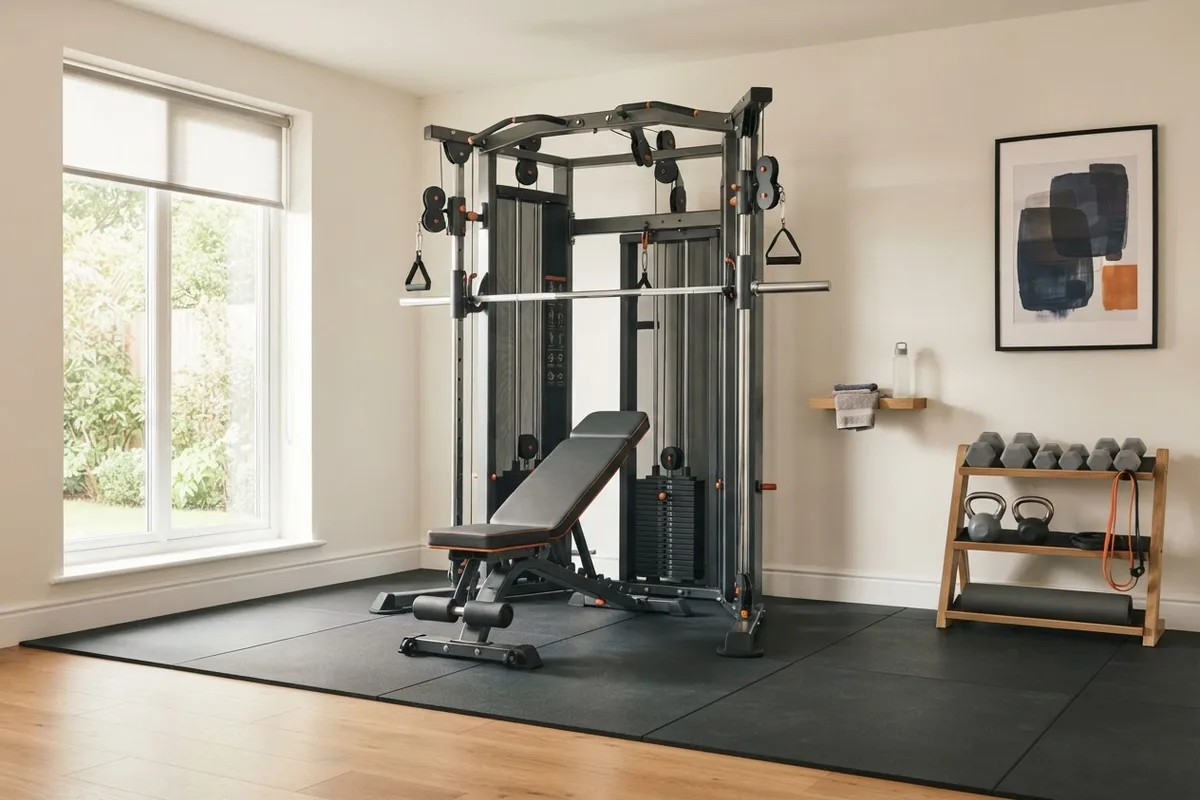
Usable resistance
Check the resistance delivered at each station, adjustment increments, cable travel, and room to progress.
Useful stations
Prioritize stations that support your weekly program instead of the largest advertised exercise count.
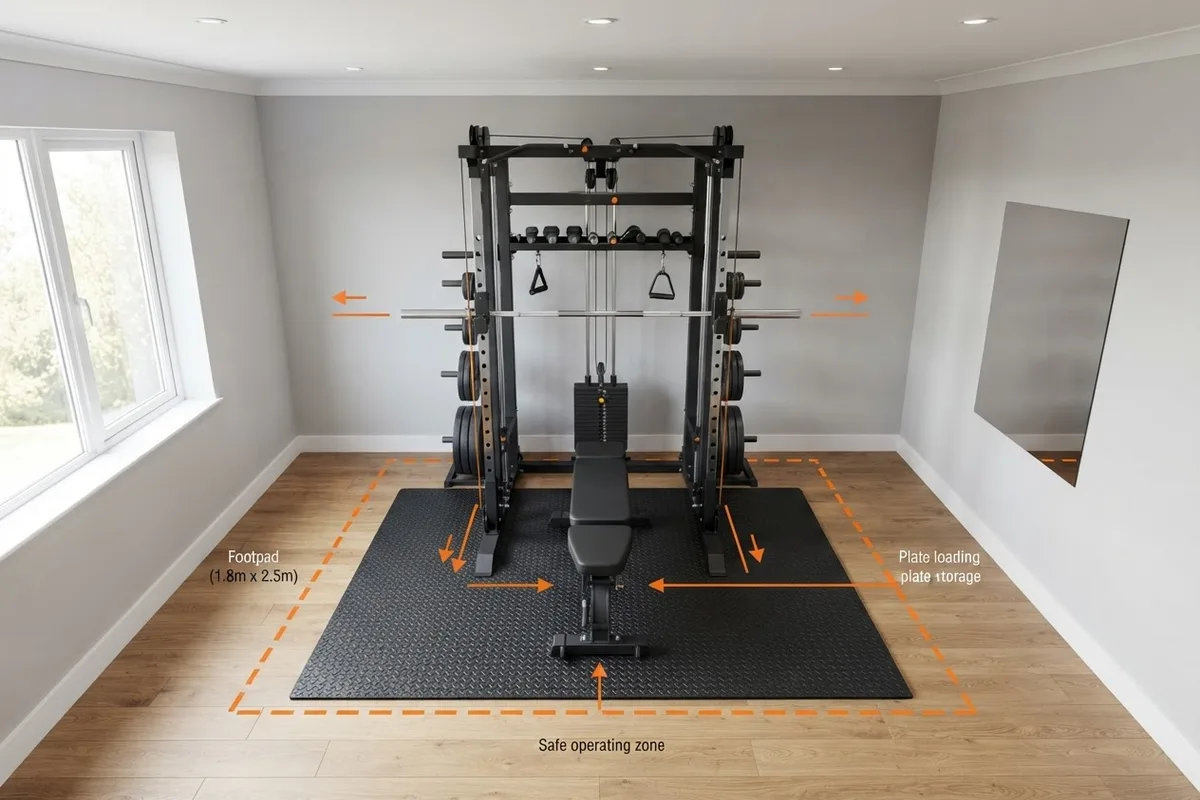
Operating footprint
Measure the machine plus seats, arms, cables, plate loading, adjustments, and safe access around it.
Start With Your Training Goals
Write a realistic weekly program before comparing machines. List the pushing, pulling, squatting, hinging, leg, arm, core, and conditioning movements you intend to repeat. Then mark each exercise as essential, useful, or optional. This turns a long feature list into a practical test of whether the machine supports your training.
An all-in-one system can be a strong choice when several people share one compact station, when guided movements improve confidence, or when you want quick resistance changes without storing many separate products. A modular collection of home gym equipment may be more suitable when you value free-weight specificity, easy replacement, or the ability to change the room gradually.
Do not buy for every exercise you might perform someday. Prioritize the movements that anchor your program and confirm that their setup feels natural. An exercise is only valuable when you can enter the position, adjust the machine, complete the required range of motion, and leave the station safely.
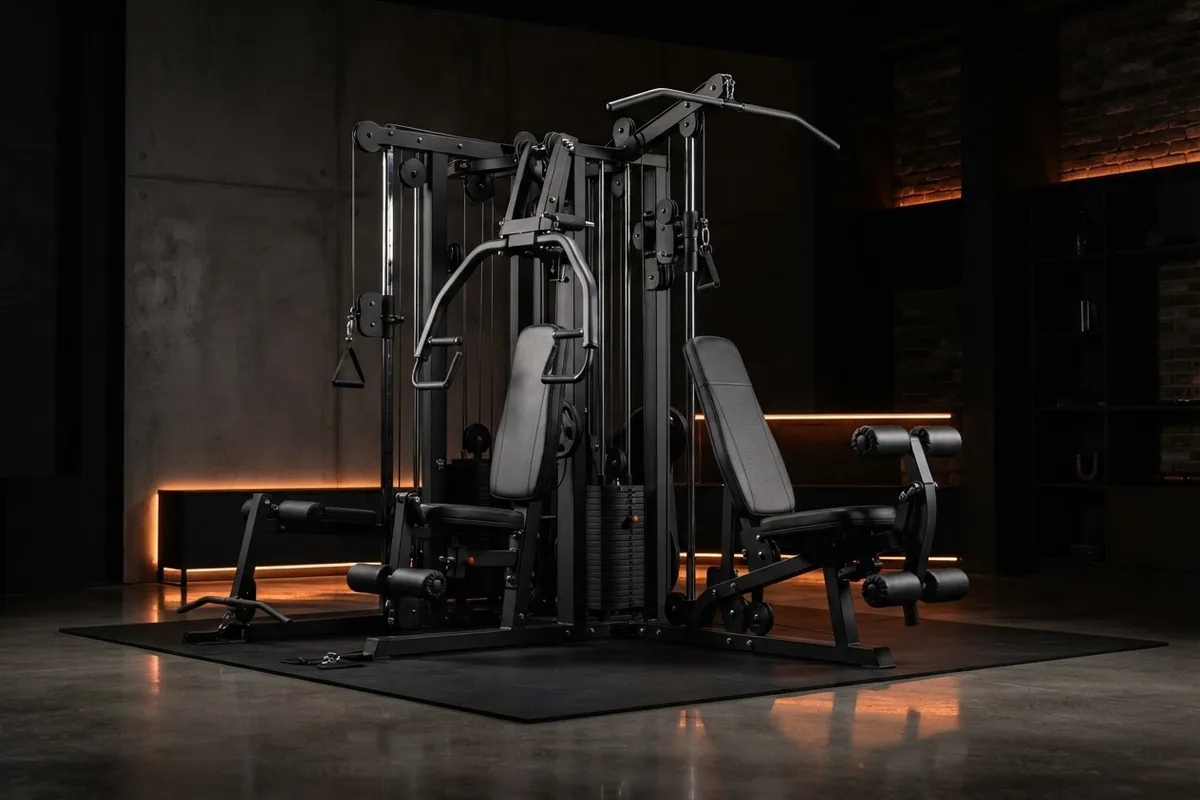
Compare the Main Resistance Systems
The resistance system determines how quickly the load changes, how much space the machine needs, and how the force feels through the movement. Compare the actual mechanism rather than assuming every all-in-one machine works the same way.
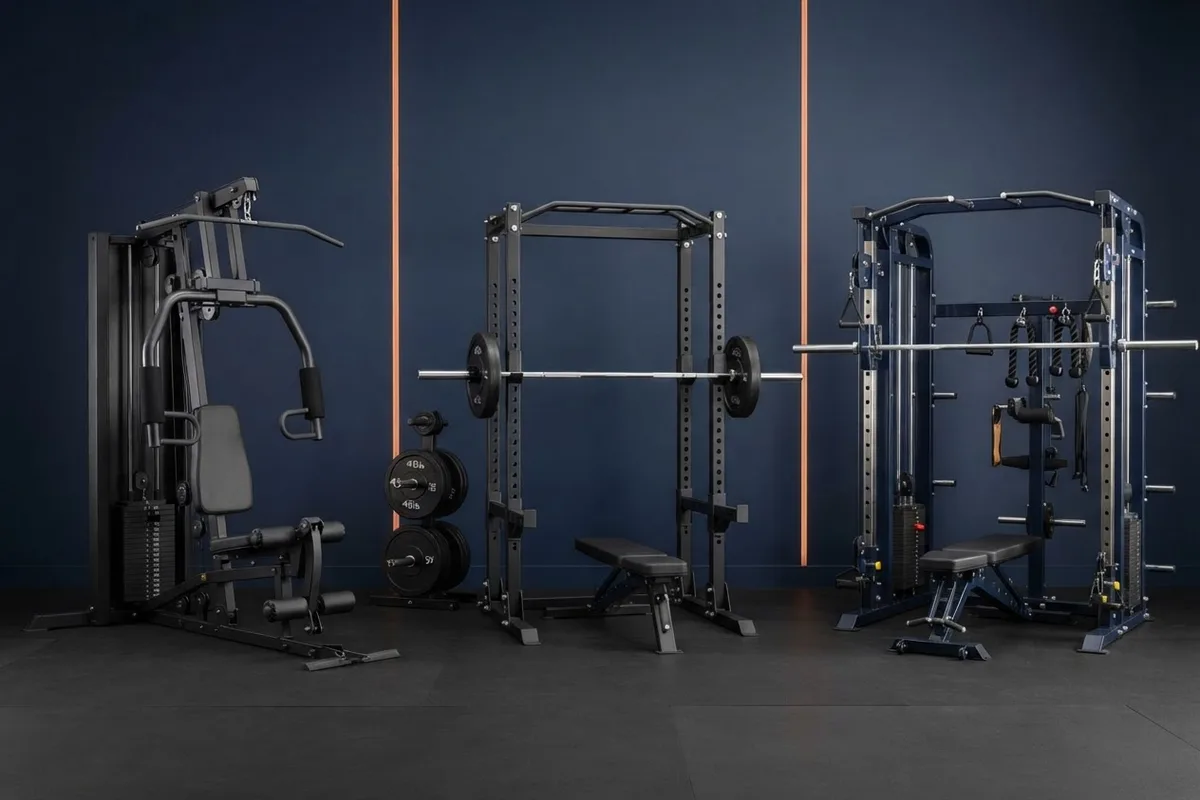
| System | Best fit | Main advantage | Main tradeoff |
|---|---|---|---|
| Selectorized weight stack | Fast changes and shared workouts | Move a pin to select resistance | Fixed top end; stack value may not equal handle resistance |
| Plate loaded | Buyers who already own compatible plates | Expandable resistance and familiar loading | Slower changes, extra storage, and loading clearance |
| Smith and cable combination | Guided bar work plus cable variety | Supports several training styles in one frame | Larger footprint, more setup, and higher total cost |
| Flexible or bodyweight resistance | Light-to-moderate training and compact rooms | Often lighter and easier to reposition | Resistance feel and progression may differ from iron weights |
A selectorized home gym weight stack favors convenience because changes are quick and loose plates are minimized. Check the listed stack weight, smallest increment, available add-on resistance, and whether every station uses the same effective load. For plate-loaded systems, confirm sleeve diameter, usable sleeve length, storage, and the cost of compatible weight plates.
Understand Pulley Ratio and Usable Resistance
The number printed on a weight stack does not always represent the force delivered at the handle. Cable routing can create a mechanical advantage. In a simplified example, a 2:1 ratio provides roughly half the selected stack load at the handle while allowing more cable travel. A 1:1 ratio provides resistance closer to the selected load but usually with less cable travel for the same stack movement.
Actual feel can also be affected by cable angle, pulley count, friction, moving attachments, and the geometry of the exercise arm. Use the manufacturer’s station-specific resistance chart when available. Do not calculate capacity from stack weight alone, and do not assume the press arm, lat pulldown, low row, and free cable deliver identical resistance.
Check the minimum usable load as carefully as the maximum. Smaller users, beginners, rehabilitation-oriented routines, and isolation exercises may need light starting resistance and manageable increments. Advanced users should compare the top effective load at the exercises most likely to progress.
Evaluate the Exercise Stations You Will Use
A high exercise count often includes small variations of the same cable movement. Instead of counting claims, inspect the hardware that creates those movements: high pulley, low pulley, press arm, fly or pec arm, leg developer, functional pulleys, pull-up handles, dip station, Smith bar, rack safeties, and included attachments.
Upper-Body Stations
Check press-arm adjustment, handle options, shoulder position, pulldown clearance, row bracing, and whether cable angles suit curls, extensions, raises, and fly variations.
Lower-Body Stations
Evaluate leg-extension and curl alignment, footplate size, cable height, usable range of motion, and whether the machine supports the squat or hinge patterns in your plan.
Free-Movement Stations
Functional pulleys add exercise variety when they adjust smoothly, provide enough cable travel, and leave room for standing, kneeling, and split-stance movements.
If cable training is your priority, compare dedicated cable machines as well as multi-gyms. If guided barbell work is essential, review the bar path, safety stops, starting weight, and load rating found on suitable Smith machines. A more focused machine may outperform a broader system at the movement you value most.
Check User Fit and Adjustment Range
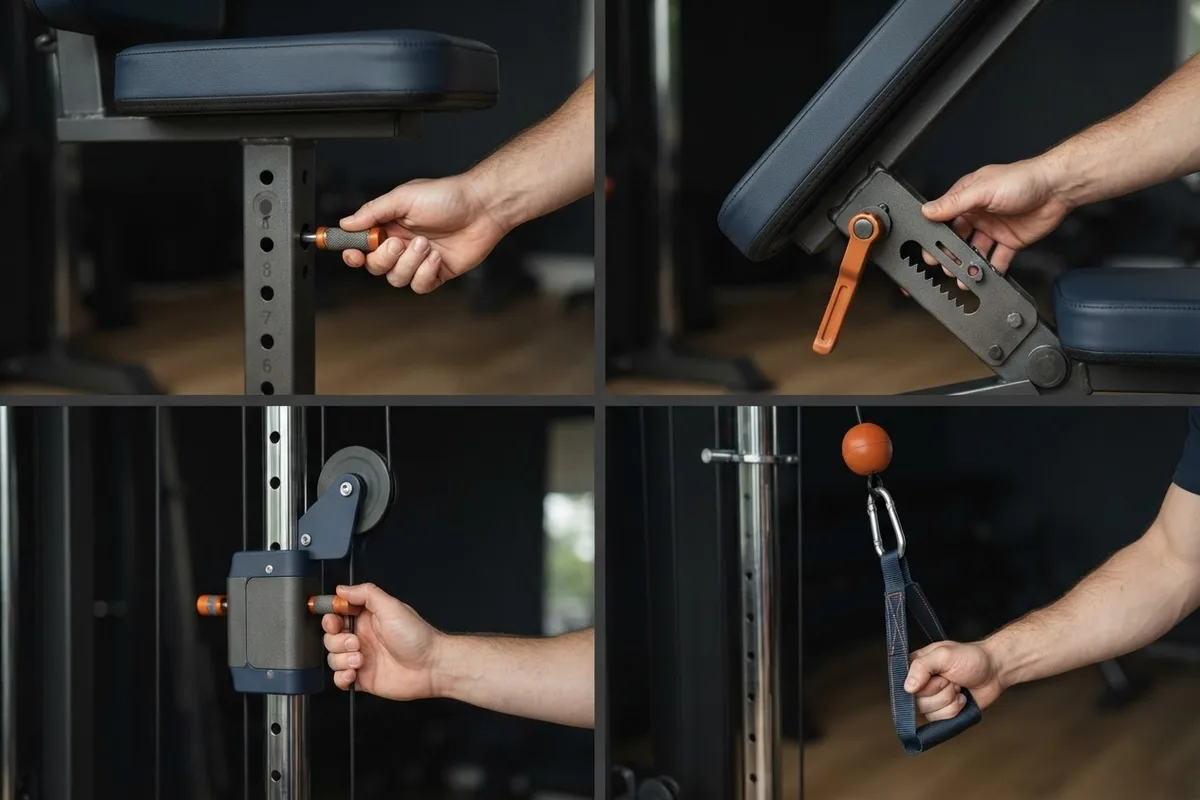
Seat height, back-pad position, start angle, roller position, handle reach, and foot placement affect whether a station fits the user. A machine that suits one person may place another person’s joints or body in an awkward position. Multi-user households should verify the full adjustment range and the time required to change settings.
Compare the stated user-height guidance and user-weight limit, then inspect the exercises most sensitive to fit. On a press station, check shoulder position and handle depth. On a leg developer, check whether the machine’s pivot aligns reasonably with the knee. On a lat pulldown, confirm overhead reach and thigh restraint. On low rows, verify foot support and full cable travel.
When a separate bench is required, include its dimensions and movement path. Compare compatible weight benches by pad height, adjustment angles, stability, capacity, and whether the bench can roll into every intended station without hitting the frame.
Measure Footprint, Ceiling Height, and Clearance
Record assembled width, depth, and height, but do not stop there. Add the space required for moving arms, extended cables, plate loading, pull-ups, bench positions, seat adjustments, and access to the selector pin. A machine that technically fits between two walls may still be unusable if you cannot reach a station or complete its movement path.
Use painter’s tape to mark the full operating footprint. Rehearse approaching each station, changing resistance, moving the bench, and exiting the room. Check ceiling height above pull-up handles and overhead cable positions. Confirm that doors, windows, vents, electrical panels, and storage remain accessible.
For a small dedicated room, compare compact all-in-one home gym options by operating dimensions rather than the frame alone. If the room must return to another use, folding gym equipment may provide greater flexibility than a permanently assembled multi-station frame.
Inspect Frame, Cables, Pulleys, and Moving Parts
Review the frame material, tubing dimensions, weld quality, fasteners, finish, feet, and contact points. The listed machine capacity should cover the intended user, resistance, plates, attachments, and exercise configuration. Verify which component each rating applies to; a frame rating does not automatically describe the capacity of the bench, cable, Smith bar, pull-up station, or storage pegs.
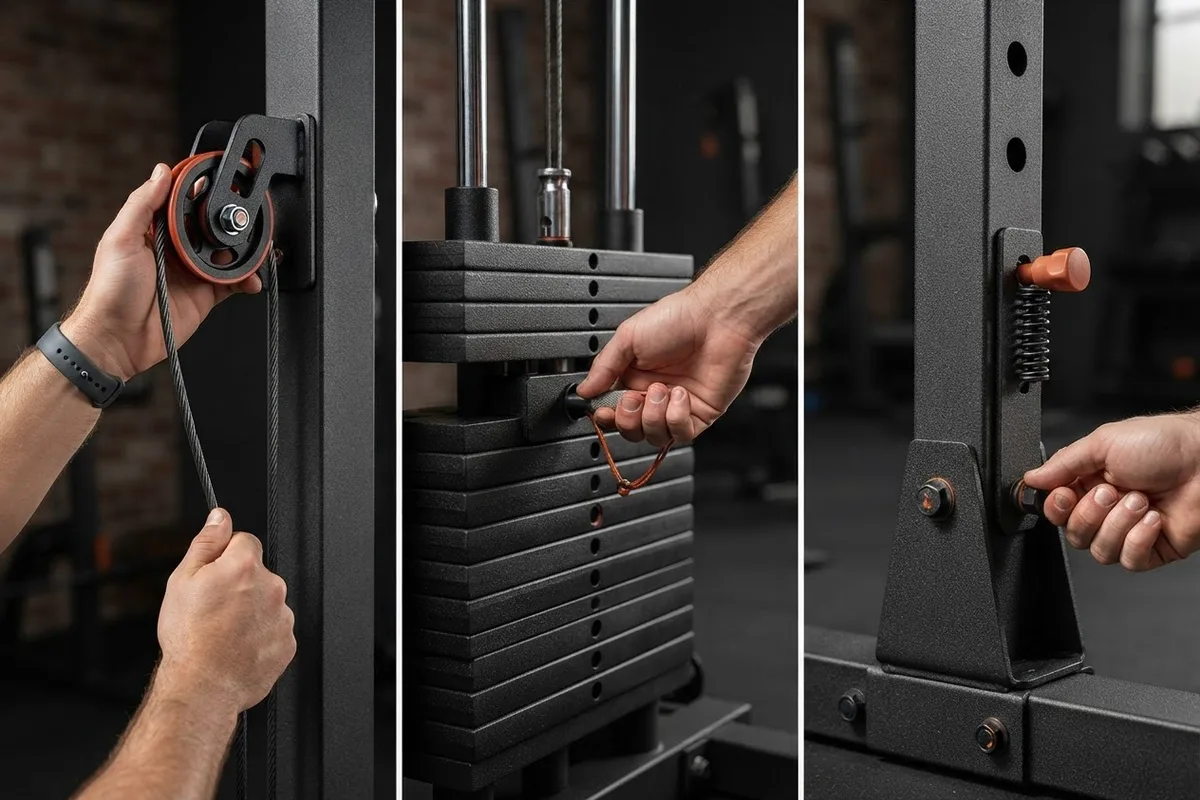
Cables should route cleanly through aligned pulleys without rubbing the frame. Inspect pulley material, bearings or bushings, cable coating, end fittings, and adjustment hardware. Smooth movement matters, but so does access for inspection and replacement. A complex cable path may require careful assembly and regular checks.
Test pins, pop-pins, catches, safety stops, hooks, and adjustment arms. They should engage positively without excessive play. Upholstery should be secure and appropriately positioned, while rollers and handles should rotate or remain fixed as intended. Replacement parts matter because cables, upholstery, grips, and pulleys are wear components.
Confirm Safety Requirements
Install the machine on a stable, level surface that can support the combined load of the frame, resistance, stored plates, attachments, and user. Protective flooring can improve traction and protect finishes, but it does not increase structural capacity. Seek qualified advice when floor capacity or anchoring suitability is uncertain.
Follow the manual for anchoring, leveling, cable tension, bolt tightening, guards, lubrication, and inspection intervals. Never improvise safety hardware. Keep children and pets away from weight stacks, cables, selector pins, plates, and moving arms. Maintain a clear exit and do not store accessories where they can enter a cable path.
Before every session, check that the selector pin, safety stops, bench locks, adjustment pins, attachments, and collars are fully engaged. Stop using the machine if a cable is frayed, a pulley is damaged, a fastener is loose, or a moving part does not track normally.
Plan Delivery and Assembly Before Ordering
All-in-one systems may arrive in several heavy boxes. Compare package count, largest package dimensions, individual package weights, delivery type, and whether the carrier brings items inside. Measure gates, hallways, elevators, stairs, landings, turns, and the final doorway before ordering.
Assembly complexity varies widely. Cable routing, pulley orientation, hardware sequence, frame alignment, and bolt tightening can affect operation. Read the manual in advance when possible, identify required tools, estimate the number of people needed, and determine whether professional assembly is available.
Choose the final location before major assembly. A completed machine may be too large or heavy to move through a doorway. Leave enough access for final leveling, bolt inspection, cable adjustment, cleaning, and future part replacement.
Calculate Total Ownership Cost
The listed price is only one part of the all-in-one home gym cost. Add delivery, inside placement, assembly, flooring, compatible plates, a bench, attachments, storage, maintenance supplies, replacement wear parts, and any required structural work. For a plate-loaded machine, calculate enough plates for simultaneous stations or balanced loading where the design requires it.
Compare value by useful capability rather than advertised exercise count. A machine that performs twenty movements well may be more valuable than one claiming a much larger list with awkward setup or limited resistance. Also consider whether a future upgrade can be added or whether the entire system would need replacement.
Review the warranty by component. Frame, cables, pulleys, upholstery, electronics, and labor may have different coverage periods and exclusions. Confirm whether home use, commercial use, improper assembly, outdoor storage, or dropped weights affect coverage. Keep order records, model information, and assembly documentation.
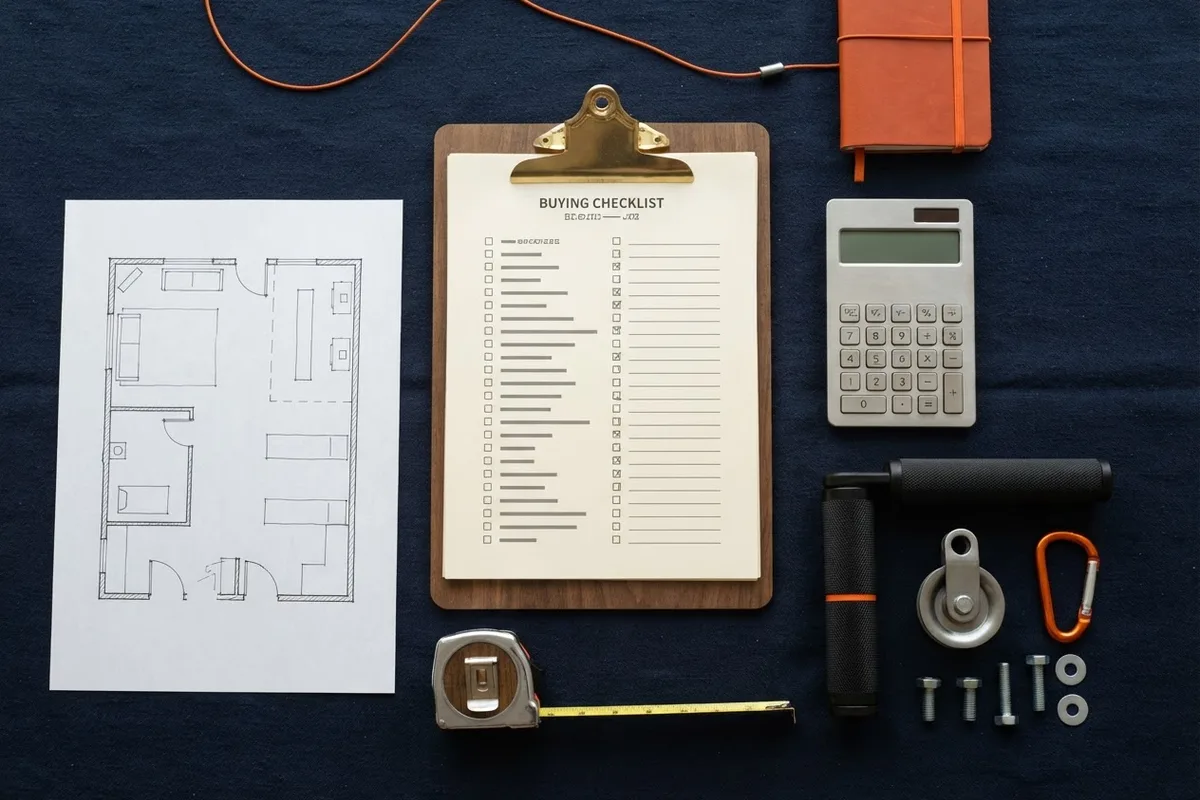
All-in-One Home Gym Buying Checklist
- List the essential exercises in your weekly program.
- Choose the resistance system that suits your workout pace.
- Check effective resistance at every important station.
- Compare minimum load, increments, maximum load, and cable travel.
- Verify seat, pad, handle, pulley, and safety-stop adjustments.
- Confirm fit for the shortest, tallest, lightest, and heaviest user.
- Measure assembled dimensions and the complete operating footprint.
- Include ceiling height, door swing, cable extension, and loading space.
- Check frame, station, bench, storage, and attachment capacities separately.
- Review anchoring, flooring, inspection, and maintenance requirements.
- Measure the delivery route and inspect the assembly manual.
- Calculate delivery, setup, accessories, plates, and ownership costs.
- Review return shipping, parts availability, and warranty exclusions.
- Confirm the exact model, included attachments, and selected variation.
Common Buying Mistakes
Choosing by Exercise Count
Many listed exercises are variations of the same station. Judge whether the machine performs your essential movements comfortably and at useful resistance levels.
Confusing Stack Weight With Handle Load
Pulley ratio and station geometry can change effective resistance. Use station-specific information rather than assuming the stack label tells the whole story.
Measuring Only the Frame
Operating space includes cables, arms, benches, attachments, plate loading, pull-ups, adjustments, your body, and a clear route around the machine.
Ignoring User Fit
A broad adjustment list does not guarantee good alignment. Check the actual positions used by every person who will train on the system.
Underestimating Assembly
Incorrect cable routing or hardware sequence can affect operation and safety. Review the manual, tools, helpers, and final location in advance.
Forgetting Long-Term Costs
Plates, accessories, flooring, setup, replacement cables, upholstery, and moving expenses can materially change the value of the purchase.
Frequently Asked Questions
Is an all-in-one home gym worth it?
It can be worthwhile when its core stations match your program, its resistance and adjustment ranges fit the users, and its full operating footprint fits the room. It is less compelling when you would use only one station or prefer training that the fixed frame cannot support well.
What exercises should an all-in-one home gym include?
There is no universal list. Prioritize the pushing, pulling, leg, and cable movements in your weekly program. Common useful stations include a chest press, high pulley, low pulley, adjustable cable, row position, and lower-body attachment, but execution quality matters more than quantity.
How much resistance does a home gym need?
The required resistance depends on the exercise, user, repetition range, and progression plan. Compare effective resistance at each station, not only total stack or plate capacity, and leave practical room above current working loads.
What does a 2:1 pulley ratio mean?
In a simplified 2:1 system, the handle receives roughly half the selected stack load and gains more cable travel. Actual resistance can vary with routing, friction, attachments, and exercise geometry, so use the manufacturer’s station-specific information.
How much room should I leave around an all-in-one gym?
Add enough clearance for moving arms, extended cables, plate loading, bench positions, adjustments, pull-ups, your body, and a safe walkway. Mark the operating footprint on the floor and rehearse station changes before ordering.
Are selectorized or plate-loaded home gyms better?
Selectorized systems favor fast resistance changes and cleaner storage. Plate-loaded systems may offer expandable resistance and work well when compatible plates are already available. The better option depends on training pace, required load, space, and total cost.
Can one all-in-one home gym fit multiple users?
Yes, when the seat, pads, handles, pulleys, restraints, and start positions adjust across the required body sizes. Check the user-height guidance, user-weight limit, and time needed to reset each station.
Final Recommendation
Choose an all-in-one home gym by working backward from your program. Confirm the essential stations, effective resistance, increments, cable travel, user adjustments, and progression capacity. Then verify the complete operating footprint, delivery route, floor, assembly, safety requirements, warranty, and ownership cost.
The best system is not the machine with the largest frame or longest exercise list. It is the one that fits its users, performs the most important movements well, leaves safe room to train, and remains practical to maintain over time.
Compare All-in-One Home Gym Options
Evaluate resistance, exercise stations, dimensions, user fit, construction, and total cost before choosing a permanent centerpiece for your home gym.
Explore All-in-One Home Gyms →
Pingback: All-in-One Home Gym Vs. Free Weights: Which Is Better?