

How to Choose Home Gym Equipment for Your Space and Budget
Build a useful home gym by matching every purchase to your training goals, available floor space, total budget, and realistic upgrade plan.
Learning how to choose home gym equipment starts with three limits: what you want to train, where you can train, and what you can comfortably spend. The best setup is not the room with the most machines. It is the one that supports your weekly routine without blocking doors, crowding movement, damaging the floor, or consuming money that should have gone toward more useful equipment.
This guide gives you a practical planning process. You will measure the room, establish a complete budget, prioritize equipment by training value, compare compact and full-size options, account for safety and storage, and create an upgrade path that prevents expensive duplicate purchases.
Safety note: This article provides general educational guidance. Follow manufacturer instructions, observe stated clearances and weight limits, and consult a qualified professional when structural, electrical, medical, or exercise-safety concerns apply.
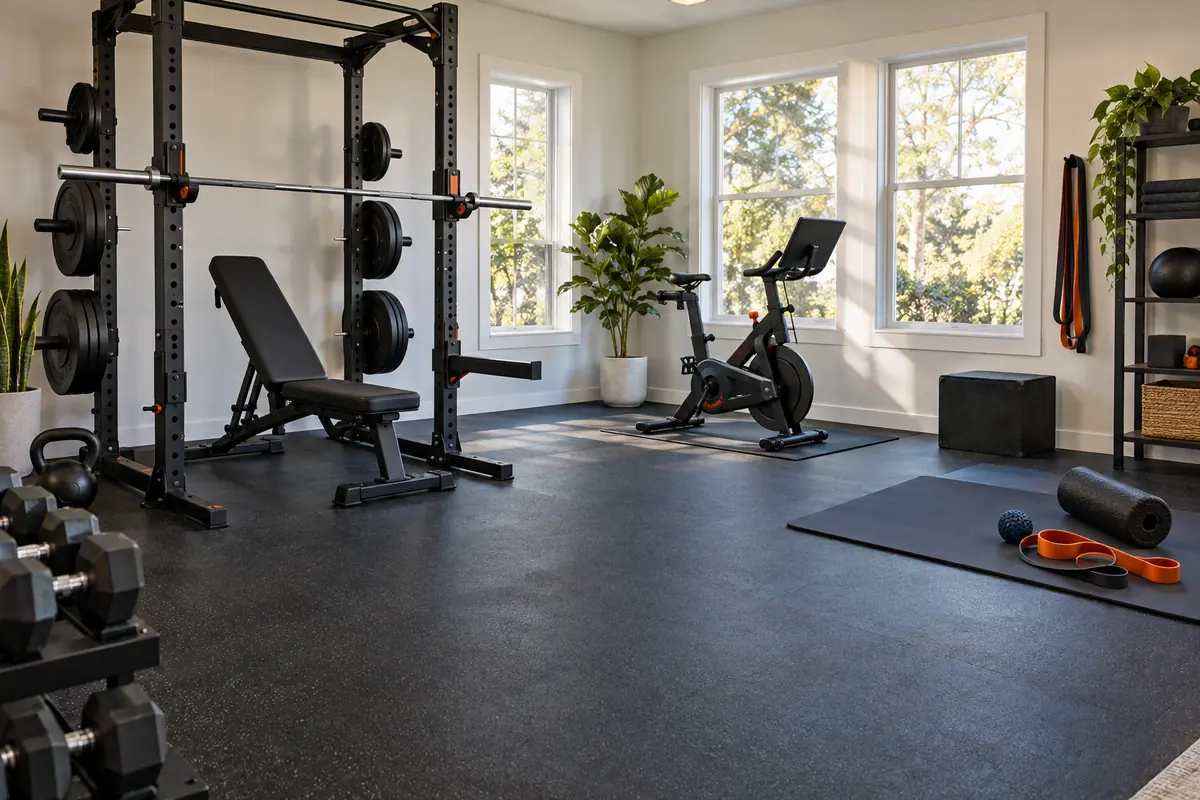
Measure usable space
Plan for the equipment footprint, your body, moving parts, loading access, and safe circulation.
Budget for the full setup
Include delivery, flooring, storage, attachments, maintenance, and likely upgrades—not only the machine price.
Buy for your program
Choose equipment that supports the exercises you will repeat, rather than products that merely look impressive.
Define Your Training Goals First
Write down the type of training you expect to complete during a normal week. Strength, muscle building, general fitness, low-impact cardio, interval training, mobility, and sports conditioning require different tools. A power rack may be central to a barbell program but unnecessary for someone who prefers dumbbell circuits and indoor cycling.
Next, list the exercises that appear most often. Separate them into must-have movements and optional variety. This prevents a common mistake: buying a specialized machine for one exercise while leaving no budget or room for equipment that supports the rest of the program.
Strength and Muscle
Prioritize scalable resistance, a stable bench or rack when required, appropriate plates or dumbbells, and enough load capacity for progression.
Cardio and Endurance
Prioritize a modality you enjoy, suitable impact level, convenient controls, ventilation, electrical access, and a footprint you can live with.
General Fitness
Choose versatile tools that cover pushing, pulling, squatting, hinging, carrying, core work, and conditioning without excessive duplication.
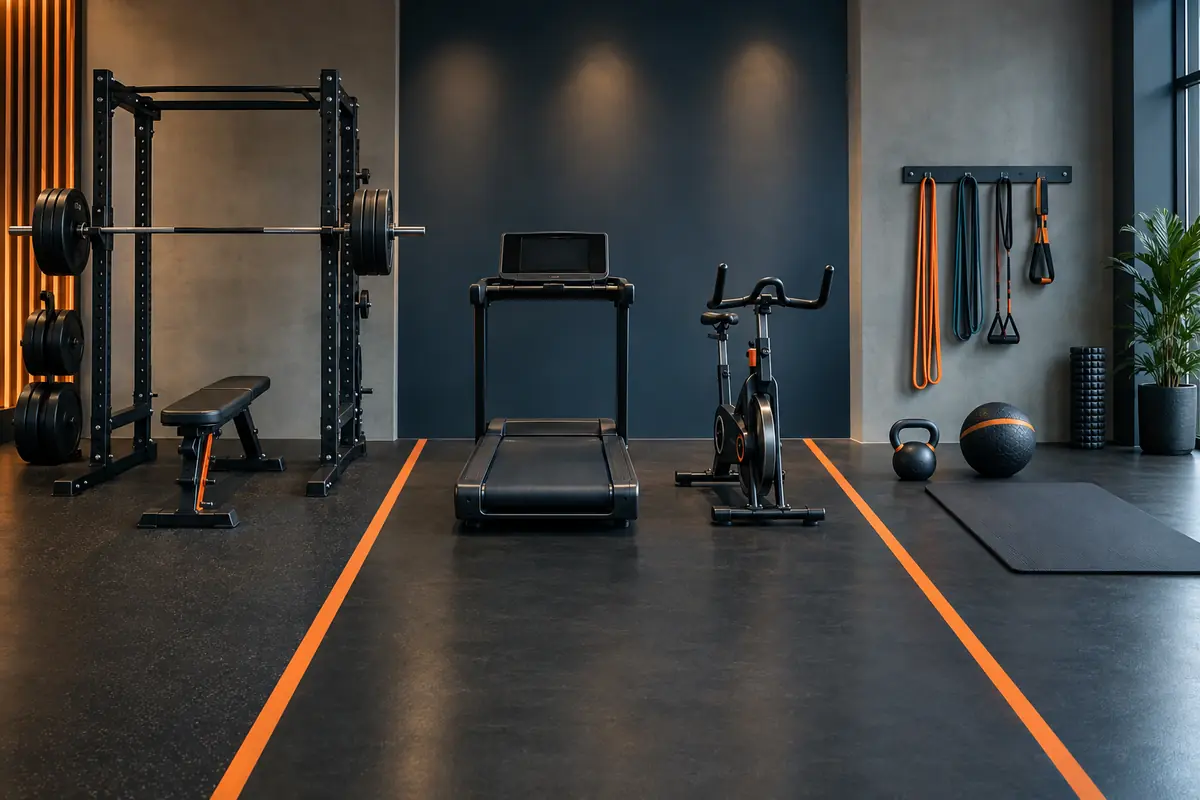
Measure the Entire Training Space
Measure wall-to-wall length and width, but do not treat the resulting square footage as fully usable. Mark doors, windows, vents, radiators, outlets, columns, stairs, low ceilings, sloped walls, and storage that must remain accessible. Then record the smallest ceiling height—not only the highest point in the room.
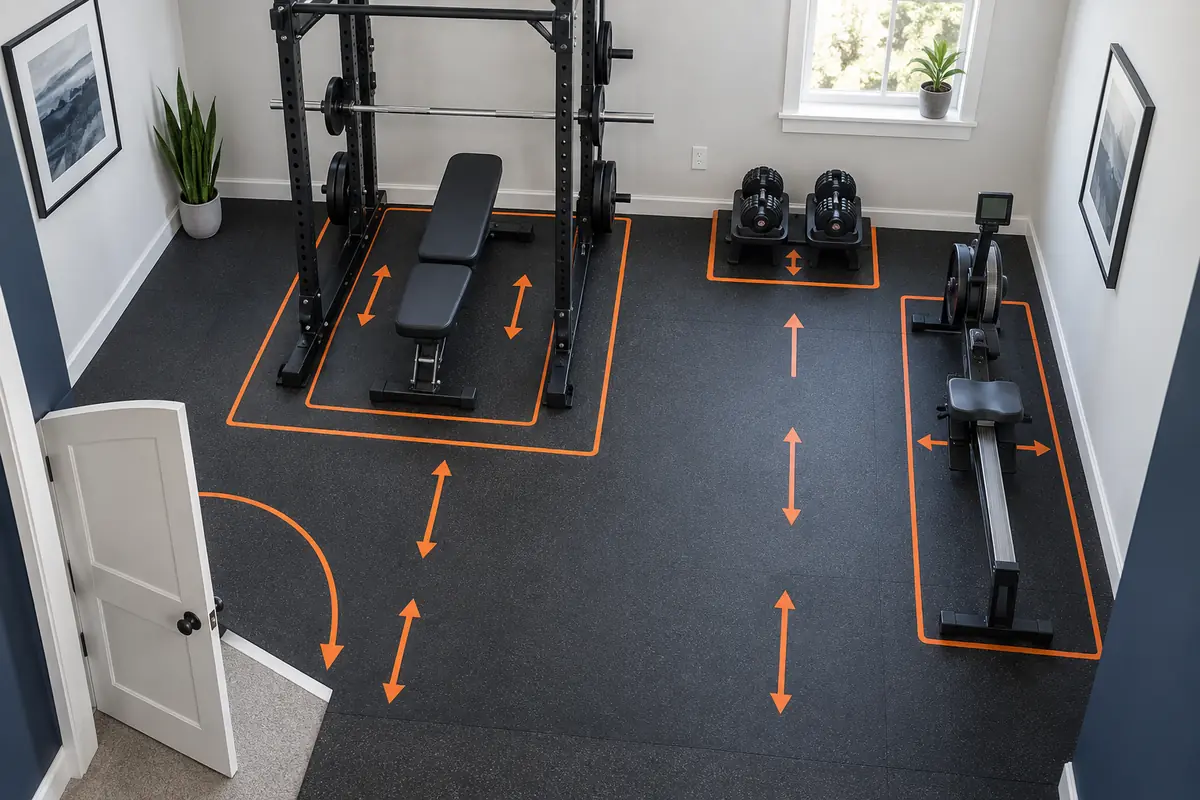
Every item needs more room than its listed footprint. A treadmill belt extends behind the console, a rower requires length during the stroke, a bench needs clearance on both sides, and a plate-loaded rack needs access for changing plates. Add your body position, the path of each moving part, and a clear route for entering and leaving the room.
For home gym equipment for small spaces, use painter’s tape to outline each proposed footprint on the floor. Rehearse picking up weights, adjusting a bench, completing a lunge, and moving around the equipment before ordering anything.
Set a Complete Home Gym Budget
A realistic home gym equipment budget includes more than the headline price. Add taxes, delivery, assembly, floor protection, storage, collars, attachments, compatible plates, electrical work when necessary, and replacement wear parts. Heavy equipment may also create return-shipping costs if it does not fit or arrives in a configuration you cannot use.
Separate the budget into three categories: equipment required to begin training, supporting items required for safe and convenient use, and future upgrades. Protect the first two categories before spending on optional accessories. A modest setup with a complete exercise plan usually provides more value than one premium machine surrounded by missing basics.
| Planning range | Best approach | Typical priorities | Watch for |
|---|---|---|---|
| Under $500 | Build a versatile starter setup | Adjustable resistance, mat, bands, basic storage | Cheap duplication and low capacity |
| $500–$1,500 | Create a focused strength or cardio gym | Quality bench and weights, or one reliable cardio machine | Delivery, flooring, stand, and plate costs |
| $1,500–$3,000 | Combine broader strength and conditioning | Rack or compact gym, weights, bench, flooring, cardio option | Room clearance and equipment overlap |
| $3,000+ | Invest in durable long-term equipment | Higher capacity, better adjustability, storage, multiple training zones | Buying premium features you will not use |
These are planning ranges, not product-price guarantees. Prices, delivery charges, bundles, and availability change over time.
Prioritize Equipment by Training Value
Rank each item by the number of planned exercises it supports, how frequently you will use it, how well it scales, and how difficult it would be to replace. Multi-use equipment deserves priority. Specialized accessories should wait until your routine demonstrates a genuine need.
- Foundation: Clear training area, suitable floor protection, ventilation, lighting, and safe access.
- Primary resistance or cardio: The central tool required by your main weekly program.
- Support equipment: Bench, rack, stand, plates, collars, or storage needed to use the primary tool correctly.
- Versatility: Low-footprint additions that fill movement gaps without duplicating existing functions.
- Specialization: Attachments and single-purpose equipment justified by consistent use.
Compact tools can deliver excellent variety. A pair of adjustable dumbbells, a stable adjustable bench, and resistance bands can support many full-body exercises while leaving room to move.
Match Equipment to the Room Size
| Available area | Practical equipment direction | Storage strategy | Main constraint |
|---|---|---|---|
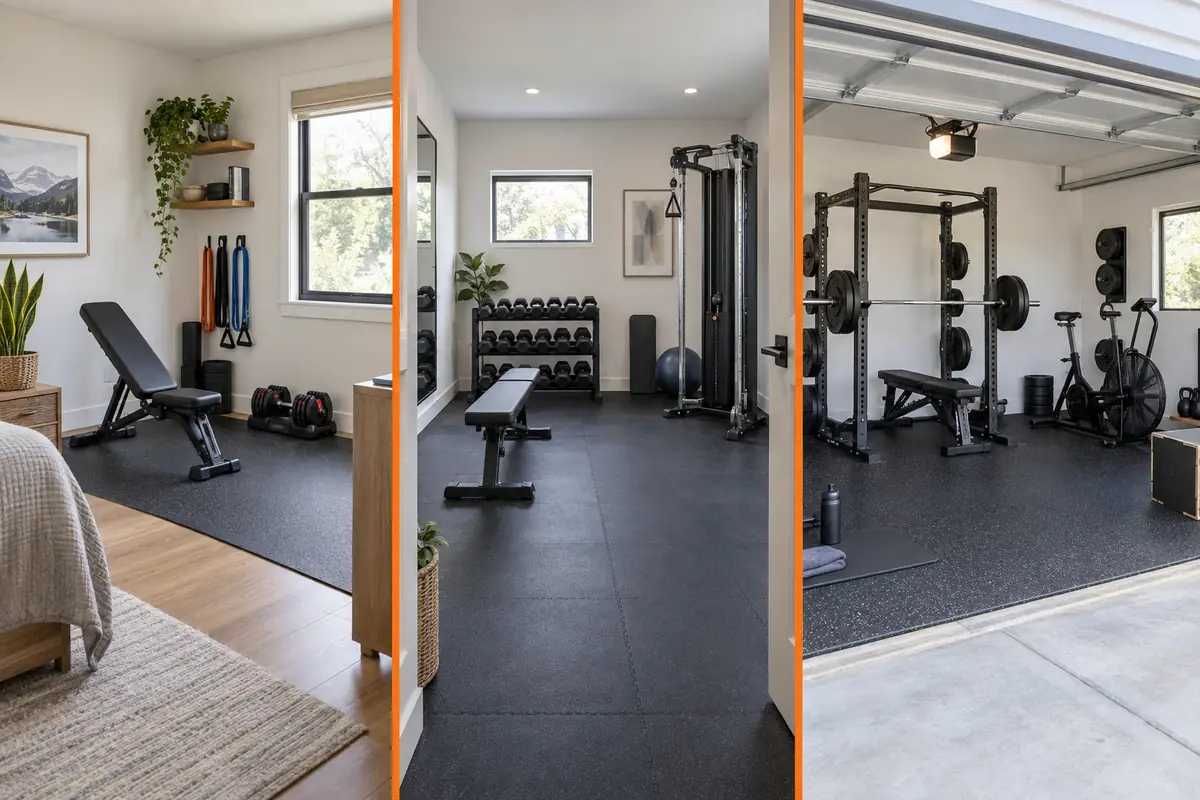
| Shared room or training corner | Adjustable weights, bands, compact bench, jump rope where appropriate | Vertical stand, wall-safe hooks, under-bench storage | Everything must reset quickly after use |
| Small dedicated room | Foldable bench, dumbbells, compact cable or cardio option | One wall reserved for storage and charging | Door swing and exercise clearance |
| Single-car garage area | Rack or all-in-one system, barbell, plates, bench, conditioning tool | Wall or rack-mounted plate and bar storage | Floor slope, temperature, moisture, and parking needs |
| Large basement or garage | Separate strength, cardio, and mobility zones | Dedicated racks and clear walkways | Ceiling height, power, ventilation, and total cost |
If the room must serve another purpose, consider folding gym equipment. Check both folded and operating dimensions, the effort required to deploy it, and whether folding truly clears useful floor space. Equipment that is inconvenient to unfold may be used less often.
Choose Strength Equipment That Can Grow With You
For strength training, begin with the required movement patterns and likely load progression. Compare minimum and maximum resistance, adjustment steps, stability, dimensions, warranty terms, and compatible upgrades. A high stated capacity has little value when the equipment cannot be positioned comfortably in your room or adjusted efficiently during your program.
A bench expands exercise options, but it needs the correct back-pad positions, stability, user capacity, and floor clearance. Review weight benches together with the weights or rack you intend to use; products that work separately can still create awkward alignment when combined.
Before choosing a rack, cable machine, Smith machine, or all-in-one system, measure the assembled height and width plus the space required for plates, pulleys, safety arms, benches, attachments, and overhead movements. Confirm that every intended accessory is compatible with the exact model and version.
Select Cardio Equipment You Will Actually Use
The most useful cardio equipment matches your preferred movement, available space, impact tolerance, noise limits, and maintenance expectations. Treadmills need belt clearance and a suitable outlet. Rowers require significant operating length. Bikes are often compact, but handlebar and seat adjustment must fit every intended user.
Test the basic experience when possible: mounting and dismounting, control placement, stride or pedal feel, resistance changes, noise, display readability, and emergency-stop access. Subscription features can be useful, but evaluate the machine’s core operation without assuming you will maintain a paid membership indefinitely.
For an apartment or upstairs room, consider vibration and sound transmission to adjacent spaces. A quieter machine on protective flooring may be more practical than a higher-performance model that you cannot use at the times you prefer.
Plan Flooring and Storage Before Delivery
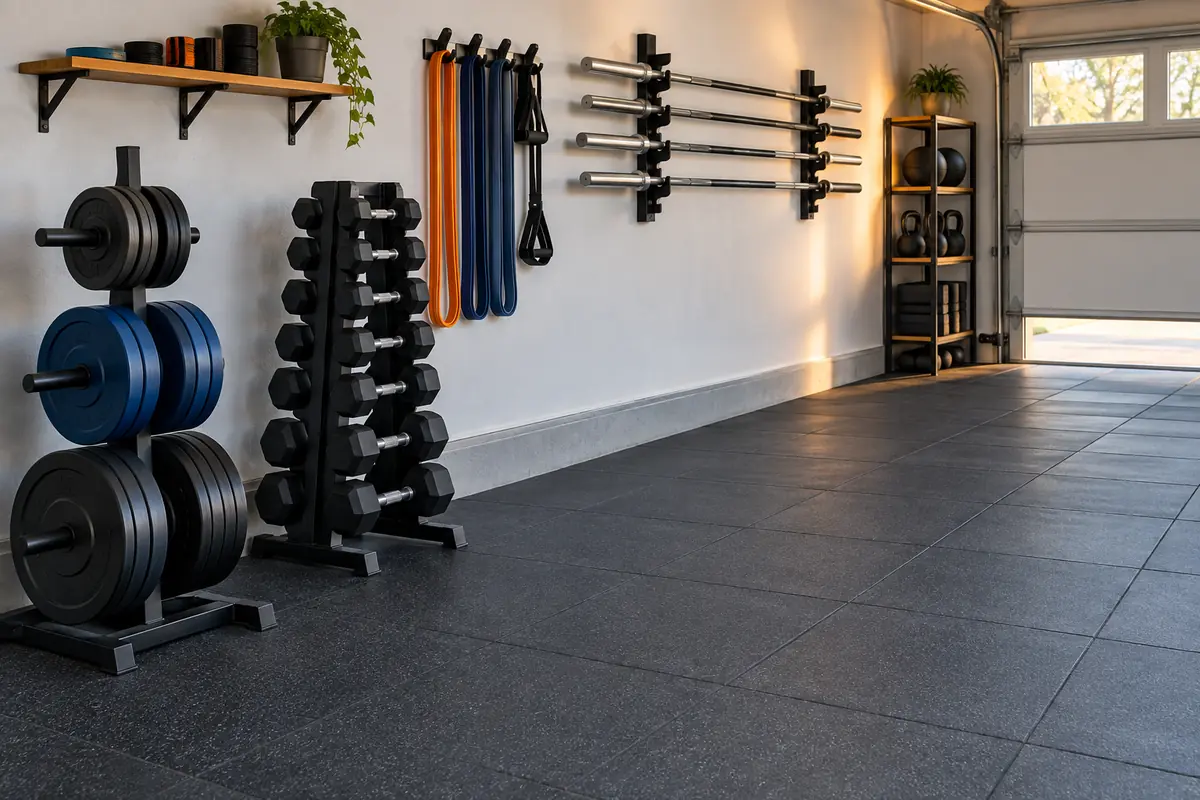
Floor protection should suit the equipment, room, and training style. gym mats can reduce direct contact, improve traction, and help manage vibration, but they do not increase the structural capacity of the floor. Check material compatibility with finished flooring and avoid trapping moisture underneath.
Good home gym storage keeps heavy items low, frequently used equipment accessible, and walkways clear. Confirm the rack or stand’s rated capacity and loaded dimensions. Avoid shelves or hooks that place weights where they can fall, roll, or interfere with doors and emergency access.
Plan the delivery route as carefully as the final location. Measure gates, hallways, turns, stairs, elevators, and door openings. Compare the largest packaged component—not only the assembled footprint—and determine where packing material can be handled without obstructing the room.
Check Safety, Structure, Power, and Setup
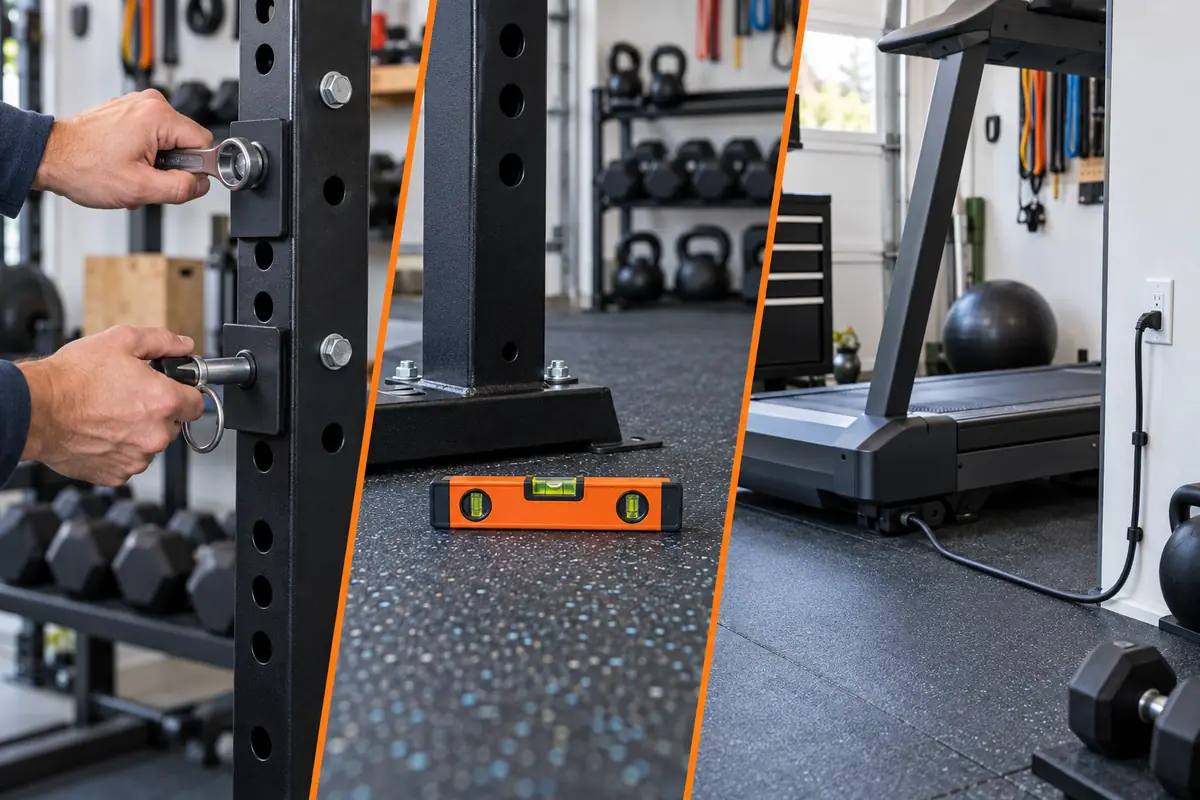
Heavy equipment must stand on a stable, level surface. Confirm the floor can support the equipment, stored weights, user, and dynamic activity. When structural capacity is uncertain—particularly in upstairs rooms—seek qualified advice instead of estimating from the equipment footprint alone.
Follow instructions for assembly, anchoring, leveling, inspection, lubrication, and replacement parts. Do not assume a wall-mounted or freestanding unit is safe without the specified hardware and surface. Maintain clear access to exits, electrical panels, and ventilation.
Motorized equipment should use the electrical arrangement specified by its manufacturer. Avoid improvised extension setups, protect cords from weights and foot traffic, and position emergency stops where they remain reachable. Allow ventilation around motors and electronics.
Buy in Stages Instead of Filling the Room at Once
Begin with the smallest complete setup that supports a repeatable program. Train with it long enough to discover real limitations. Your next purchase should solve a specific problem: insufficient resistance, a missing movement, slow adjustment, poor storage, inadequate conditioning, or the need for safer support.
- Prepare the room, floor, lighting, ventilation, outlets, and delivery route.
- Buy the primary equipment needed for your main training goal.
- Add required support equipment and secure storage.
- Track usage and identify the most important limitation.
- Upgrade only when the new item solves that demonstrated limitation.
This staged approach preserves space and reduces duplicate purchases. It also gives you better information: after several weeks of consistent training, you will know which exercises, loads, adjustments, and convenience features matter in your actual routine.
Home Gym Equipment Buying Checklist
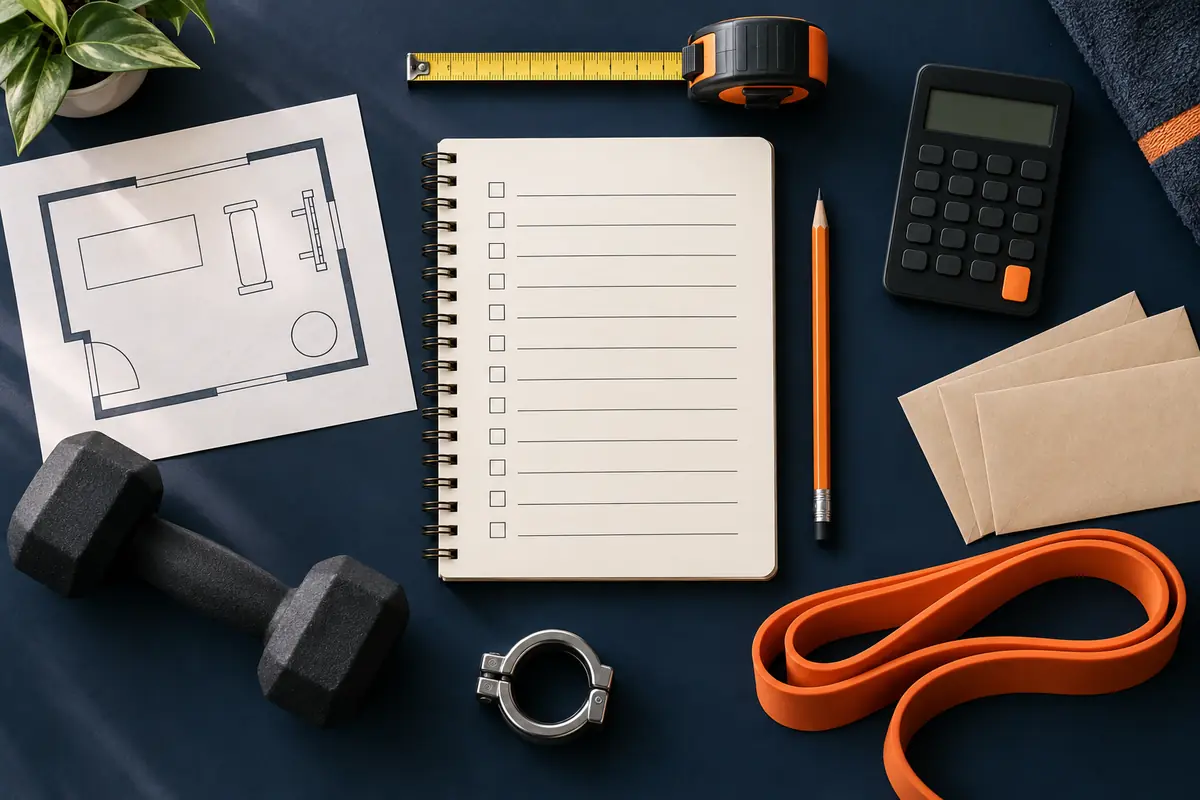
- List weekly training goals and must-have exercises.
- Measure floor area, ceiling height, doors, windows, and outlets.
- Add operating, loading, adjustment, and walking clearances.
- Outline proposed equipment positions before ordering.
- Set separate budgets for essentials, support items, and upgrades.
- Include delivery, assembly, flooring, storage, and maintenance costs.
- Check user fit, adjustment range, stability, and weight capacity.
- Confirm model-specific attachments and future expansion options.
- Review warranty exclusions, return costs, and package dimensions.
- Verify floor, anchoring, power, ventilation, and safety requirements.
- Keep exits, panels, doors, and traffic routes unobstructed.
- Buy in stages and upgrade from demonstrated training needs.
Common Home Gym Buying Mistakes
Measuring Only the Product
The listed footprint does not include your body, moving parts, plate loading, bench positions, or a safe route around the equipment.
Spending the Entire Budget on One Item
Delivery, flooring, storage, supporting equipment, and accessories can make an incomplete setup significantly more expensive.
Buying for an Imagined Routine
Choose equipment for exercises you intend to repeat each week. Novelty features do not compensate for poor fit with your actual program.
Ignoring the Upgrade Path
Incompatible plates, proprietary attachments, limited resistance, or unavailable expansion kits may force replacement instead of expansion.
Overlooking Noise and Neighbors
Motors, impact, vibration, dropped weights, and equipment movement can make an otherwise suitable setup impractical in a shared building.
Filling Every Empty Corner
A useful gym needs open floor area. Preserve space for setup, body movement, mobility work, cleaning, maintenance, and future changes.
Frequently Asked Questions
What equipment should I buy first for a home gym?
Buy the smallest complete group of equipment that supports your main weekly program. For many strength-focused users, this may be adjustable resistance plus a stable bench and suitable floor protection. Your first purchase should follow your chosen exercises rather than a universal list.
How much should I budget for a home gym?
The answer depends on training goals, available space, required capacity, and whether you buy new or used. Set a total budget that includes equipment, delivery, flooring, storage, assembly, attachments, and likely maintenance. A focused starter gym can be more effective than a larger but incomplete setup.
How do I plan a home gym in a small room?
Measure permanent obstacles and operating clearances, then outline each footprint on the floor. Favor adjustable, vertical, wall-safe, or foldable solutions, but preserve an open movement zone. Check the equipment in both stored and operating positions.
Is an all-in-one home gym worth it?
It can be worthwhile when its exercise stations match your program, its resistance and user adjustments are suitable, and the complete operating footprint fits your room. Compare it with a modular setup that may offer easier upgrades or more open floor space.
Should I buy strength or cardio equipment first?
Choose the category most central to the routine you will perform consistently. You can cover the other category with lower-cost or outdoor options at first, then add equipment after confirming the need and available space.
Can I put heavy gym equipment upstairs?
Do not assume that it is safe based only on equipment size. The relevant load includes the equipment, stored weights, user, and dynamic activity. When the floor’s structural capacity is uncertain, obtain qualified advice before installation.
Is used home gym equipment a good way to save money?
Used equipment can reduce cost when you can verify the exact model, condition, completeness, adjustment function, safety components, recall status, and transport requirements. Replacement parts and remaining warranty coverage may be limited.
Final Recommendation
Start with your program, not a shopping list. Measure the room’s usable training area, set a complete budget, and rank equipment by frequency of use and exercise coverage. Confirm user fit, resistance or performance range, clearances, delivery access, flooring, storage, safety requirements, and upgrade compatibility before purchasing.
The right home gym leaves enough open space to train comfortably and enough budget to complete the setup. Buy the essential foundation first, use it consistently, and let demonstrated needs—not empty floor space—determine each upgrade.
Plan a Home Gym That Fits Your Real Life
Compare equipment by training value, total footprint, safety requirements, and long-term cost before you commit your room and budget.
Explore Home Gym Equipment →
Pingback: How To Choose An All-in-One Home Gym | Gym Gear Pilot