

6 Best Foldable Home Gym Systems for Full-Body Workouts
Six different ways to train your whole body while reclaiming the room when the workout is over.
A foldable home gym earns its floor space twice: once during the workout and again when it folds away. The best choice depends on what folding means in your room. A functional trainer can close behind cabinet doors, a cable-equipped rack can fold against a wall, and a barbell rack can swing or lift toward the wall. Each supports a different kind of full-body training and requires a different amount of installation and accessory storage.
Quick Picks by Training Style
Best freestanding cable gym
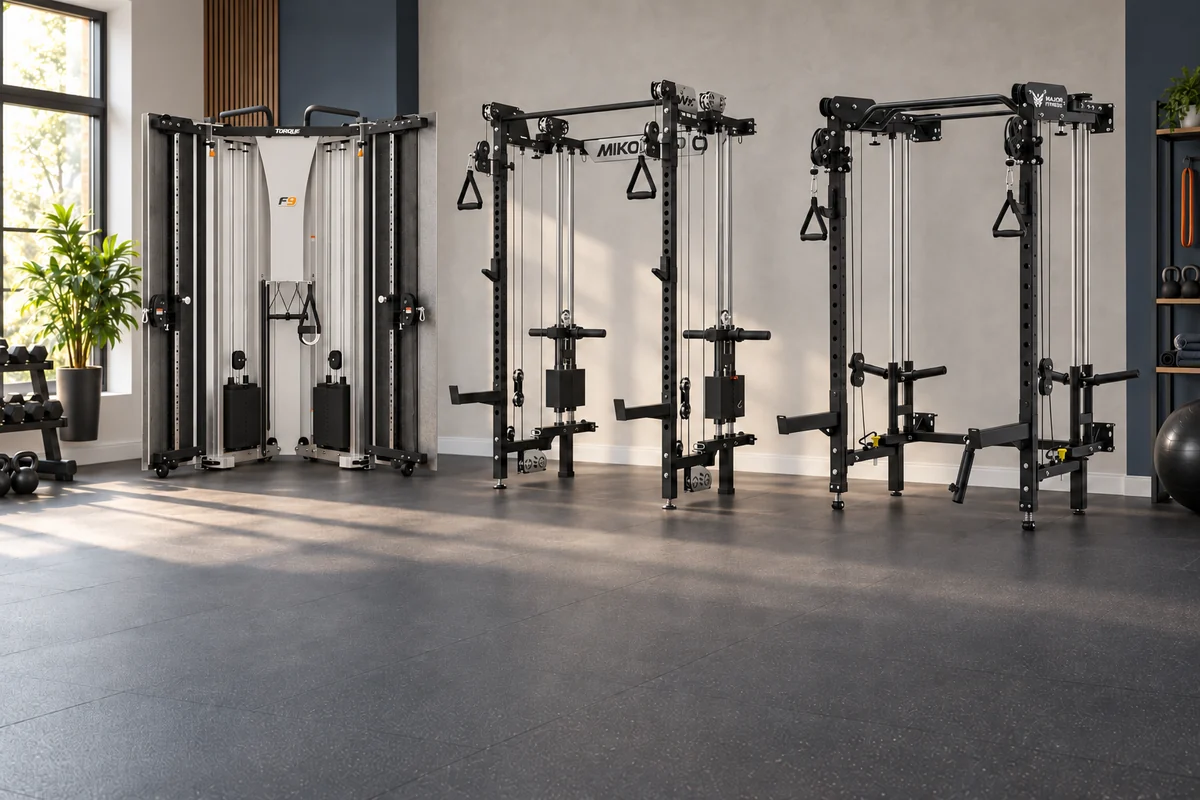
Torque Free-Standing F9: dual cable stacks and pull-up bar behind fold-away cabinet doors; check its substantial weight and open footprint.
Best cable-and-rack combination
MIKOLO CHEETAH 2.0 Elite: wall-mounted folding rack with dual cable stacks; check package availability and wall requirements.
Best plate-loaded cable rack
Major Fitness F35: folding power rack with dual cable pulleys that uses plates; budget for barbell and plates.
Best dedicated folding rack styles
PRx Profile PRO, REP PR-4100, and Rogue RML-3W: wall-mounted barbell stations with different folding mechanisms; each needs additional equipment for a rounded full-body program.
Browse foldable home gym systems by resistance style and stored shape, then choose the one that supports your main movements. A device that stores neatly but cannot provide your preferred leg, push, pull, and hinge exercises is a poor fit.
Six Foldable Systems Compared
| System | Folding / storage method | Resistance | For full-body training | Watch before buying |
|---|---|---|---|---|
| Torque Free-Standing F9 | Cable station closes behind fold-away cabinet doors | Dual selectable weight stacks | Cable push, pull, hinge and leg work; pull-up bar | Machine weight, door swing, exercise clearance |
| MIKOLO CHEETAH 2.0 Elite | Wall-mounted rack frame folds inward | Dual cable stacks, plus optional free weights | Cable crossover, rack lifts and pull-ups with appropriate gear | Wall mounting, variant and inventory, load per handle |
| Major Fitness F35 | Plate-loaded rack folds toward wall | Barbell and plate-loaded dual pulleys | Squat, bench, pull-up, row and cable work with gear | Wall, plates, full folded depth and package |
| PRx Profile PRO | Rack lifts toward wall | Barbell and plates bought separately | Squat, pull-up, press, row, and hinge with add-ons | Wall structure, ceiling, bar and plate storage |
| REP PR-4100 | Rack uprights fold against wall | Barbell and plates bought separately | Rack-based strength with bench and free weights | Stringers, fold direction, depth variant |
| Rogue RML-3W | Rack uprights fold back toward wall | Barbell and plates bought separately | Expandable barbell training and pull-ups | Wall mounting, optional stringers, accessories |
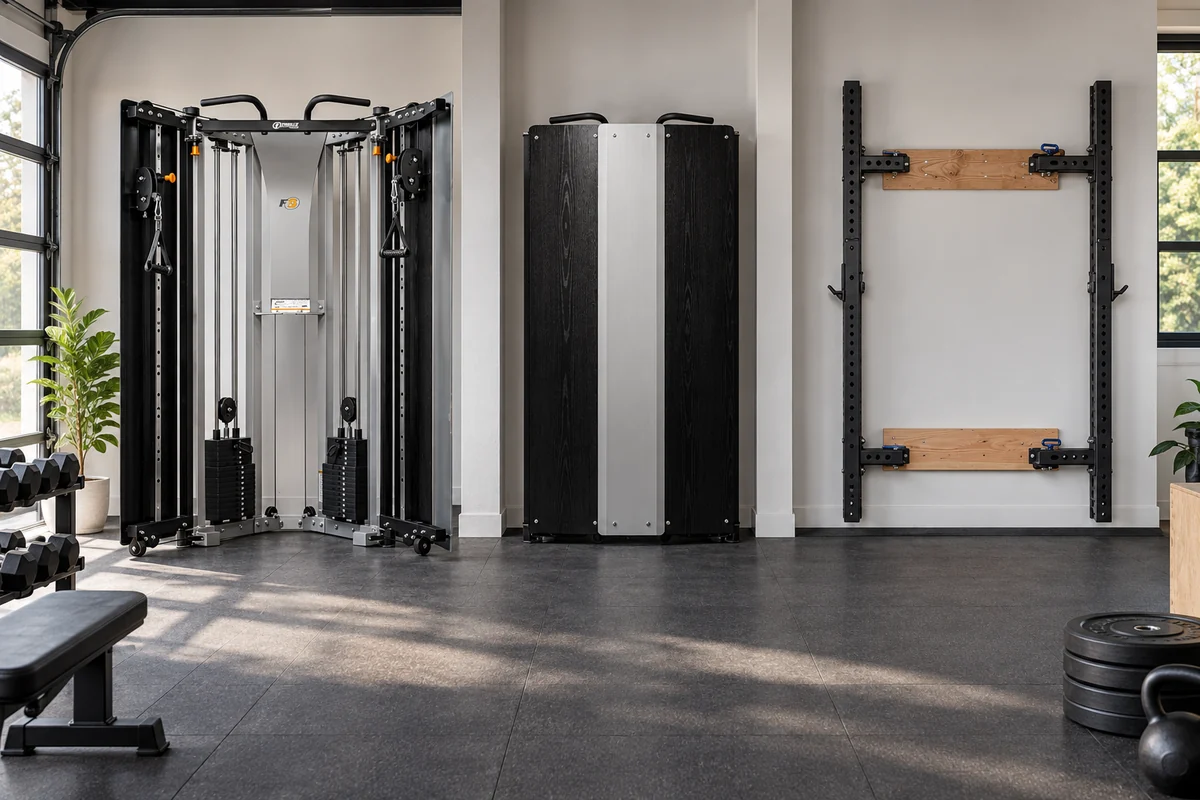
A folded rack frees the space occupied by the uprights, but it does not make a barbell, plates, or bench disappear. The Torque F9 closes around its cable station, yet the machine stays in place. If space is your first constraint, compare the complete operating zone with other compact home gyms before narrowing by brand.
How We Chose These Systems
We included products with a folding rack or enclosure that changes the stored footprint, and whose design can support a credible full-body routine with the stated accessories. We looked at manufacturer documentation, available exercise angles, resistance method, wall requirements, expected accessories and the difficulty of putting the equipment away after a session. The F9’s doors fold closed around a stationary machine; its stored floor footprint remains substantial.
Our “best” labels describe the user each design serves most clearly; they are not laboratory test results or a promise that one machine is superior for everyone. Brand claims about stack weight and barbell capacity are not directly comparable across different pulley ratios and rack configurations. Inventory, packages and terms change, so check manufacturer listings at purchase time.
1. Torque Free-Standing F9
Torque’s Free-Standing F9 brings dual adjustable cable pulleys, selectable weight stacks and a pull-up bar into one cabinet-style training station. Its doors fold shut after training, concealing the hardware in a shared room. Included handles, a straight bar and a squat harness make a credible cable-based full-body routine possible; an adjustable bench expands exercise options but is sold separately. The machine remains on the floor when closed, so its storage advantage is visual tidiness and reduced open width, not a disappearing footprint.
- Storage: fold-away doors close around a freestanding cable station.
- Exercise focus: adjustable cable pressing, pulling, squatting and pull-ups.
- Needs: open door and cable clearance; level floor; delivery plan.
- Best for: households seeking a weight-stack trainer that can close up neatly.
Trade-offs: Torque lists the closed cabinet at 34.9 × 44.6 × 83.8 inches and the open unit at 61.2 × 69.7 × 83.8 inches; the assembled machine weighs 610 pounds. The three advertised stack options have a 1:2 pulley ratio, so the weight selected on each stack is not the resistance at the handle. Verify your doorways, floor suitability and the current accessory package.
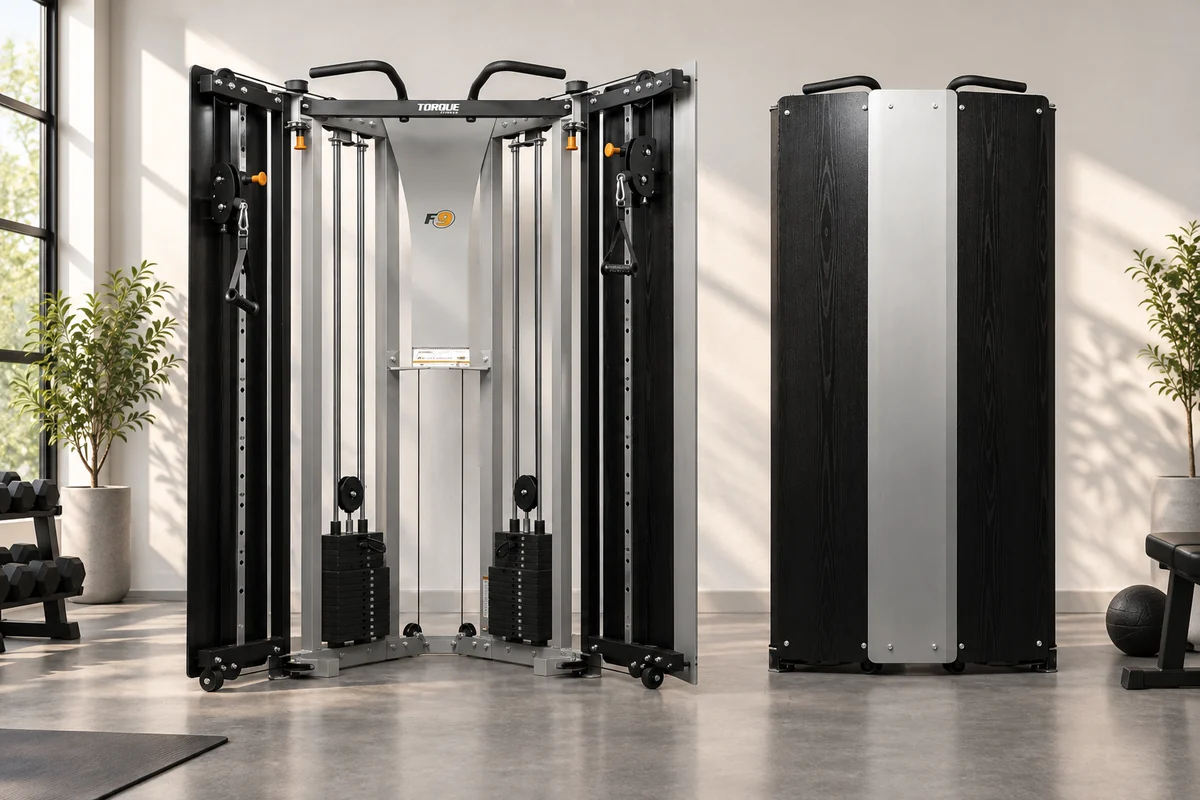
Product source: Torque Free-Standing F9 manufacturer page. Confirm stock, configuration and delivery for your address.
2. MIKOLO CHEETAH 2.0 Elite
The CHEETAH 2.0 Elite combines a folding wall-mounted power rack with two cable weight stacks. Adjustable pulleys, a pull-up station and space for barbell work give you more ways to cover push, pull, squat and hinge patterns in the same station. Unlike an ordinary fold-back rack, it supplies cable resistance without loading plates for every cable exercise. The bar, plates, bench and some pictured accessories may still be separate; inspect the exact package.
- Storage: rack folds toward the wall; the cable-stack assembly remains in place.
- Exercise focus: dual-cable work, pull-ups and barbell training with added gear.
- Needs: approved mounting wall and clearance for opening the rack.
- Best for: lifters who want cables and a fold-away rack together.
Trade-offs: MIKOLO publishes a 48.4 × 22.4-inch folded footprint and a 2:1 pulley ratio for the Elite variant. A 100-pound stack per side corresponds to a lower load at each handle, so compare actual handle resistance with your target exercises. The product page displays conflicting stock indicators; check the selected color, stack material and delivery availability before treating an offer as current.
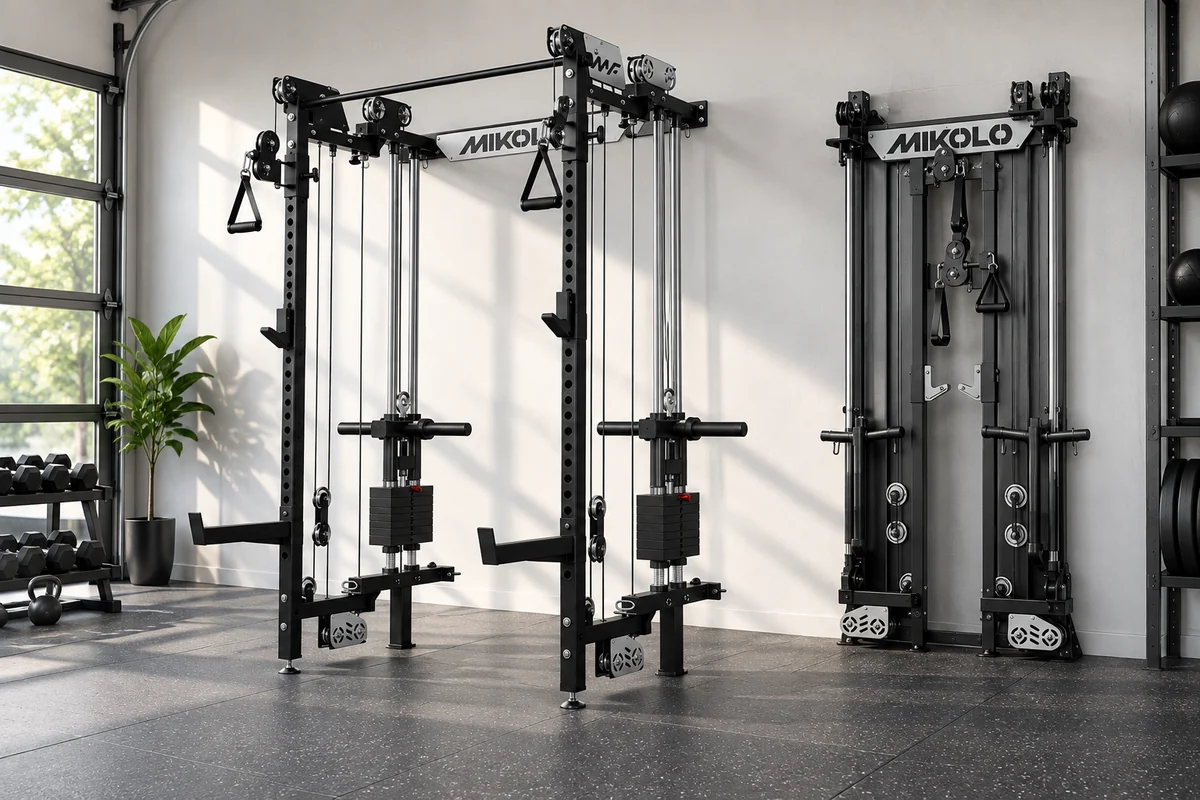
Product source: MIKOLO CHEETAH 2.0 Elite manufacturer page. Confirm the selected package and current stock.
3. Major Fitness F35
Major Fitness’s F35 folds a power rack toward the wall and integrates two independent plate-loaded cable pulleys. It can anchor barbell squats and presses while also adding rows, pulldowns and crossover work, assuming you purchase or already own suitable plates and a bar. Compared with a plain folding rack, the cable components broaden exercise variety, though the rack is still a permanent wall-mounted installation.
- Storage: uprights fold back while pulley hardware remains.
- Exercise focus: barbell lifts, pull-ups and plate-loaded cable work.
- Needs: approved wall and floor; barbell, plates and exercise clearance.
- Best for: garage lifters who want a folding rack with cables.
Trade-offs: the manufacturer lists a 22-inch folded depth, 54-inch width and 84.6-inch height for its published configuration. The dual cable system uses a 1:1 ratio, but you’ll still need to budget and store suitable plates. Confirm the actual package, mount hardware and compatibility before counting any bench or bar in the purchase.
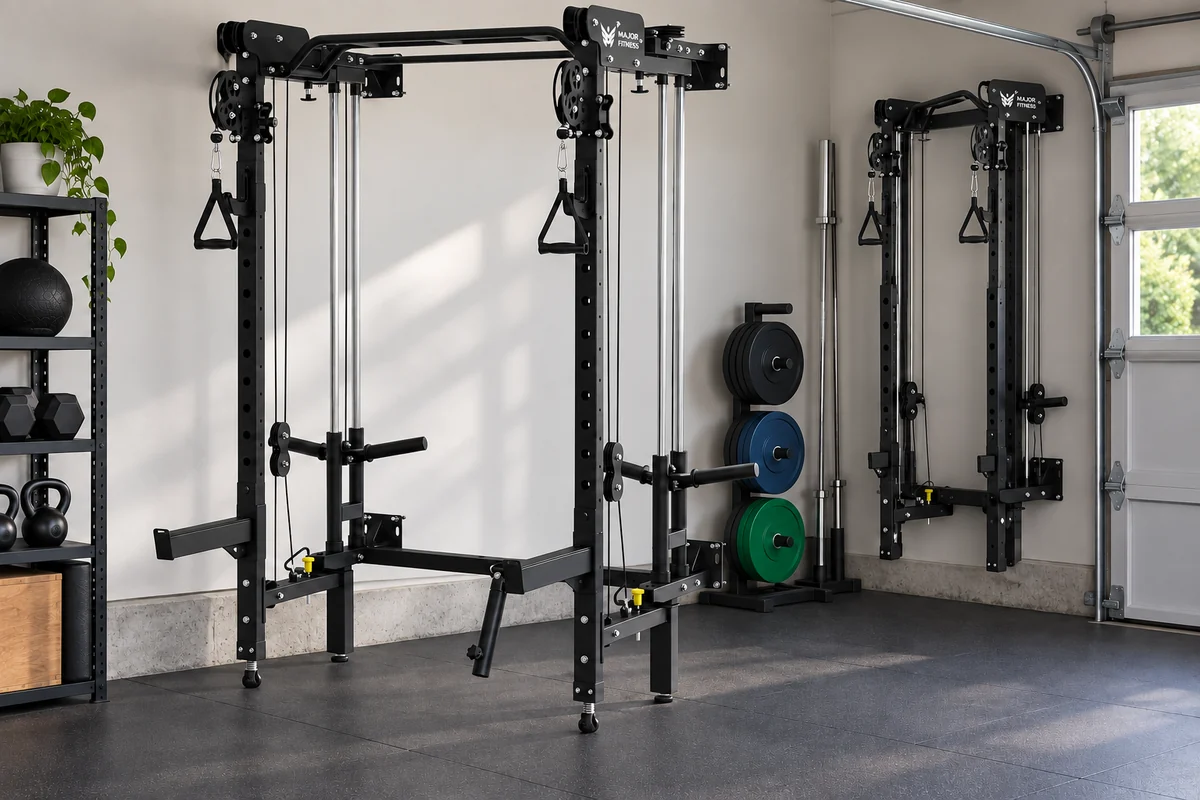
Product source: Major Fitness F35 manufacturer page. Confirm the package and mounting instructions.
4. PRx Profile PRO
PRx’s Profile PRO uses a wall-mounted rack that lifts upward with hydraulic assistance. It is a compelling setup when you want barbell squats, presses, pull-ups, and related free-weight work but need the floor back after training. The rack is a platform for a program, not an all-inclusive machine: plan for a barbell, plates, safeties where applicable, bench, floor protection, and storage.
- Storage: rack lifts against the wall rather than folding sideways.
- Exercise focus: free-weight and pull-up training with compatible accessories.
- Needs: approved wall, enough height for the fold-up path, bar/plate space.
- Best for: barbell-focused lifters with a suitable mounting wall.
Trade-offs: the upward folding path means ceiling height and wall hardware are central buying criteria. Confirm the correct height variant, installation instructions, rack depth, and compatible safeties for the specific package. A rack alone does not supply a full-body program until you include the right free weights and exercises.
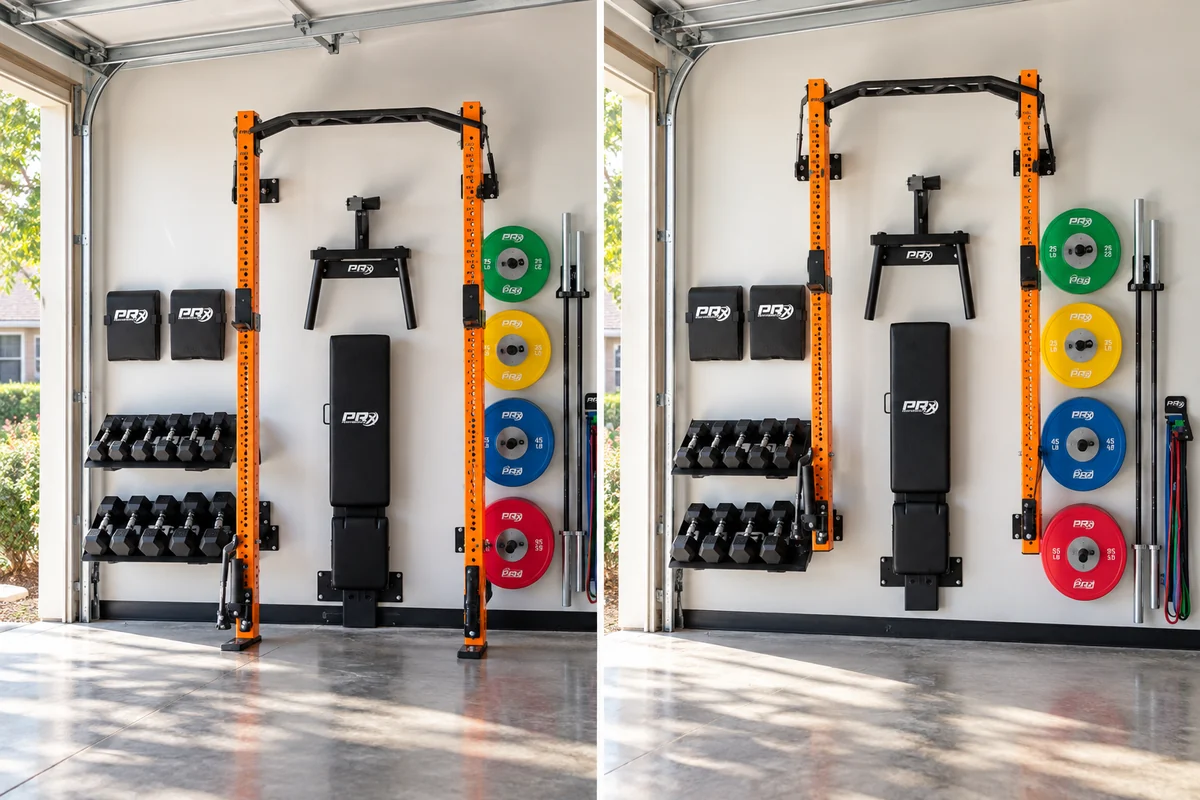
Product source: PRx Profile PRO manufacturer page. Verify the correct rack configuration and installation requirements.
5. REP PR-4100 Folding Wall-Mount Rack
The PR-4100 offers a familiar rack training station that can swing toward the wall after a session. REP sells different depths, and the two variants fold in different directions and leave different projections from the wall. This makes the product especially worth mapping with tape before ordering: choose the actual depth and hinge orientation, then test how your garage door, parked car, bench, and stored barbell will interact with it.
- Storage: wall-hinged uprights fold to suit the selected depth.
- Exercise focus: barbell squats, presses, pull-ups, and accessory work.
- Needs: approved mounting structure; REP notes stringers are separate.
- Best for: a garage or dedicated wall where a rack can be expanded.
Trade-offs: safe mounting is part of the project, and bars, plates, bench, and some attachments add to the cost. The manufacturer describes different folded profiles for the two sizes; compare the correct variant rather than assuming both lie equally flat against the wall.
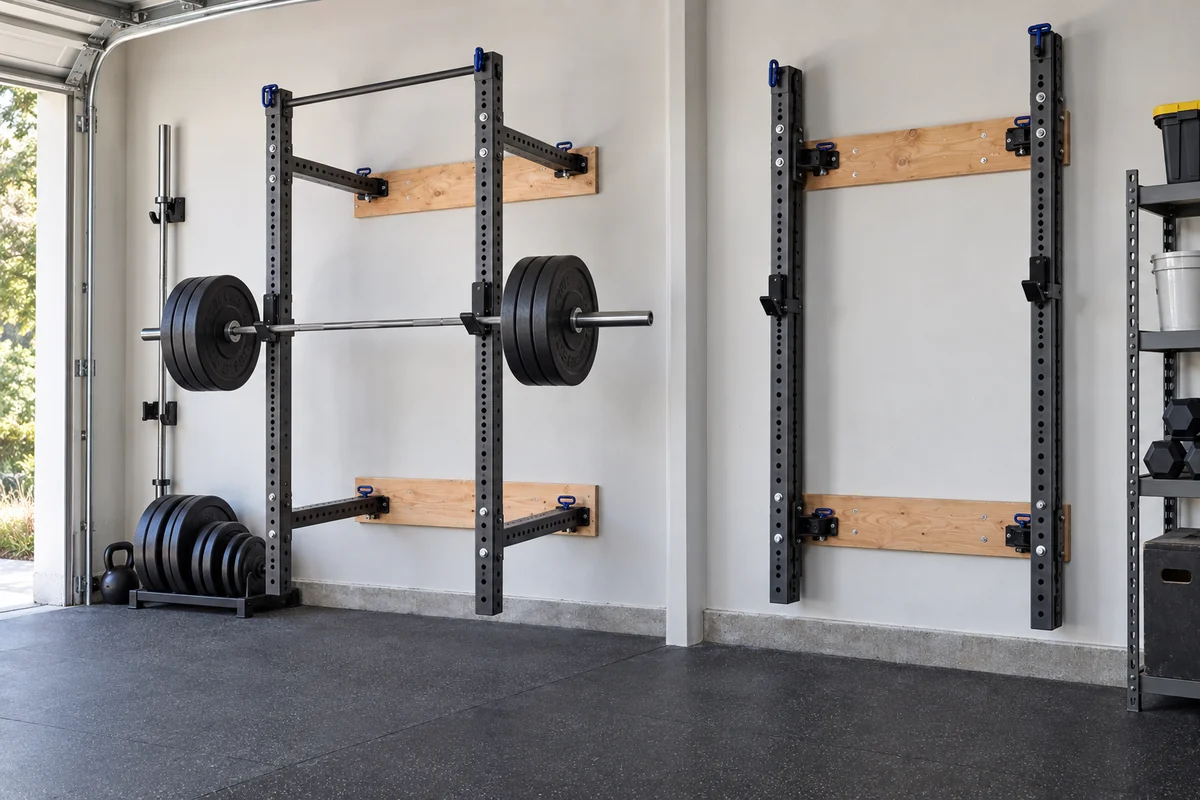
Product and mounting source: REP PR-4100 manufacturer page.
6. Rogue RML-3W Fold Back Wall Mount Rack
Rogue’s RML-3W folds its uprights toward the wall through a hinge-and-pin design. The two listed depths let you choose a shallower or deeper lifting station, and the rack supports compatible Monster Lite accessories. It suits a garage strength setup that you plan to develop over time rather than a single self-contained cable machine.
- Storage: hinged rack uprights fold inward or outward at the wall.
- Exercise focus: barbell lifts, pull-ups, and compatible accessories.
- Needs: suitable wall, mounting plan, bar, plates, and bench as needed.
- Best for: a long-term garage or basement strength station.
Trade-offs: a separate stringer may be needed; Rogue lists it separately. Check the full cost of rack plus mounting materials and compatible accessories. The fold-back mechanism clears floor space, yet safe barbell handling still needs side clearance and a place to keep plates.
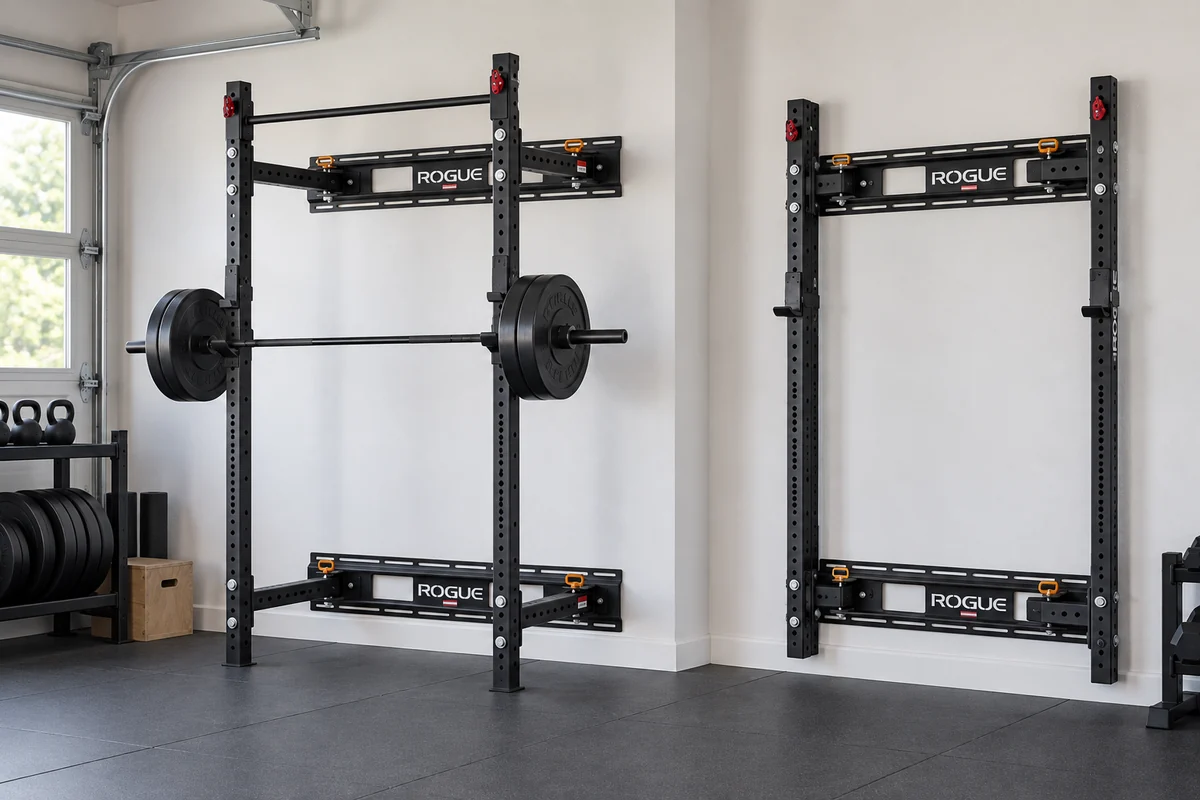
Product source: Rogue RML-3W manufacturer page.
What to Check Before Buying a Foldable Home Gym
Measure three sizes, not one
Record the unit’s stored dimensions, its fully open dimensions, and the complete workout area. Cabinet doors need swing clearance; a folding rack needs ceiling or side space for the hinge path; a cable trainer needs room for a full handle pull. Tape the footprint on the floor, rehearse a squat and row, and make sure doors, outlets, and walking routes remain available. Full-size all-in-one home gyms offer another route if storage is less important than permanent exercise stations.
Decide whether you want weight-stack cables, plate-loaded cables, or a barbell
Cable machines can offer fine load changes and varied lines of pull, but the pulley ratio and anchor positions determine which movements feel natural. A plain foldable rack provides familiar free-weight loading but requires an entire supporting setup. If your favorite workouts emphasize adjustable cable paths, compare dedicated cable machines with these folding options.
Budget for everything that stays after the rack folds
Wall racks generally require a barbell and weight plates, plus safe storage for them. A stable bench expands pressing and supported rows; compare compatible weight benches by height, storage, and adjustment angles. For smaller supplementary lifts, adjustable dumbbells may help complete a program without a second permanent station.
Account for floor, noise, and installation
Surface protection matters when racks, benches, and weights share a room. Choose gym mats for the floor and exercises you plan to do, then follow the machine’s rules for stability and ventilation. Mats do not increase structural floor capacity. Wall racks must be installed to the manufacturer’s approved substrate and hardware requirements; renters should confirm permission before purchase.
Real three-year cost
System + shipping + installation + bar/plates or accessories + bench and floor protection + any required subscriptions + anticipated service. Do not rely on a promotion price or one photo of a bundle; check current U.S. package contents and return terms.
- Measure storage, fully open frame, exercise movement, ceiling, and delivery route.
- List a squat or leg move, hinge, horizontal push, horizontal pull, and vertical pull you can actually perform.
- Check whether attachments, safeties, barbell, bench, plates, and mounting stringers are included.
- Compare actual resistance at the handle where a 1:1 or 2:1 pulley is advertised.
- Read the wall installation instructions, warranty, service availability, and return policy.
Can One Folding System Handle a Full-Body Workout?
It can support a useful full-body routine if the chosen setup covers five basic patterns and permits gradual progression. A stack-based cable gym may use split squats, cable hinges, rows, chest presses, and pulldowns. A plate-loaded folding rack with its cable option can add similar movements, provided you own compatible plates and the right attachments. A folding rack with a suitable bar, plates, bench, and safeties can support squats, hip hinges, presses, rows, and pull-ups. These routines are examples, not a claim that the base package includes every attachment.
Start with movements you can set up and perform confidently, then add load or difficulty gradually. The CDC recommends muscle-strengthening work on at least two days each week for adults, along with aerobic activity. A machine’s convenience matters when it helps you keep a repeatable schedule rather than spending each session rearranging the room.
Frequently Asked Questions
What is the best foldable home gym for a small apartment?
If building rules prevent wall mounting, start by measuring the freestanding Torque F9 in both open and closed states. Its doors close, but its substantial floor footprint and delivery weight remain. A smaller setup outside this list may fit better if your room cannot accommodate it.
Do folding wall racks include everything needed for full-body workouts?
Usually not. A rack is the structure for barbell and pull-up training; a rounded program typically also needs a compatible bar, plates, bench, safeties or other accessories. Verify exactly what the selected package includes.
Is a folding cable system the same as a folding squat rack?
No. Cable systems provide resistance through adjustable handles and cable paths. Folding racks provide an area for free-weight lifts and fold back against a wall. Their resistance feel, exercise setup, installation and storage needs differ.
Can I install a folding rack on any wall?
No. Follow the manufacturer’s approved mounting requirements for the wall structure, stringers, fasteners, height, and floor. Obtain building or landlord approval where required; do not assume ordinary drywall alone is suitable.
What should I measure before buying?
Measure usable floor width and depth, ceiling height, the full open footprint, folding clearance, movement space around a bar or cable, the route through your home, and storage for accessories. Manufacturer clearance rules take priority.
Do folding cable racks replace free weights?
Some combine pulleys with a rack, but barbell training still calls for a compatible bar and plates, and cable pulley ratios change the load felt at the handle. Compare the specific exercises and purchase package before replacing a free-weight setup.
Choose the Folding Method That Fits Your Workout
Torque F9 suits a freestanding stack-based cable station that closes like a cabinet; MIKOLO CHEETAH 2.0 Elite combines stacks and a folding rack; and Major Fitness F35 adds plate-loaded pulleys to a wall-mounted rack. PRx, REP, and Rogue serve lifters who want a folding barbell station and are ready to buy and store supporting free weights. Measure your complete training zone, identify the five movements you need, and price the whole setup before placing an order.
