

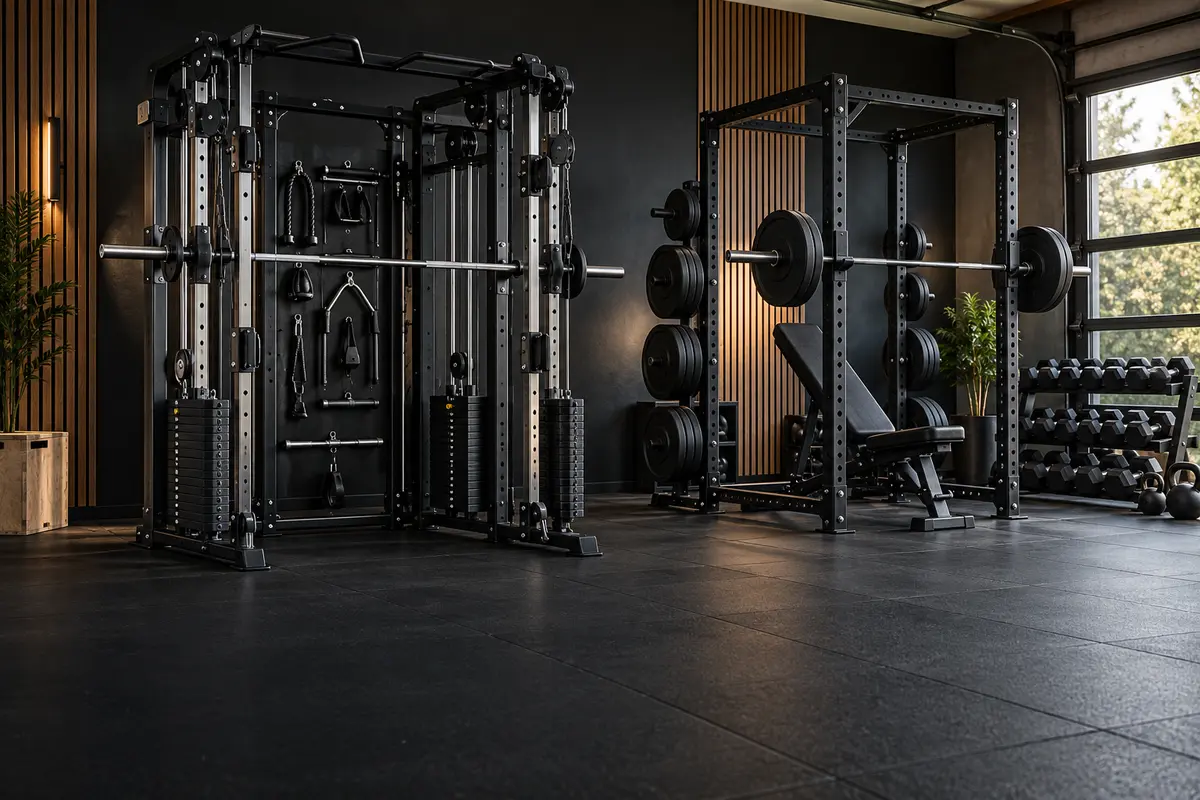
Gym Gear Pilot • Equipment Comparison
All-in-One Home Gym vs. Free Weights
Compare space, training range, progression, safety, cost, maintenance, and workout flow before choosing the foundation of your home gym.
The all-in-one home gym vs. free weights decision is not really about finding one universally superior training method. It is about choosing the system that makes your program easier to perform consistently. A multi-station machine consolidates guided and cable-based exercises into one organized footprint. Free weights provide open-ended loading, natural movement choices, and a modular setup that can grow piece by piece.
Quick Answer: Which One Is Better?
Best for Organized Convenience
An all-in-one gym is a strong fit when you want quick pin changes, cable exercises, guided stations, centralized storage, and less loose equipment.
Best for Flexible Progression
Barbells, dumbbells, plates, and a suitable rack offer the widest loading freedom, easier component replacement, and a highly customizable training environment.
Best Long-Term Setup
A rack or bench with free weights plus a cable station often gives experienced home-gym owners the most complete balance of heavy compounds and targeted work.
Bottom line
Choose an all-in-one system when convenience and organization will help you train more often. Choose free weights when progressive loading, exercise freedom, component choice, and long-term expandability matter more.
All-in-One Home Gym vs. Free Weights: Side-by-Side
| Factor | All-in-One Home Gym | Free Weights | Typical Winner |
|---|---|---|---|
| Organization | Stations and attachments stay around one frame | Requires separate storage for bars, plates, and dumbbells | All-in-one |
| Exercise freedom | Limited by pulley locations, frame geometry, and included stations | Loads can move through many paths and exercise variations | Free weights |
| Resistance changes | Fast with a selectorized stack; slower on plate-loaded machines | Fast with fixed dumbbells, slower when changing barbell plates | Depends |
| Maximum loading | Limited by stacks, cable ratios, or machine ratings | Can expand by adding plates within equipment ratings | Free weights |
| Learning curve | Guided paths may simplify setup for some exercises | Requires more control, setup knowledge, and movement practice | All-in-one |
| Repairability | Cables, pulleys, pins, electronics, and proprietary parts may need service | Individual components are usually simpler to inspect and replace | Free weights |
| Initial purchase | Large single purchase, sometimes including many stations | Can start small and expand gradually | Free weights |
| Shared workouts | Multi-stack units may support two users; single-stack units may bottleneck | Multiple bars and dumbbells can support simultaneous training | Depends |
What Counts as an All-in-One Gym or Free-Weight Setup?
All-in-one home gym
The category includes traditional weight-stack multi-gyms, functional trainers with integrated Smith machines, plate-loaded rack-and-cable systems, and compact digital cable platforms. The best all-in-one home gyms combine useful stations without making basic adjustments unnecessarily complicated. Do not assume the phrase “all-in-one” means every exercise, attachment, bench, plate, or resistance upgrade is included.
Free weights
A free-weight setup may include a barbell, plates, dumbbells, kettlebells, collars, a bench, and a rack or squat stand. Unlike a machine with a defined cable or lever path, the user controls the load through space. A practical collection of free weights for a home gym can begin with only a few items and become more specialized as training goals develop.
1. Space, Ceiling Height, and Room Layout
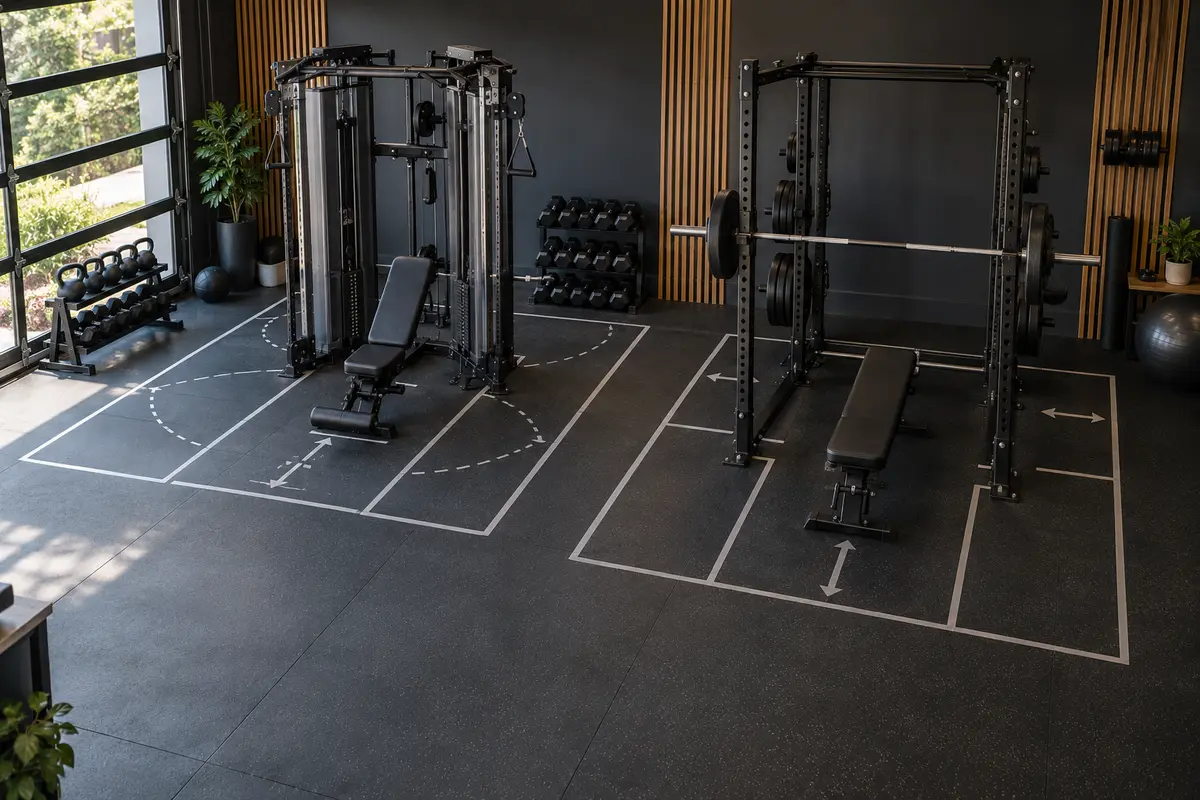
An all-in-one machine concentrates many functions around one chassis, but its listed dimensions are only the starting point. You may need extra room in front for a bench, behind for assembly or service, beside the machine for plate loading, and above it for pull-ups. Swing arms, leg-press attachments, cable travel, and storage horns can expand the operational footprint beyond the frame.
Free weights spread the footprint across several components. A rack may look smaller on paper, yet a seven-foot bar needs lateral clearance, plates need accessible storage, and a bench must roll in and out of position. Full power racks also need usable interior depth and correctly positioned safeties—not just enough room to stand the frame against a wall.
Measure ceiling height at the lowest obstruction, not the highest point in the room. Include garage-door tracks, lights, ducts, beams, fans, outlets, baseboards, and sloped floors. Mark the equipment outline with tape, then rehearse the movements of the bar, bench, cables, and attachments before ordering.
2. Training Variety and Movement Options
Where all-in-one systems excel
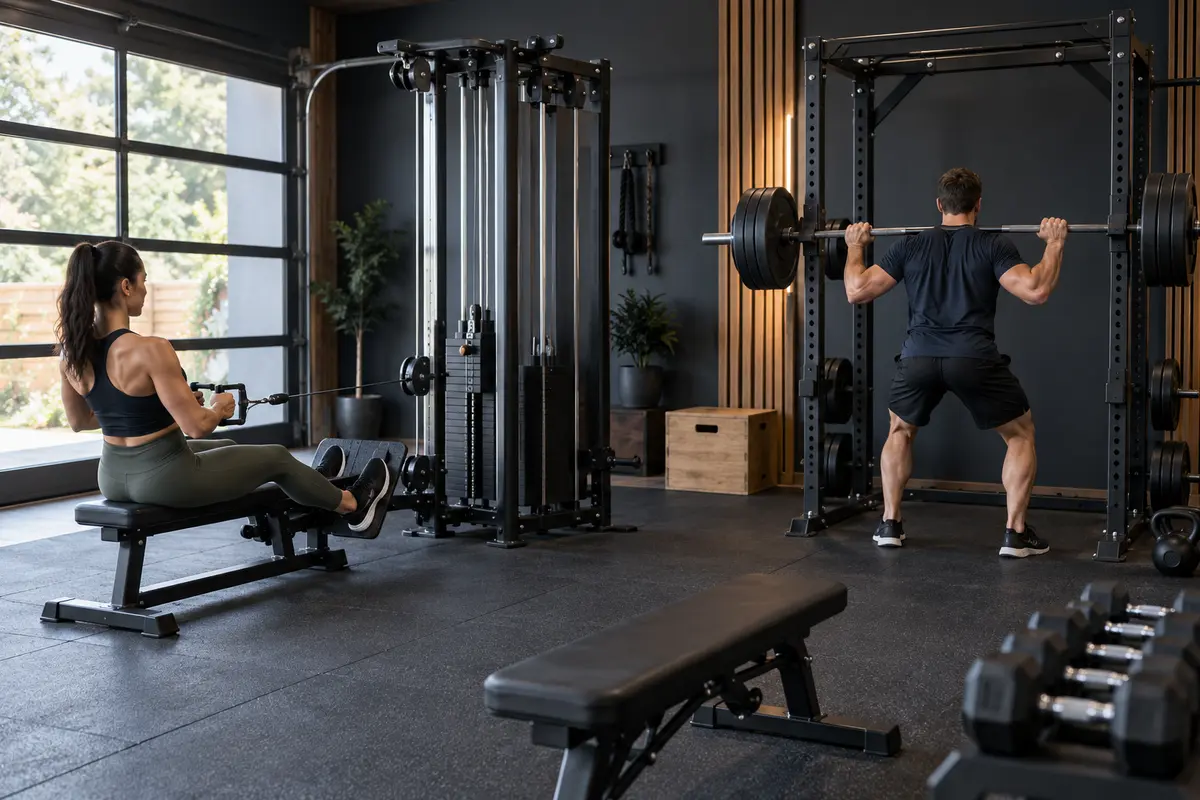
Cable stations maintain tension through a large portion of many movements and allow useful angles for rows, pulldowns, presses, flyes, lateral raises, curls, extensions, belt squats, and rehabilitation-style exercises. Selectorized machines make it easy to change resistance in small steps. Guided press, leg, or Smith stations can also reduce the amount of setup needed between exercises.
The limitation is geometry. Pulley height, trolley range, cable travel, seat position, lever length, and frame width determine which exercises feel natural. A machine can advertise dozens of movements while still fitting only a narrower range of body sizes or requiring optional accessories for its most appealing stations.
Where free weights excel
Free weights are not tied to a proprietary movement path. You can change stance, grip, range of motion, implement, tempo, and exercise sequence without waiting for a manufacturer-specific attachment. Barbell squats, presses, deadlift variations, loaded carries, split squats, dumbbell rows, and floor presses can all be organized around a relatively small core of equipment.
That freedom also increases responsibility. The lifter must stabilize the load, select an appropriate range of motion, and maintain control. More possible exercises do not automatically make a better program; a short list of repeatable movements is usually more useful than a machine or equipment collection filled with rarely used options.
3. Strength Progression and Resistance Limits
Progressive training requires more than adding weight. You can add repetitions, sets, range of motion, pause duration, slower eccentrics, or more demanding exercise variations. Still, the equipment must provide resistance increments and maximum loads that fit your program.
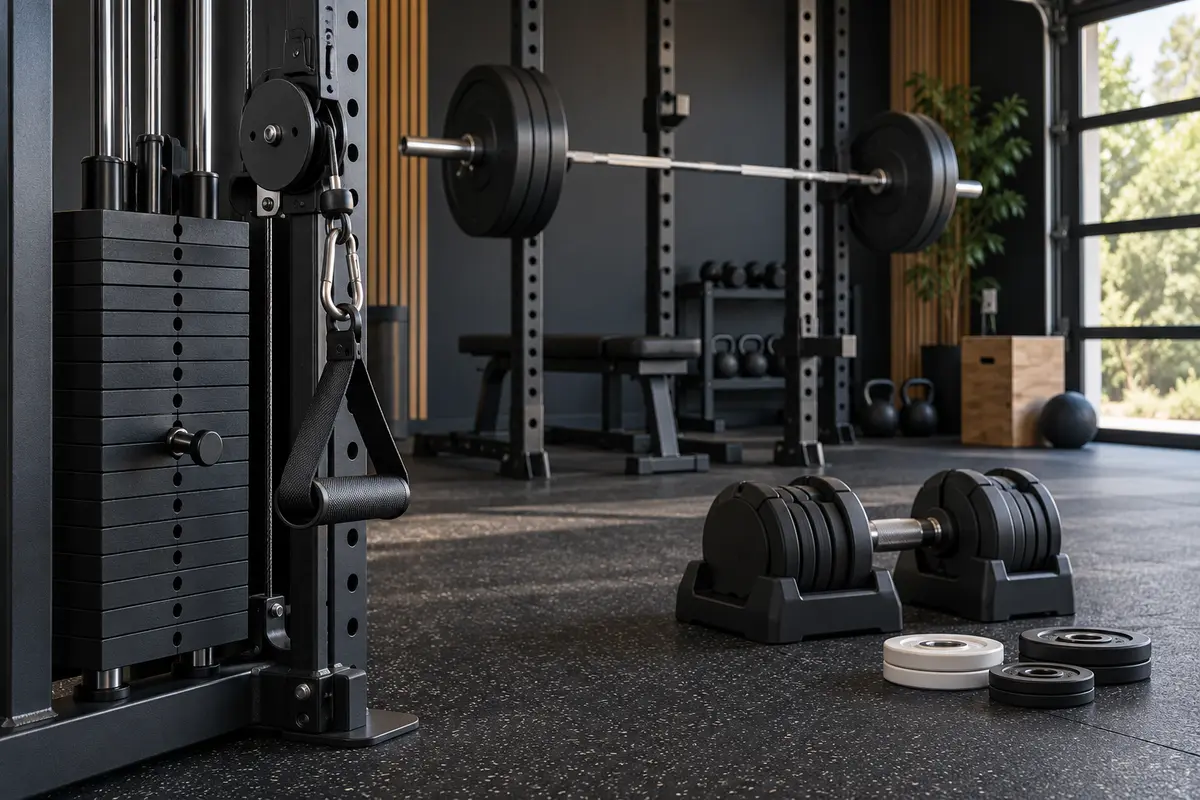
Selectorized machines are convenient, but cable ratios affect the resistance felt at the handle. A 2:1 pulley system generally provides longer cable travel and a lighter effective load than the selected stack value. Integrated Smith machines, lever arms, and leg presses may have separate ratings or mechanical ratios, so compare specifications station by station.
Free weights make loading transparent: the bar, plates, collars, and any implement weight form the external load. They are especially adaptable when strength increases beyond the capacity of a fixed stack. Dumbbells remain useful for unilateral training and smaller spaces; modern adjustable dumbbells can cover a broad range, although their maximum settings and increment patterns still impose limits.
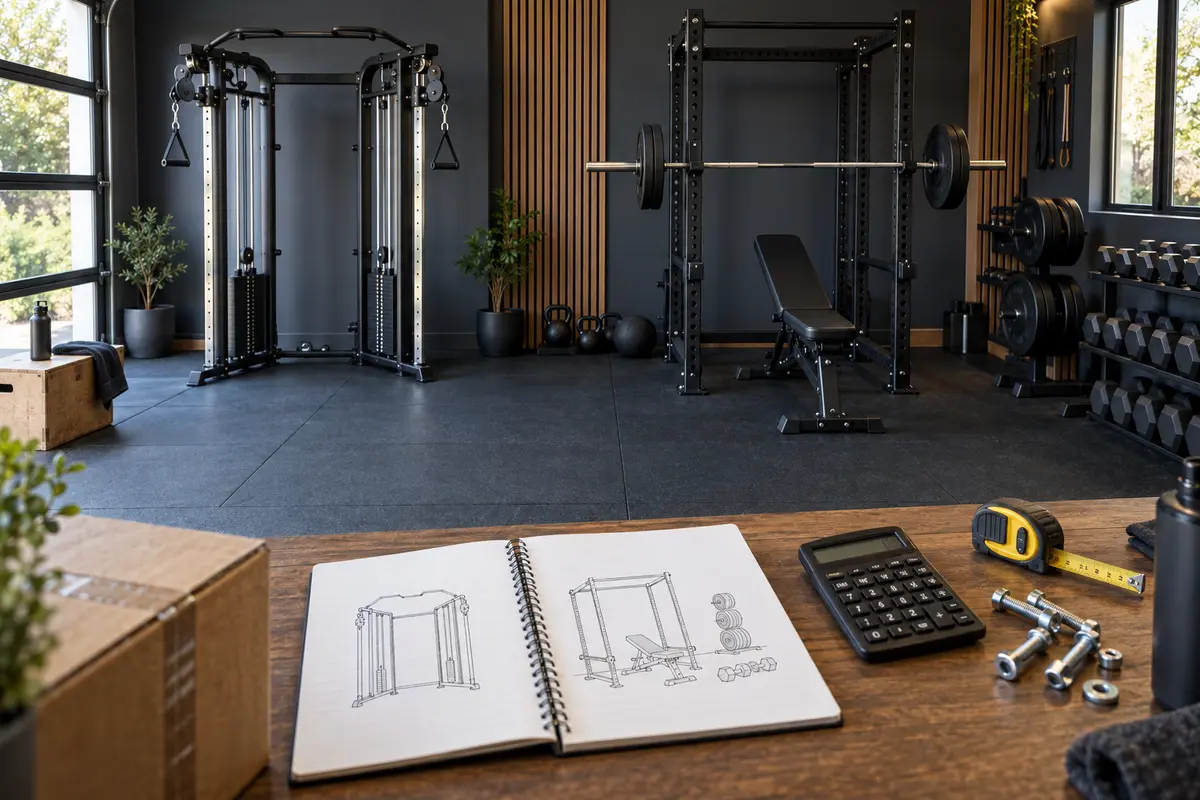
4. Upfront Cost, Hidden Costs, and Expansion
A multi-gym can replace several separate stations, so its high price is not automatically poor value. Calculate what is actually included: resistance stacks, Smith bar, rack positions, cable handles, pull-up grips, storage, bench, leg station, delivery, assembly, and warranty. Plate-loaded systems may look less expensive until you add enough plates and the accessories needed for your program.
Free weights offer a lower-cost path into training because you can build the setup in stages. Start with a bar, a limited plate set, a stable bench, and appropriate safeties; add dumbbells or specialty equipment later. Budget separately for floor protection, storage, shipping, and a suitable set of weight benches if pressing and supported exercises are part of the plan.
Expansion is usually easier with standardized free-weight equipment, but compatibility still matters. Bar diameter, sleeve size, rack hole spacing, upright dimensions, attachment width, and bench height can limit future choices. Machine owners should check whether replacement cables, pulleys, pins, upholstery, software support, and proprietary attachments are likely to remain available.
5. Workout Speed and Everyday Convenience
Convenience is where a selectorized all-in-one system often earns its footprint. Move a pin, reposition a trolley, attach a handle, and begin the next set. Cable supersets can be fast when two pulley positions remain ready. Integrated storage also reduces the time spent moving bars, plates, and accessories around the room.
Plate-loaded all-in-one systems are different. If the cable station and Smith bar share your plate collection, transitions may involve unloading one station and loading another. Some attachments are heavy or awkward to install, which can make an impressive feature list less useful in daily training.
Free-weight transitions range from instant to slow. A rack of fixed dumbbells is extremely fast; changing multiple plates on a bar is not. For traditional strength work with longer rest periods, plate changes may be inconsequential. For circuits, drop sets, or shared sessions, ready-to-use cable stacks and dumbbell pairs can improve training flow.
6. Safety, Setup, and Learning Curve
A guided path can simplify balance, but it does not make a machine automatically safe. Users still need to set seats, pulleys, pins, safeties, and range-of-motion limits correctly. Cables and attachments must be inspected, and hands should stay clear of stacks, pulleys, and moving carriage parts. Digital resistance equipment adds software and emergency-stop procedures that must be understood before use.
Free-weight training requires more control of the load and more deliberate setup. Solo barbell lifters should use correctly rated safeties for squats and presses, keep collars and J-cups in good condition, and avoid working outside the protected area when a failed repetition could trap the body. A spotter can be helpful, but equipment setup should not depend on a spotter correcting avoidable mistakes.
Beginners can learn on either system. Start with manageable resistance, use repeatable technique, and increase difficulty gradually. People returning after injury or managing a medical condition should seek individualized guidance from an appropriate qualified professional rather than choosing equipment based on a general comparison article.
7. Durability, Maintenance, and Moving the Gym
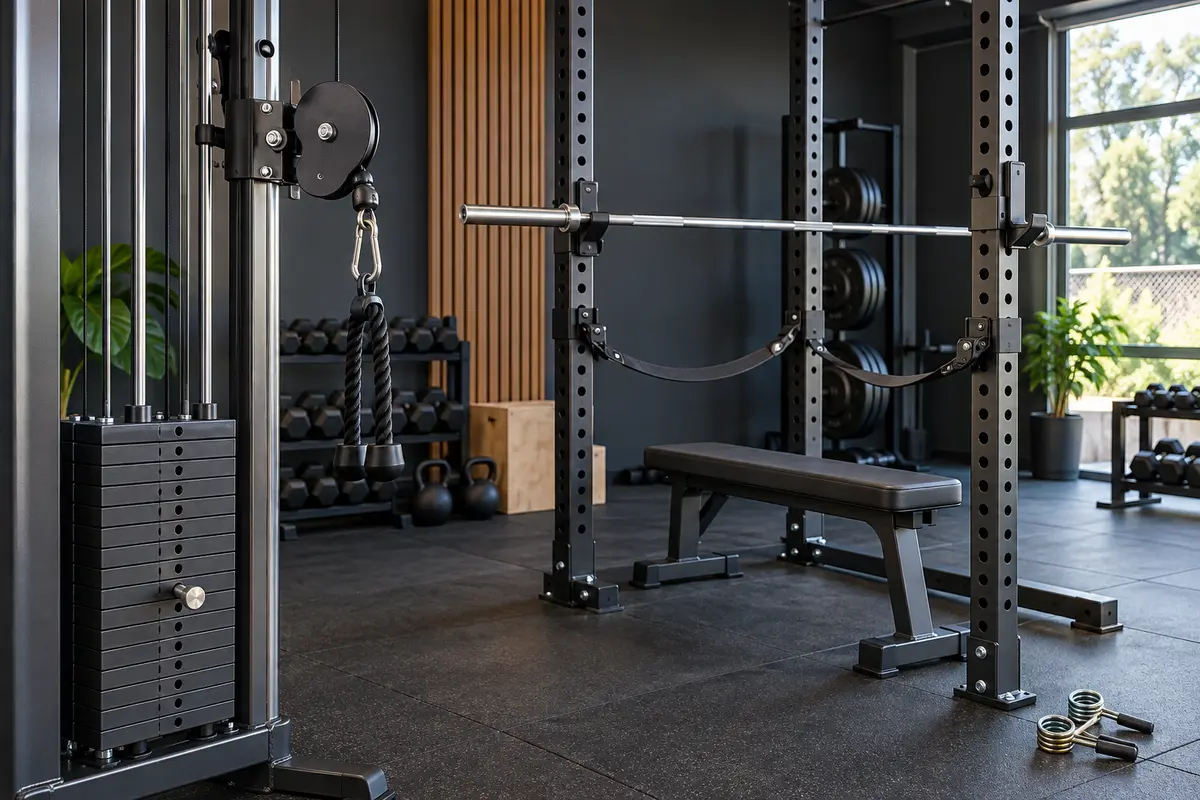
All-in-one machines contain more wear points. Cables can fray, pulleys can develop resistance, guide rods need appropriate care, upholstery can tear, and pins or bushings may need replacement. These are normal maintenance considerations, not automatic deal-breakers. The more important question is whether parts, instructions, and support will be available when the machine needs service.
Free weights are mechanically simpler. Quality bars, iron or bumper plates, dumbbells, and steel racks can remain useful for many years when stored properly and inspected. Individual components are also easier to move or replace than an 800-pound machine. However, bars can rust, bearings can suffer from impact or contamination, rubber can age, and loose bolts or damaged safeties still require attention.
If relocation is likely, modular free weights have the advantage. A large selectorized machine may arrive in many boxes but become difficult to disassemble safely once built. Keep assembly manuals, photograph cable routing, retain hardware labels, and confirm doorway and stair dimensions before the original installation.
Who Should Choose Each Setup?
Choose It If You…
- Prefer quick resistance changes and guided stations.
- Use cable exercises in nearly every workout.
- Want equipment and attachments centralized.
- Have measured a permanent location for a large machine.
- Value convenience more than unlimited modular expansion.
Choose Them If You…
- Prioritize barbell and dumbbell strength training.
- Want to expand the gym in stages.
- Need higher long-term loading potential.
- Prefer standardized, replaceable components.
- May relocate or reconfigure the room later.
When a hybrid setup makes sense
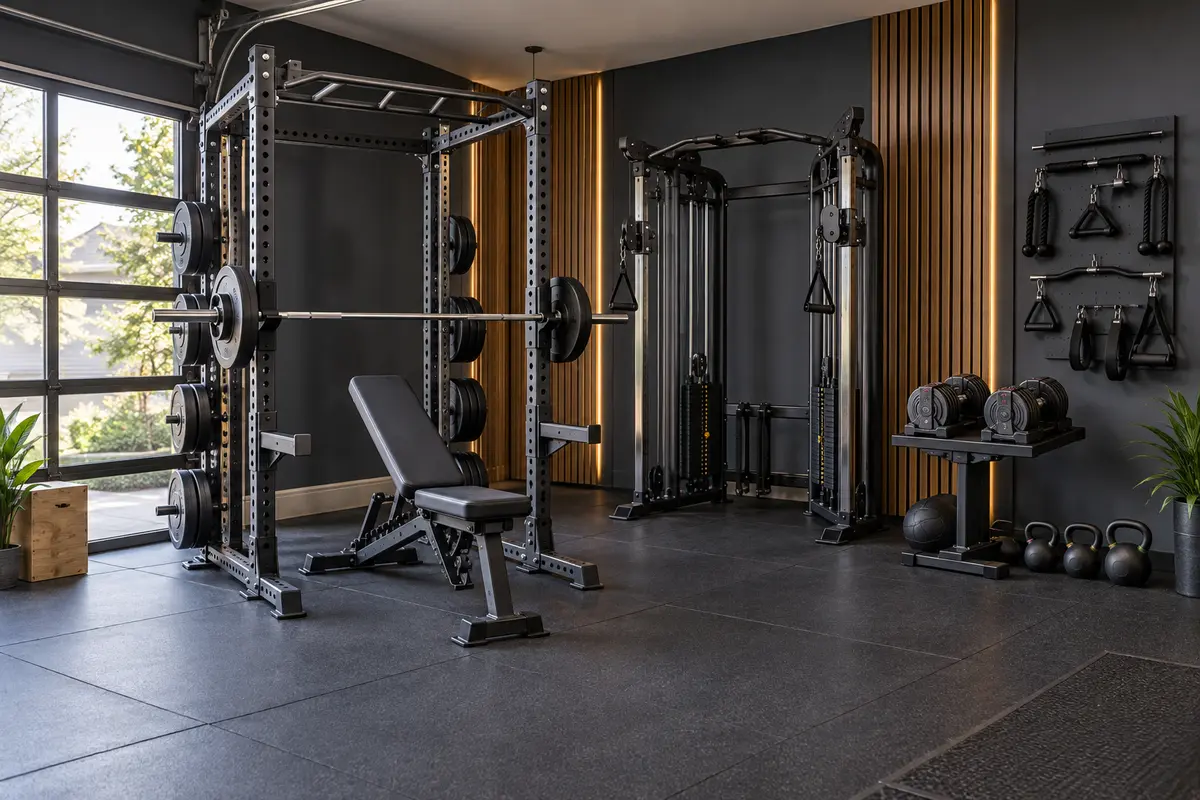
The strongest answer is often not either-or. A rack, bar, plates, dumbbells, and an adjustable bench cover heavy compound lifts and unilateral work. A functional trainer or compact cable station then adds smooth resistance, rapid changes, and more exercise angles. Buy the foundation first, track which movements are missing, and add equipment only when the need appears repeatedly.
Before committing to one large machine, review our guide on how to choose an all-in-one home gym. Compare ceiling height, operating clearance, resistance type, cable ratio, station limits, delivery access, assembly, warranty, and future parts support—not just the number of exercises in the product listing.
Decision Checklist Before You Buy
- Write down the ten exercises you perform most often and confirm the setup supports them comfortably.
- Measure equipment dimensions plus bar, bench, pulley, plate-loading, pull-up, and maintenance clearance.
- Compare usable resistance at each station, not only the largest advertised capacity number.
- Check maximum loading, increment size, cable ratio, and future expansion options.
- Calculate the full cost of flooring, storage, bench, plates, bars, attachments, delivery, and assembly.
- Confirm that safeties, pins, collars, cables, and adjustment points are easy to inspect and use.
- Review warranty terms, replacement-part availability, and whether coverage changes with commercial use.
- Plan how the equipment will enter the building and whether it can be moved or serviced later.
If free weights are part of the plan, estimate the plates required for the first year rather than buying every size immediately. Well-chosen weight plates should match the bar sleeve, available storage, floor protection, lifting style, and noise limits of the room.
Training Context: The Equipment Is Only the Tool
The U.S. physical activity guidelines emphasize regular muscle-strengthening activity that works all major muscle groups. They do not require one particular equipment category. An all-in-one gym, free weights, resistance bands, bodyweight movements, or a combination can contribute when the exercises are appropriate and performed consistently.
Public-health context: CDC Adult Activity Overview and Physical Activity Guidelines for Americans. This article is educational and is not a substitute for individualized medical or exercise advice.
Frequently Asked Questions
Can an all-in-one home gym replace free weights?
It can replace many exercises for general strength and fitness, especially when it includes adjustable cables, pressing or pulling stations, and sufficient resistance. It may not replace the loading freedom, specific barbell skills, or open movement choices available with free weights.
Are free weights better for building muscle?
Not automatically. Both machines and free weights can challenge muscles when the program uses appropriate exercises, effort, volume, and progression. The better choice is the equipment that fits your body, supports the target movement, and allows consistent training over time.
Is an all-in-one gym safer for beginners?
Guided paths and selector pins can simplify some exercises, but safety still depends on correct setup, appropriate resistance, equipment condition, and technique. Free weights can also be used safely when beginners learn the movements and use suitable racks, safeties, collars, and loads.
Which setup takes less space?
An all-in-one machine may consolidate several stations into one area, while a minimal free-weight setup can be smaller overall. Compare operational clearance rather than frame dimensions alone: include bar length, bench travel, cable movement, plate access, pull-ups, and storage.
Which option is cheaper?
Free weights usually allow a lower-cost starting setup because you can buy components gradually. An all-in-one machine may offer better value when you would otherwise purchase several cable and guided stations. Compare complete ownership cost, including freight, assembly, flooring, storage, accessories, and maintenance.
Can I use an all-in-one gym and free weights together?
Yes. A hybrid setup is often the most versatile solution. Free weights can handle barbell, dumbbell, and unilateral work, while a cable machine provides fast changes, continuous tension, and exercise angles that are less convenient with loose weights.
Final Verdict
An all-in-one home gym is the better choice for users who value fast adjustments, guided or cable-based exercises, organized attachments, and a permanent training station. It can make full-body workouts more approachable and efficient, provided the machine fits the user, room, resistance needs, and long-term service expectations.
Free weights are the better choice for lifters who want modular growth, transparent loading, barbell and dumbbell skills, simpler components, and the freedom to rebuild the gym as their training changes. They require thoughtful storage, safe setup, and more control of the load.
When space and budget permit, a hybrid gym offers the fewest compromises. Begin with the equipment that supports your highest-priority exercises, then add the missing function after real training experience shows that you need it.
Choose the System That Removes Friction
The best equipment is not the machine with the longest feature list or the largest pile of plates. It is the setup that fits your room, supports measurable progression, and makes you more likely to complete the next workout.
